

Schedule Appointment


Have you ever looked at a dental X-ray and been told that there are stones inside your teeth? The term can sound alarming, especially when you hear that the “stone” is located inside the tooth itself.
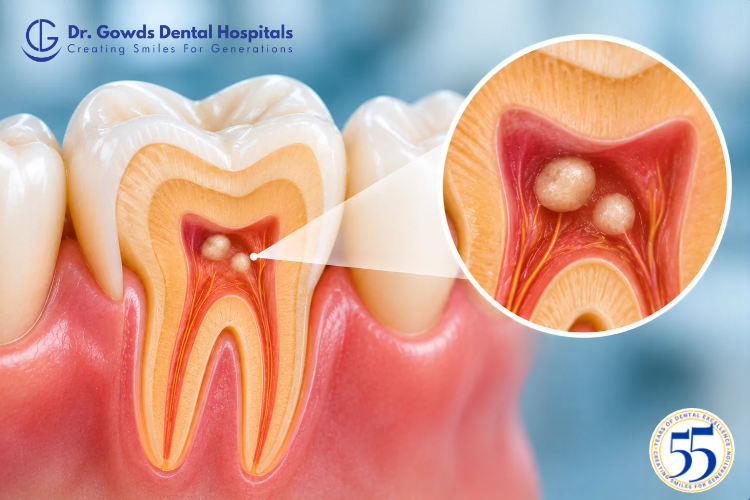
These are commonly referred to as pulp stones. They are calcified structures that can develop within the dental pulp, the soft tissue located at the centre of a tooth. They may be noticed during a routine dental examination or while a dentist is investigating a particular tooth.
So, are stones inside teeth a problem? Can pulp stones cause tooth pain? Do they need to be removed? And can they affect root canal treatment?
Understanding where these calcifications occur and how dentists assess them can make an unexpected X-ray finding much easier to understand.
The term “stones inside teeth” usually refers to pulp stones, which are calcified structures that develop within the dental pulp.
To understand pulp stones, it helps to know the basic anatomy of a tooth.
A tooth has several main parts:
A pulp stone can develop within the pulp chamber or other areas of the pulp space.
Pulp stones can differ in size and their relationship with the surrounding tooth structure. Some may be small and separate within the pulp space, while others may be attached to or incorporated into the dentin.
One of the ways dentists identify stones inside teeth is through dental imaging.
Pulp stones may appear as calcified or radiopaque areas within the pulp chamber or root canal region. Their appearance can vary depending on their size, location and relationship with the surrounding tooth structures.
However, an X-ray finding should not be interpreted on its own. The dentist may also consider:
This helps the dentist determine whether the pulp stone is simply an incidental finding or something that needs closer attention.
There is not always one obvious reason why pulp stones develop.
Dentists may consider several factors when evaluating calcification inside a tooth, including the history and condition of the tooth.
The assessment may take into account:
It is important not to assume that every pulp stone has one specific cause.
Pulp stones can be described according to their relationship with the surrounding tooth structure.
A free pulp stone is located within the pulp space without being attached to the surrounding dentin.
An attached pulp stone is connected to the dentin along part of its surface.
An embedded pulp stone is incorporated into the dentin as the surrounding tooth structure develops.
Pulp stones can also be described based on their microscopic structure. For patients, however, the more important point is usually where the calcification is located and whether it has any relevance to the condition or treatment of the tooth.
This is one of the most common questions people have after seeing a pulp stone on an X-ray.
The presence of a pulp stone does not automatically mean that the tooth has a serious problem or needs treatment.
Some pulp stones are found during dental imaging when the tooth is being examined for another reason.
At the same time, it is not appropriate to assume that every pulp stone is irrelevant. Its significance depends on the individual tooth and the reason it is being examined.
A dentist may assess the pulp stone together with the tooth’s symptoms, clinical condition, dental history and X-ray findings before deciding what the finding means.
A pulp stone seen on an X-ray should not automatically be considered the cause of tooth pain.
Tooth pain can have many possible causes, including problems involving the tooth structure, pulp, gums or surrounding tissues.
If you have pain in a tooth that also contains a pulp stone, your dentist may evaluate the tooth more closely to determine what is contributing to the symptoms.
This distinction is important because the presence of a calcification on an X-ray does not necessarily explain every symptom associated with that tooth.
No. Pulp stones and dental calculus are different.
Dental calculus, commonly called tartar, forms on the surface of teeth when dental plaque hardens. It is located outside the tooth.
A pulp stone, on the other hand, develops inside the tooth within the pulp space.
In simple terms:
The word “stone” in both terms can make them sound similar, but they are different dental findings.
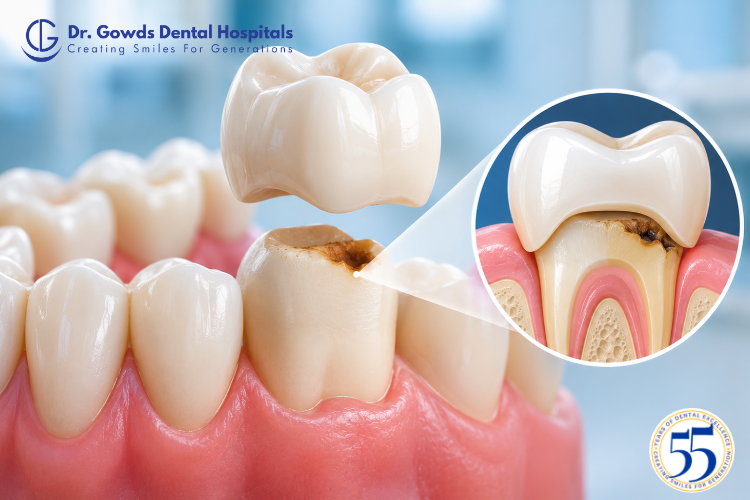
Pulp stones are also different from tooth decay.
Tooth decay involves changes and damage to the hard structures of the tooth, while a pulp stone is a calcified structure located within the pulp space.
A dental X-ray may show both types of findings, which is why professional interpretation is important.
If a dental report mentions a calcification inside a tooth, it should not automatically be interpreted as tooth decay.
Not every pulp stone needs to be removed.
If a pulp stone is found incidentally and the tooth does not require treatment involving the pulp, the dentist may simply consider the finding as part of the overall dental assessment.
The approach can be different if the tooth has symptoms or requires treatment involving the pulp.
The dentist may consider:
The appropriate approach therefore depends on the individual tooth rather than the presence of a pulp stone alone.
A pulp stone does not necessarily need to be removed simply because it is visible on an X-ray.
If a dental procedure requires access to the pulp chamber or root canal system, the dentist may need to work around or through calcified areas depending on their location and the anatomy of the tooth.
In such situations, the pulp stone becomes relevant to treatment planning rather than simply being an X-ray finding.
The dentist can determine whether the calcification needs to be addressed as part of the planned dental procedure.
Pulp stones can be particularly relevant when a tooth is being assessed for root canal treatment.
Root canal treatment involves accessing the internal space of a tooth and working within its canal system. A calcification inside this space can be relevant when the dentist is assessing the internal anatomy of the tooth.
Before planning treatment, the dentist may assess the tooth’s anatomy using a dental examination and appropriate imaging.
The presence of a pulp stone does not by itself determine whether root canal treatment is necessary. That decision depends on the overall condition of the tooth and the findings from the dental assessment.
If you have been told that a tooth contains a pulp stone and you have also been advised to consider root canal treatment, ask your dentist how the calcification relates to your particular tooth.
Have a dental X-ray showing stones inside your teeth or another unusual finding? The team at Dr Gowds Dental Hospitals can assess the tooth and explain the dental findings at our branches in Hyderabad.
A dentist does not need to rely on the X-ray finding alone.
The assessment may include:
The dentist may ask about previous dental treatment, earlier problems with the tooth and any changes you have noticed.
The tooth and surrounding tissues can be examined for relevant dental findings.
An X-ray can help the dentist assess the location and appearance of the calcification and the surrounding tooth structures.
If you have pain, sensitivity or discomfort, the dentist may consider those symptoms alongside the examination and imaging findings.
If the tooth requires treatment, the dentist can consider the internal anatomy and the location of any calcification when planning the procedure.
This tooth-specific approach is more useful than trying to determine the significance of a pulp stone from an X-ray report alone.
If a pulp stone has been mentioned during a dental examination, it is reasonable to ask your dentist what it means for that particular tooth.
An assessment becomes especially relevant when:
The goal is not to assume that the pulp stone is causing a problem, but to understand whether it has any relevance to the tooth’s current condition.
Stones inside teeth, commonly called pulp stones, are calcified structures that can develop within the dental pulp. They may be discovered during dental X-rays and can vary in size, location and relationship with the surrounding tooth structure.
A pulp stone does not automatically mean that a tooth needs treatment. However, its significance can depend on the condition of the tooth, associated symptoms and whether treatment involving the pulp is being considered.
If you see the term “pulp stone” on a dental X-ray report, there is no need to make assumptions based on the term alone. A dentist can examine the tooth, interpret the imaging and explain whether the finding has any relevance to your dental care.
Looking for a dental evaluation in Hyderabad? Dr Gowds Dental Hospitals provides dental care across Nanakramguda, Gachibowli, Madhapur, koti. Schedule a dental consultation to have your tooth and X-ray findings assessed by a dental professional.
“Stones inside teeth” commonly refers to pulp stones, which are calcified structures that develop within the dental pulp, the soft tissue located at the centre of a tooth.
The presence of a pulp stone does not automatically indicate a serious dental problem. Its significance depends on the condition of the individual tooth, associated findings and whether dental treatment involving the pulp is required.
Pulp stones can develop for different reasons, and there may not always be one identifiable cause. A dentist may consider the tooth’s history, condition and previous dental treatment when evaluating them.
Yes. Pulp stones may be visible on dental X-rays as calcified areas within the pulp space. Their appearance and location can help the dentist assess the finding.
A pulp stone seen on an X-ray should not automatically be assumed to be the cause of tooth pain. If pain is present, the dentist can assess the tooth and look for the underlying dental cause.
No. A pulp stone does not automatically require removal or treatment. The dentist considers the condition of the tooth, symptoms, location of the calcification and whether treatment involving the pulp is being considered.
A pulp stone can be relevant when a dentist is planning treatment involving the pulp or root canal system. Its location may be considered when assessing the internal anatomy and planning access to the tooth.
No. Dental calculus is a hardened deposit that forms on the tooth surface, while a pulp stone is a calcified structure within the internal pulp space of a tooth.
 Gachibowli Branch