

Schedule Appointment


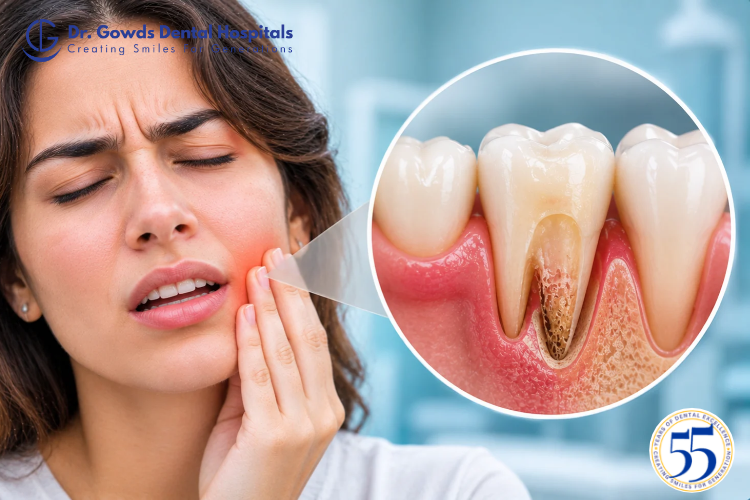
Have you ever heard someone say that a tooth root is “dissolving inside the gum”? The phrase can sound alarming, but it usually refers to a dental condition known as tooth resorption.
Tooth resorption is a process involving the loss of part of the tooth’s hard structure. Depending on where the process begins, it may involve the inside of the tooth or the outer surface around the root.
Because tooth resorption is not always easy to notice from the outside, understanding what it means and when to have a dental evaluation can help you make sense of what you may be seeing on a dental scan or experiencing with a tooth.
In this guide, Dr Gowds Dental Hospitals explains tooth resorption in simple terms, including its types, possible signs, how dentists evaluate it, and the factors that may be considered when planning care.
Tooth resorption refers to the breakdown or loss of dental hard tissue. When this involves the root, it is commonly described as tooth root resorption.
The word “resorption” can sometimes be confusing. A tooth does not simply melt away inside the gum. Instead, the structure of the tooth can gradually be lost through a biological process.
Tooth resorption can occur in different parts of a tooth. This is why dentists generally look at the exact location and appearance of the affected area before deciding what it represents.
A dental X-ray or other dental imaging may reveal changes that are difficult to see during a routine visual examination.
Tooth resorption is commonly discussed according to where the process begins.
Internal resorption begins from inside the tooth.
The affected area may be within the central part of the tooth and can sometimes be noticed during dental imaging. In some cases, a person may not notice anything unusual until the tooth is examined.
Because the process begins internally, the outside appearance of the tooth may not immediately explain what is happening underneath.
External resorption begins on the outer surface of the tooth, often around the root.
The location and pattern can vary. A dentist may use dental imaging to understand where the affected area is located and how it relates to the surrounding tooth structure.
External resorption can sometimes be associated with changes around the root, making detailed examination important.
There is no single explanation that applies to every case of tooth resorption.
A dentist may consider several factors when reviewing a tooth, including:
The important point is that the appearance of a tooth root on an X-ray does not tell the entire story by itself. The location, pattern and clinical history all matter when understanding tooth resorption.
One of the challenging aspects of tooth resorption is that it may not always produce an obvious symptom.
Some people may notice:
However, these signs are not specific to tooth resorption. Similar symptoms can occur with other dental conditions.
That is why trying to identify tooth resorption based only on symptoms can be misleading. A dental examination and appropriate imaging may be needed to understand what is happening.
A dentist usually begins by discussing your dental history and examining the tooth and surrounding area.
Dental imaging can then provide additional information about the location and appearance of the affected area.
A dental X-ray may help the dentist examine the tooth root and surrounding structures.
Depending on the situation, additional imaging may be considered to provide a more detailed view. The choice depends on what the dentist needs to understand about the tooth.
The goal is not simply to identify a “dissolving root”. It is to determine where the change is located and understand the overall condition of the tooth.
No. Tooth resorption and tooth decay are different processes.
Tooth decay involves damage to the tooth associated with the decay process. Tooth resorption refers to the loss of tooth structure through a different biological process.
Because both can involve changes to the tooth, it is easy to confuse them without a proper dental examination.
If a dental X-ray shows an unusual area around or within a tooth, a dentist can assess its appearance and determine what further evaluation may be appropriate.
The approach to tooth resorption depends on several factors.
A dentist may consider:
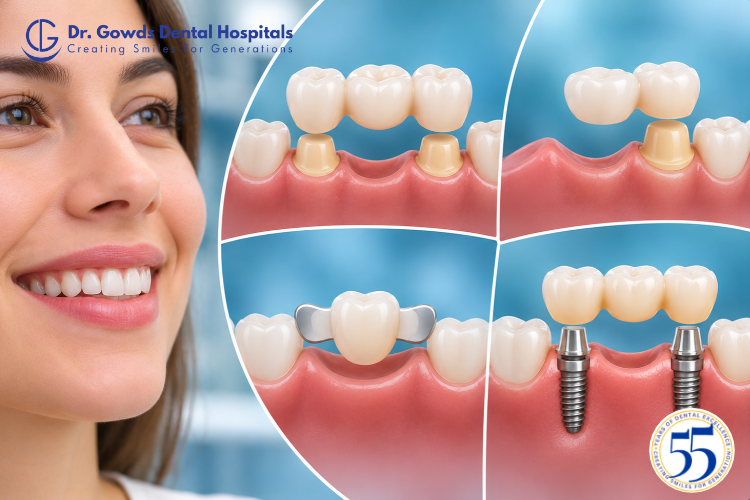
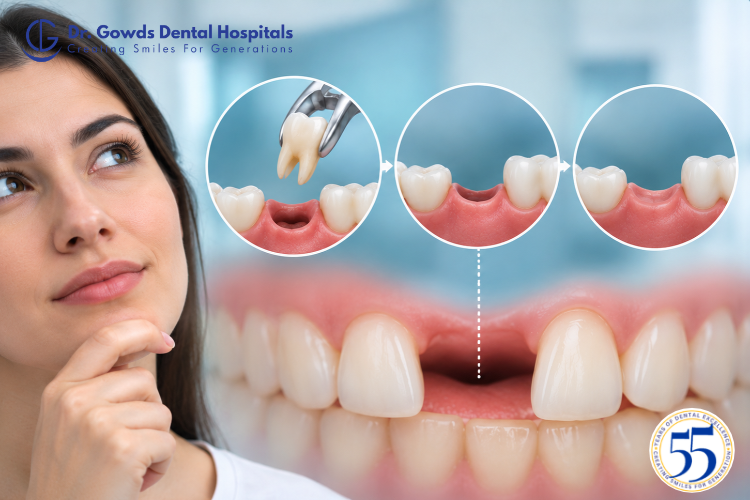
Depending on these factors, the dentist may discuss observation, restorative dental care, endodontic care or other treatment options.
There is no single treatment that applies to every case of tooth resorption. The appropriate approach needs to be determined after examining the individual tooth.
You should consider a dental evaluation if you have been told that a tooth root appears to be dissolving, particularly if the finding came from a dental X-ray or scan.
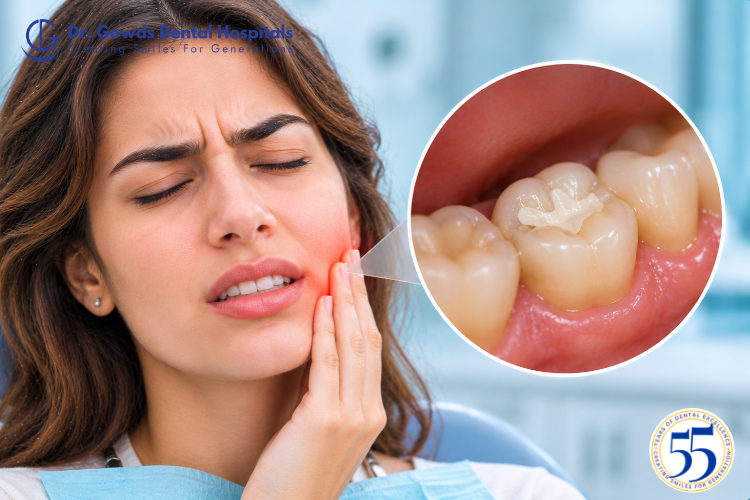
It is also worth discussing persistent or unusual changes involving a tooth, such as:
Early professional evaluation can help clarify what the finding actually represents and what options may be relevant.
Not sure what an X-ray finding around your tooth root means?
Visit Dr Gowds Dental Hospitals at your nearest branch [Nanakramguda, Gachibowli, Madhapur, koti] for an evaluation and a clearer understanding of your dental condition.
The phrase “tooth root dissolving inside the gum” can sound frightening, but it is important to understand that this is a simplified way of describing a more specific dental finding.
Tooth resorption can involve the inside or outside of a tooth, and the pattern can differ from one case to another.
The most useful steps are to understand the type of resorption, identify where it is occurring, review the dental imaging and discuss the findings with a qualified dental professional.
If you have noticed a change in a tooth or have been told that part of the tooth structure is being lost, don’t rely on symptoms alone to determine what is happening. A proper dental assessment can provide a clearer picture.
Tooth resorption is the loss or breakdown of part of the tooth’s hard structure through a biological process. It can involve the inside of a tooth or its outer surface, including areas around the root.
A dental X-ray or scan may show changes in the shape or structure of a tooth root. These findings can sometimes be associated with tooth resorption, but the exact cause and type need to be evaluated by a dentist.
Internal tooth resorption begins within the tooth. It may be identified through dental imaging because changes inside the tooth are not always obvious from its external appearance.
External tooth resorption begins on the outer surface of the tooth. It can affect areas around the root, with the exact location and pattern varying between cases.
Some people may experience sensitivity, discomfort or visible changes around the affected tooth. However, tooth resorption may not always produce noticeable symptoms.
Dental imaging can show changes involving the structure of a tooth and its root. A dentist can assess the image along with the clinical examination to understand what the finding may represent.
No. Tooth resorption and tooth decay are different processes. A dental examination can help distinguish between different causes of changes seen in or around a tooth.
The appropriate approach depends on the type, location and extent of the resorption and the condition of the tooth. A dentist can assess the tooth and discuss the options relevant to the individual case.
 Gachibowli Branch