

Schedule Appointment


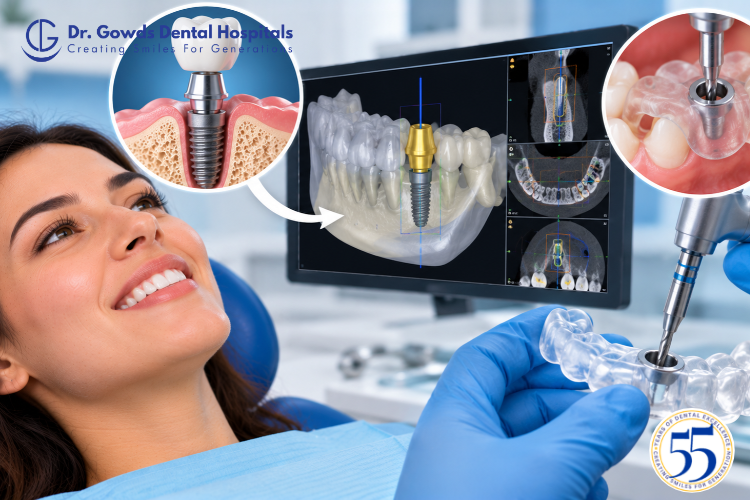
Replacing a missing tooth involves more than simply placing an implant. Before the procedure begins, the implant position, surrounding structures and planned restoration all need to be considered. This is where 3D-guided dental implant surgery comes into the picture.
Instead of relying only on traditional two-dimensional images and visual assessment, 3D-guided implant planning uses digital scans and computer-based planning to create a detailed view of the treatment area. A customised surgical guide can then be used during implant placement, depending on the treatment plan.
But how exactly does the process work? And what happens between the first scan and the placement of the implant?
This guide from Dr Gowds Dental Hospitals explains the 3D-guided dental implant surgery process in simple terms, from digital scanning and planning to guided implant placement and restoration.
Considering dental implants?
3D-guided dental implant surgery is a digitally planned approach to implant placement.
The process uses three-dimensional information about the mouth to help the dental team plan the intended position of the implant before the surgical procedure. Based on this plan, a surgical guide may be designed to assist with implant placement.
The process can involve:
The important point is that the procedure begins with planning before placement. The implant position is considered digitally as part of the overall treatment plan.
The exact workflow can vary from one patient to another. However, the process generally follows several stages.
The process begins with an examination and discussion about the missing tooth or teeth.
The dentist may assess factors such as:
This stage helps establish whether dental implant treatment should be considered and what type of planning may be appropriate.
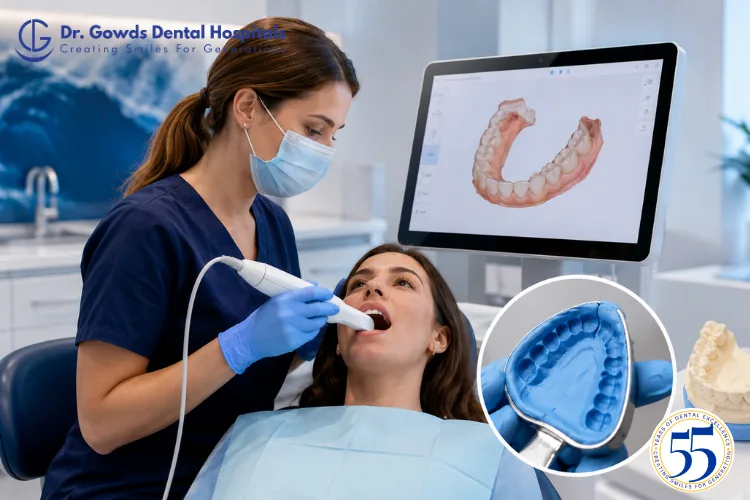
A three-dimensional scan can provide digital information about the treatment area.
Depending on the case, the dental team may use a CBCT scan, along with other digital records, to create a three-dimensional representation of the relevant oral structures.
Unlike a simple photograph or conventional dental image, a 3D scan provides information that can be viewed from different angles as part of the digital planning process.
The scan becomes an important part of the virtual implant planning stage.
Once the required digital information has been collected, the dental team can use implant planning software to create a virtual treatment plan.
The planned implant can be positioned digitally before the actual procedure.
During this stage, the dental team can consider:
This is one of the defining features of computer guided dental implants. Rather than beginning the surgical procedure without a digital plan, the intended implant position can first be assessed virtually.
After the digital plan is prepared, a customised dental implant surgical guide may be created.
The guide is designed according to the planned implant position. During the procedure, it is placed in the mouth and used as a physical reference for the planned implant placement.
Think of it as a physical version of the digital treatment plan.
The exact design of the guide depends on the patient’s anatomy and the treatment plan.
The next stage is the surgical procedure itself.
The dental team follows the planned approach, with the surgical guide helping relate the planned implant position to the patient’s mouth.
The implant is placed according to the treatment plan.
It is important to understand that the guide does not replace the dentist’s clinical judgement. The dental professional remains responsible for evaluating the situation during treatment and making decisions based on the clinical circumstances.
Dental implant treatment does not end with implant placement.
The final restoration, such as a crown, also needs to be considered as part of the overall treatment plan.
With digital implant planning, the intended position of the implant and the planned restoration can be considered together during treatment planning.
This is sometimes referred to as restoration-driven implant planning, where the desired final tooth is an important consideration when determining the implant position.
A dental implant surgical guide is a customised device used during guided implant surgery.
It is created based on the digital treatment plan and is designed to correspond with the patient’s mouth.
Its purpose is to provide a physical reference for the planned implant position during the procedure.
A simple way to understand the process is:
3D scan → Digital planning → Surgical guide → Guided implant placement → Restoration
The guide itself is not the implant. It is a planning and placement aid used during the surgical stage.
One common question is whether 3D-guided implant surgery is different from conventional implant placement.
The main difference is the approach to planning.
With conventional planning, the dentist uses clinical examination and available diagnostic information to determine the treatment approach.
With 3D-guided planning, three-dimensional digital information is incorporated into the planning process, and a virtual implant position can be created before the procedure.
The choice between different approaches depends on the individual case, available technology and the dentist’s clinical assessment.
If you are exploring dental implants in Hyderabad, a consultation can help you understand which planning approach is suitable for your specific dental requirements.
The complete digital implant planning process can be simplified into five stages:
The dentist evaluates the patient’s dental condition and discusses the treatment requirements.
Digital scans are collected to provide three-dimensional information about the treatment area.
The implant position is planned digitally using the available scan data and treatment information.
A customised surgical guide may be created based on the approved digital plan.
The guide is used during the procedure as a reference for the planned implant position.
This structured workflow allows the planning stage to take place before the surgical procedure.
Not necessarily.
Dental implant treatment is not a single standard procedure that works in exactly the same way for every patient. The appropriate planning method depends on factors such as the location of the missing tooth, available space, oral condition, the planned restoration and the information available from clinical examination and imaging.
A dentist needs to assess the individual case before deciding whether guided implant surgery is appropriate.
For this reason, online information cannot determine whether a person is a suitable candidate for 3D-guided implant surgery.
If you are considering implant treatment, asking the right questions can make the consultation more useful.
You could ask:
Understanding the process can help you make an informed decision about your treatment.
A dental implant is part of a larger treatment plan. The implant position needs to be considered alongside the surrounding oral structures and the eventual restoration.
Digital planning provides a way to visualise the proposed treatment before the surgical stage.
It also gives the dental team a structured digital record of the planned implant position.
However, digital technology is only one part of implant dentistry. Clinical examination, professional judgement and appropriate treatment planning remain important throughout the process.
At Dr Gowds Dental Hospitals, patients can discuss their dental implant requirements with the dental team and understand the available treatment planning options.
The implant journey can involve several stages, from the initial assessment and digital planning to implant placement and the final restoration.
The appropriate approach depends on each patient’s dental requirements and treatment plan.
If you are looking for dental implants in Hyderabad, Dr Gowds Dental Hospitals has branches in Nanakramguda, Gachibowli, Madhapur, koti.
A consultation is an opportunity to understand the proposed treatment before proceeding.
Depending on your case, the discussion may cover:
The goal is to understand how the different stages of implant treatment fit together.
Rather than focusing only on the implant itself, it is useful to view implant treatment as a complete process involving assessment, planning, placement and restoration.
3D-guided dental implant surgery brings digital scanning and computer-based planning into the implant treatment process.
The process generally involves collecting 3D information, planning the implant position virtually, creating a customised surgical guide when appropriate, and using the planned information during implant placement.
For patients, understanding this process can make dental implant consultations easier to navigate. It also helps explain why implant treatment involves more than the surgical placement of an implant alone.
If you are considering dental implants, speak with a qualified dental professional about your individual requirements and the treatment planning options available to you.
3D-guided dental implant surgery is an implant placement approach that uses three-dimensional digital information and computer-based planning. A customised surgical guide may then be created to assist with the planned implant placement.
The process generally involves collecting 3D dental images, creating a digital model of the treatment area, virtually planning the implant position and, where appropriate, designing a surgical guide based on that plan.
A dental implant surgical guide is a customised device created from the digital treatment plan. It is used during implant placement as a physical reference for the planned position.
There is no single approach that is suitable for every patient. The choice between guided and other implant planning methods depends on the individual dental situation, available diagnostic information and the dentist’s assessment.
The imaging required for dental implant treatment depends on the individual case and treatment plan. A dentist can determine which type of imaging is appropriate after evaluating the patient.
The treatment timeline varies between patients. Implant treatment involves several stages, including assessment, planning, implant placement and restoration. Your dentist can explain the expected sequence for your particular case.
Not necessarily. Whether a surgical guide is appropriate depends on the treatment plan, the patient’s dental anatomy and the clinical assessment.


 Gachibowli Branch