

Schedule Appointment

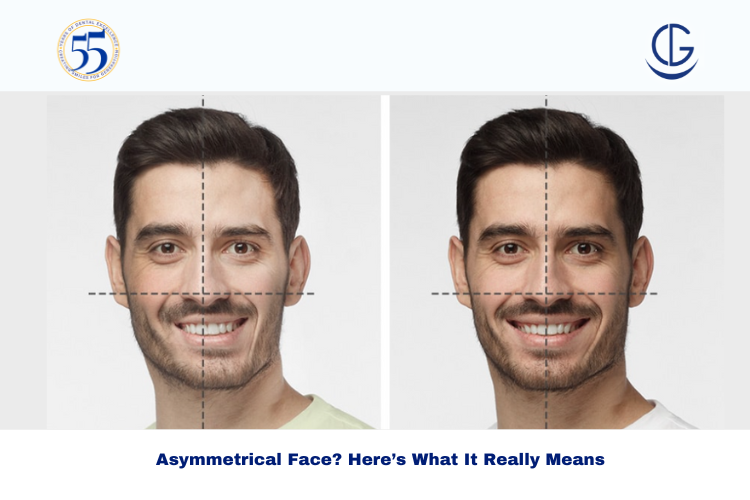
If you’ve caught yourself asking why my face looks asymmetrical — after noticing one eye sitting slightly higher, a cheek that appears fuller on one side, or a jawline that doesn’t quite match — you’re not imagining it, and you’re far from alone. Facial asymmetry is nearly universal. Studies show fewer than 1 in 1,000 people have a truly symmetrical face.
What most guides won’t tell you is that the cause matters enormously. Asymmetry rooted in muscle habits responds to asymmetrical face exercises and lifestyle changes. Asymmetry caused by jaw misalignment or dental issues — one of the most common and most overlooked drivers — often requires dental assessment to address properly. And asymmetry that appears suddenly can occasionally signal something that needs urgent medical attention.
In this guide, reviewed by Prof. Dr. Snigdha Gowd (MDS, Orthodontics & Dentofacial Orthopaedics), we break down each cause clearly — so you know exactly what you’re dealing with and what options actually apply to your situation.
A symmetrical face means both sides mirror each other closely — in structure, muscle tone, and proportion. However, no one has perfect symmetry. Minor differences are completely natural and can even make a face more unique and expressive.
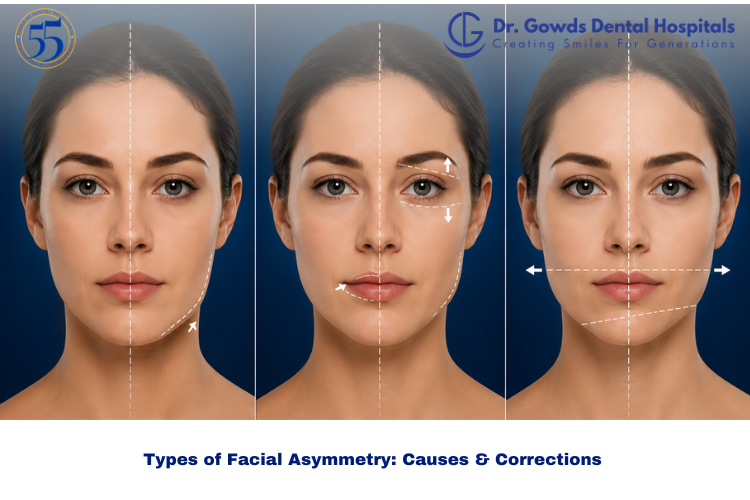
When someone wonders “why my face looks asymmetrical,” it usually means they’ve noticed more significant imbalances that make one side appear distinctly different from the other. This can range from a subtle tilt to a very asymmetrical face that impacts appearance or function.
See our full guide on why your face may look asymmetrical to identify your specific cause before starting exercises.
Knowing what’s behind “why my face looks asymmetrical” helps you figure out if it’s just your natural look or if you should check in with a doctor or specialist.
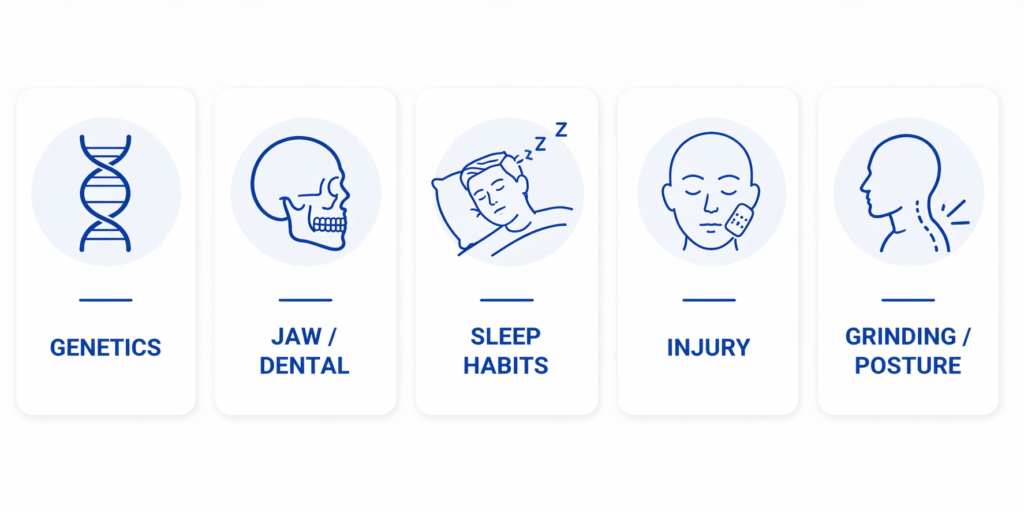
A lot of it comes down to your genes. You might have inherited a slightly smaller eye or a jawline that sits lower on one side. Some developmental conditions can make these differences bigger.
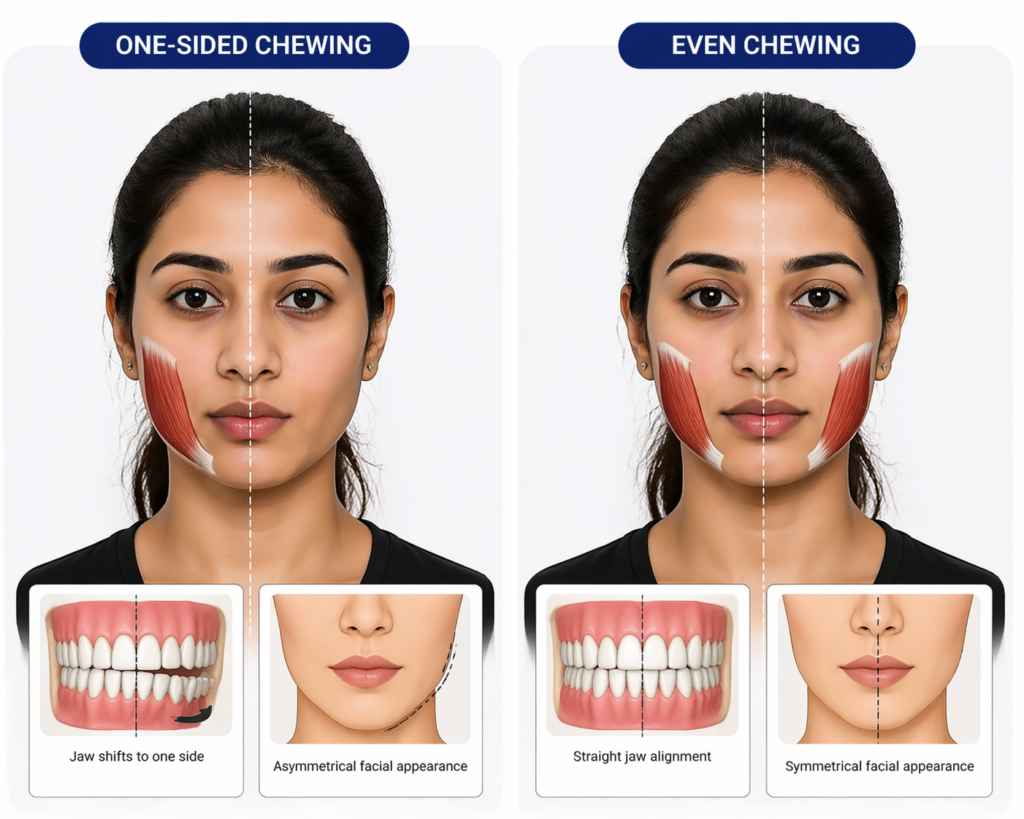
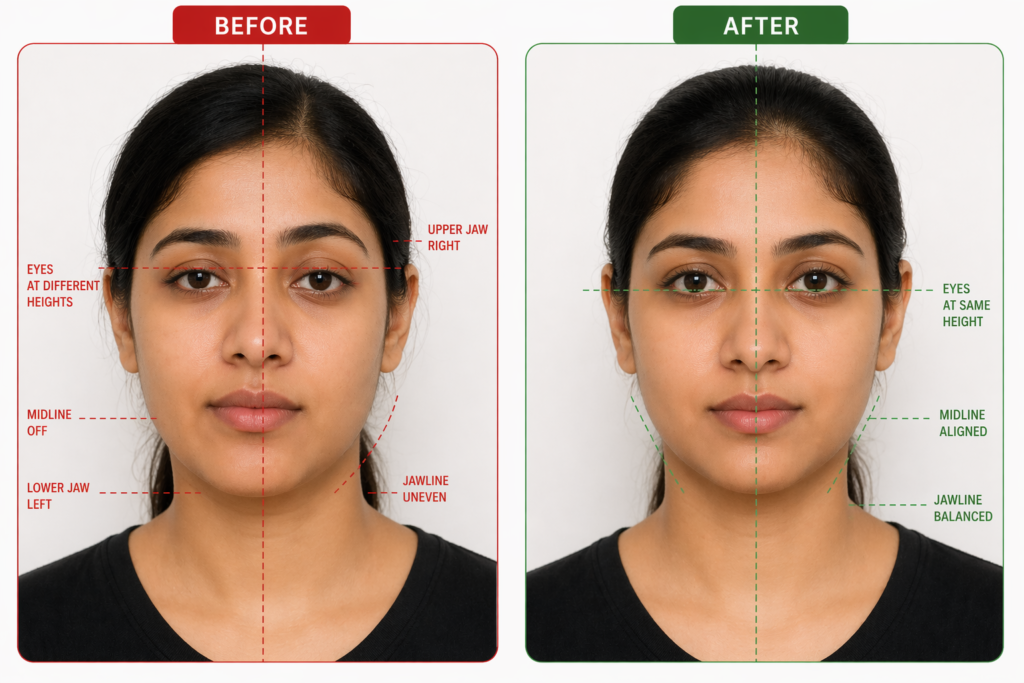
One of the most common specific patterns is one side of the face looking bigger than the other — usually tied to muscle dominance or bite imbalance.
The relationship between your teeth, bite, and facial structure is more direct than most people realise. When teeth are misaligned, missing, or when the jaw develops unevenly on one side, the muscles of the jaw adapt — working harder on one side than the other. Over months and years, this produces visible differences in jaw width, cheek fullness, and even the height of the lower face. Conditions like malocclusion (a misaligned bite), unilateral tooth loss, and TMJ disorder all contribute to this pattern. This is also why correcting dental alignment — through braces, clear aligners, or bite adjustment — often visibly improves facial balance without any cosmetic procedure.
How to identify this cause: asymmetry is more pronounced in the lower half of the face, you notice jaw clicking or pain on one side, or you’ve had a tooth extracted and noticed a change afterward.
If jaw misalignment or dental issues may be behind your asymmetry, a dental assessment is the right first step — not a cosmetic procedure. At Dr Gowds Dental Hospital, specialists use digital imaging to evaluate how your bite affects facial balance.
Some habits—like always sleeping on the same side or chewing just on one side—can slowly change your face as you get older. Over time, the muscles and tissues adapt in small ways, and you might notice more asymmetry.
Accidents, nerve problems, or conditions like Bell’s palsy can suddenly change your face’s appearance. If one side droops or hurts out of nowhere, don’t wait—see a doctor right away.
Bruxism (teeth grinding), chronic jaw clenching, mouth breathing, and incorrect tongue posture each place uneven mechanical stress on the face’s muscles and bones. Grinding, in particular, tends to be worse on one side — causing the masseter muscle on that side to hypertrophy (bulk up), creating a visibly wider or more prominent jaw on one side. Mouth breathing changes how the tongue rests, which over time affects palate development and midline alignment. These are habits, not structural conditions — which means they are among the most correctable causes of facial asymmetry when identified early.
How to identify this cause: you wake with jaw soreness or headaches, your partner reports grinding sounds, or your dentist has noted tooth wear patterns.
Minor: Barely noticeable → normal, no treatment needed
Moderate: Visible but not functional → lifestyle or orthodontic options
Significant: Affects chewing, speech, or appearance → requires specialist evaluation
Many people notice their asymmetry in selfies or videos.
This is due to:
Cameras do not replicate how others see you in real life.
Yes — but gradually.
Yes — but gradually.
Seek urgent care if you notice:
These may indicate nerve-related or neurological conditions.
Throughout history, symmetry has often been linked with beauty. Many people subconsciously perceive symmetrical faces as more attractive or “balanced.” However, total symmetry is extremely rare in nature.
A touch of asymmetry adds character and individuality. In fact, many admired celebrities have distinct asymmetrical features that make them stand out. So, while understanding why my face looks asymmetrical is useful, it’s just as important to recognize that beauty is not defined by perfect balance.
If you want to do something about your face looking uneven, the right fix depends on what’s causing it and how noticeable it is. Here are the main approaches, from simple tweaks to more serious options:
If muscle habits are behind your asymmetry, these targeted exercises are the most effective at-home starting point — see the full exercise guide for step-by-step instructions.”
For many people, dental misalignment is the hidden cause of facial asymmetry. At Dr Gowds Dental Hospital, experts use digital imaging and orthodontic evaluation to determine how teeth and jaw position affect your facial balance. Corrective procedures such as braces, aligners, or bite adjustments can significantly enhance facial symmetry.
Dermal fillers or fat grafting can correct volume loss on one side of the face. These non-surgical treatments help contour and balance the features without major downtime.
In cases of a very asymmetrical face, where bone or jaw differences are significant, surgical intervention may be necessary. Options include orthognathic (jaw) surgery, chin reshaping, or rhinoplasty. These procedures are customized to restore both function and harmony.
If you’ve noticed a sudden or severe change in your facial structure, or if asymmetry is causing functional problems like jaw pain or difficulty chewing, it’s essential to consult a qualified medical or dental specialist. Early assessment prevents complications and helps plan safe, effective treatment.
Not sure which treatment applies to your situation? Our specialists in Hyderabad can assess your specific type of asymmetry — including whether the cause is dental, muscular, or structural — and recommend the most appropriate path, whether that’s exercises, orthodontics, or specialist referral.
A very asymmetrical face isn’t just a cosmetic concern. It can affect chewing, speech, or even self-confidence. Diagnosing its root cause often involves detailed scans and examinations to study bone, muscle, and dental relationships.
Treatment usually follows a structured plan — correcting function first, then enhancing aesthetics. In all cases, results are best when managed by experienced professionals who understand the balance between facial structure and smile design.
If you’re worried about why my face looks asymmetrical or want to explore how to fix asymmetrical face issues, it’s best to get a professional evaluation. Dr Gowds Dental Hospital in Hyderabad offers expert consultations and modern solutions for both minor and very asymmetrical face cases.
If you’re concerned about facial asymmetry — whether it’s been lifelong or has recently become more noticeable — the most useful thing you can do is understand its cause. Dr. Gowds Dental Hospitals, Hyderabad, offers specialist assessments combining dental imaging, jaw evaluation, and facial balance analysis.
A lot of people wonder about this. The truth is, everyone’s face is a little asymmetrical. It usually comes down to your bone structure, how you use your facial muscles, or even small differences in your teeth. It’s totally normal and almost never something to worry about.
There are a few things you can try. Work on your posture, switch up the side you sleep on, and try to chew evenly on both sides. Some people see changes with facial exercises, good skincare, or even using makeup to contour. If your teeth are the issue, an orthodontist can help straighten things out.
If someone has a very noticeable asymmetry, it can be from jaw or bone problems, an old injury, or something they were born with. Sometimes, fixing this means surgery or orthodontic work, especially if it affects how the face works or looks.
Absolutely. Dentists and orthodontists can adjust how your teeth fit together, and that often brings better balance to your face. At Dr Gowd’s Dental Hospital, they look at how your jaws, teeth, and face all fit together to get the best results.
Yes, it does. As you age, your skin gets looser, muscles aren’t as strong, and your bones slowly change shape. All of that makes any unevenness in your face stand out more than it used to.
 Gachibowli Branch