

Schedule Appointment


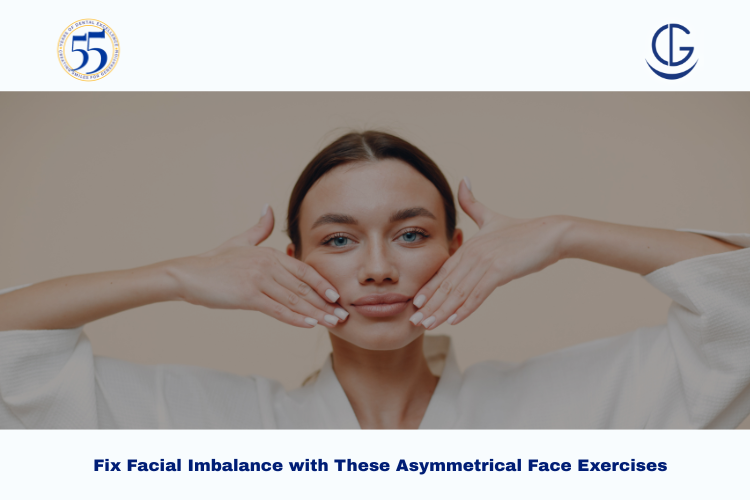
Asymmetrical face exercises are targeted facial movements that may help with muscle awareness, coordination, and posture-related differences in some people. Practise consistently, exercises like cheek lifts, jawline resistance presses, and tongue push-ups may help with certain muscle- or habit-related differences, although they cannot correct every cause of facial asymmetry. At Dr. Gowds Dental Hospitals in Hyderabad, our specialists combine expert dental care with practical guidance to help you achieve a more balanced, confident look.
Medically Reviewed by: Prof. Dr. Snigdha Gowd, MDS (Orthodontics & Dentofacial Orthopaedics)
Most people don’t realise just how common facial asymmetry truly is. Some degree of difference from one side of the face to the other is completely normal and expected. However, once that asymmetry becomes more significant, it can affect your confidence and daily comfort. The good news? Targeted exercises may help in selected cases where muscle use, posture, or habits contribute to the appearance of asymmetry. They cannot correct genetic bone structure or major skeletal differences.
At Dr. Gowds Dental Hospitals, Hyderabad's leading destination for dental and facial wellness, we offer expert guidance on how to address facial imbalance naturally and safely. This blog walks you through 5 powerful facial exercises for symmetry that you can practise at home — along with remedies to fix an uneven jawline naturally and reduce the root causes of facial asymmetry.
Ready to start your journey to a more balanced face?
Before anything else, this is worth addressing because it confuses almost everyone. The face you see in a mirror and the face in a photograph are literally mirror images of each other — and because your face is not perfectly symmetrical, these two images look noticeably different.
When you look in a mirror, you see a horizontally flipped version of yourself. Your brain has seen this version your entire life and considers it "normal." The moment someone takes a photograph, it captures your face as others actually see you — the non-flipped version — and that subtle difference can feel jarring or exaggerated.
Key point: If you think your asymmetry looks worse in photos than in real life, it is not necessarily that your face has changed. a photo shows a non-mirrored view, but camera distance, lens type, angle, lighting, and image processing can all affect how facial proportions appear. The good news is that what looks dramatic to you often goes largely unnoticed by others.
That said, photographs do sometimes exaggerate asymmetry due to camera angle (shooting slightly from one side), lighting (shadow on one side makes it appear recessed), and lens distortion (wide-angle or phone cameras distort facial proportions at close range). For the most accurate self-assessment, use a front-on photo taken at eye level, in even natural light, with a camera held at least 60 cm from your face.
Facial asymmetry is the measurable or visible difference in shape, volume, or position between the left and right sides of the face. A mild degree of asymmetry is universal — no human face is perfectly symmetrical. Clinically significant asymmetry, however, occurs when structural or muscular imbalance becomes visible to the naked eye and may affect chewing, jaw comfort, or self-confidence.
Understanding the root cause of your facial asymmetry is essential before starting exercises, because exercises only address muscular causes — not bone or dental structural ones.
Genetics and bone structure
Inherited differences in jaw bone size, cheekbone prominence, or orbital socket depth are structural and cannot be corrected by exercise alone. These require dental or orthodontic evaluation.
Habitual one-sided chewing
Habitual one-sided chewing may be associated with differences in muscle use, but visible facial asymmetry should not automatically be attributed to chewing preference alone. Dental pain, missing teeth, bite differences, or TMJ-related symptoms may also influence chewing patterns.
Small daily habits add up. → The everyday habits quietly affecting your facial symmetry
Poor posture and sleep position
Posture and sleep position may influence temporary soft-tissue appearance, muscle tension, or how the head is held, but they are not established causes of major structural facial asymmetry in adults.
📱 Spending hours on your phone or laptop? → How screen time contributes to facial asymmetry
Dental misalignment (malocclusion)
An uneven bite, missing teeth, or an improperly fitted dental appliance may affect how the teeth meet and, in selected cases, may contribute to an apparent functional shift during jaw closure. This requires dental correction in addition to exercises.
Facial muscle weakness or nerve-related changes
Weakness on one side from conditions like Bell's palsy, past injury, or prolonged disuse can cause visible drooping or reduced volume. Exercise or rehabilitation may sometimes be part of recovery, but nerve-related facial weakness should be medically evaluated before starting a self-directed exercise programme.
Tongue posture
Tongue posture can be relevant to oral function and swallowing patterns, particularly during growth. However, there is not enough evidence to claim that changing tongue posture in adults can correct facial asymmetry or reshape the jaw.
Structural and developmental causes
Some asymmetry is bony and structural — the underlying skeleton developed slightly differently on each side. This is normal and universal to some degree. At the more significant end, conditions like hemifacial microsomia (underdevelopment of one side) or prior facial fractures create structural differences that exercises cannot meaningfully change. If your asymmetry has been present since childhood and has not changed, it is likely structural.
🔎 Want the complete list of causes? → 9+ reasons your face may look asymmetrical
| Cause | Who it typically affects | What you notice | Can exercises help? |
|---|---|---|---|
| Chewing on one side | Adults, any age | One jaw angle visibly larger | Possibly, if a muscle-use difference is contributing |
| Sleep position | Side sleepers | One side puffier, skin texture difference | Usually temporary appearance effects |
| Bite misalignment | Anyone with dental issues | Lower face shifted, jaw discomfort | Limited — dental treatment needed |
| Posture / head tilt | Desk workers, phone users | Neck tension, one shoulder higher | May help with posture-related appearance or tension |
| Muscle dominance | Anyone with side preference | One cheek/jaw angle fuller | Yes, with targeted work |
| Structural/developmental | Present from childhood | Bone-level size difference | No — medical assessment needed |
🧘 Prefer a full guided routine? → Try our complete face yoga guide for asymmetrical faces

Purpose: Tone cheek muscles and correct uneven fullness.
How to Do It:
Benefits: Helps correct facial imbalance and improve facial symmetry at home by strengthening underused cheek muscles.

Purpose: Strengthen jaw muscles to reduce visible asymmetry.
How to Do It:
Benefits: Targets uneven jaw alignment and reduces one-sided facial muscle weakness, key for asymmetrical face correction.

Purpose: Lift and firm sagging skin and promote symmetry.
How to Do It:
Benefits: This face yoga for asymmetry technique improves eye-level balance and relieves tension that contributes to asymmetry.

Purpose: Improve muscle coordination and reduce side dominance.
How to Do It:
Benefits: Strengthens jaw and cheek coordination. Great for those experiencing facial asymmetry from tongue posture issues.

Purpose: Improve posture-related asymmetry.
How to Do It:
Benefits: Reduces neck tension that can cause asymmetrical face through muscular imbalance or poor head posture.
An uneven jaw appearance can have muscular, dental, skeletal, TMJ-related, or soft-tissue causes. Muscle use is only one possible factor.
There is no reliable universal timeline for visible facial-symmetry changes from exercises.
The honest answer is: it depends on what is causing yours.
Exercises may be helpful when muscle coordination, posture, or rehabilitation is part of the problem, but the amount of visible change is variable.
What exercises cannot fix: Bone-level structural differences, bite misalignment, missing tooth bone loss, or TMJ displacement. If your asymmetry has a dental or skeletal cause at its root, exercises may help the muscle component but will not address the underlying issue. Getting a dental assessment alongside any exercise programme is the most efficient path to real improvement.
That said, even in cases where a dental issue is the primary driver, exercises are a valuable complement to treatment. Strengthening the weaker side, improving posture, and correcting habitual chewing patterns all support and extend the results of any clinical intervention.
If you have been doing facial exercises consistently for three months without seeing any change at all, that is a signal that the cause is likely structural or dental rather than muscular — and professional assessment will give you a clearer picture.
"How to fix asymmetrical face without surgery" is one of the most common searches in this space — and for good reason. Most people are not looking for an operation. They want to know whether there is a meaningful non-surgical path, and if so, what it actually involves.
The honest answer is that for the majority of people with moderate facial asymmetry driven by muscle, habit, posture, or dental factors, conservative approaches can produce genuinely meaningful improvement — without surgery, without injections, and without significant cost.
Most facial asymmetry is benign and manageable. But there are specific signs that mean you should seek professional assessment before or alongside any home exercises.
See a dental or medical professional if:
- The asymmetry has developed or worsened noticeably over months rather than years
- You have pain on one side of the jaw, clicking or locking of the jaw joint, or pain when chewing
- One side of your face feels numb, tingly, or weak (this can indicate nerve involvement)
- You have swelling on one side with no obvious cause (dental abscess, salivary gland issue, or lymph node swelling all need ruling out)
- The asymmetry is accompanied by difficulty opening or closing your mouth fully
- You have missing teeth and have noticed your lower face shifting to one side over time
- Three months of consistent home exercise has produced no change at all
⚠️ Wondering if your asymmetry needs medical attention? → When to worry about facial asymmetry
At Dr. Gowds Dental Hospitals in Hyderabad, our assessment for facial asymmetry covers bite analysis, jaw joint evaluation, dental X-rays, and a muscle function assessment — helping assess whether dental, bite-related, joint, muscular, or structural factors may be contributing to improvement looks like for your specific case.
🚨 Noticed a sudden or severe change? → Very asymmetrical face — when to see a doctor
It is normal to have some facial asymmetry as part of being human, but significant asymmetry can cause a dent in confidence. The good news is that through focused asymmetrical face exercises, you can begin to address many of the issues from the comfort of home.
These simple asymmetrical face exercises, along with face yoga for asymmetry, healthy lifestyle changes, and expert help when necessary, will assist you in restoring your facial imbalance naturally.
If you are looking for advanced care, For both dental alignment and asymmetrical face correction, In Hyderabad,a trustworthy partner for asymmetrical facial correction and dental alignment is Dr. Gowds Dental Hospitals. Make an appointment for your consultation now to start down the path to a more confident and balanced you!
📍 Ready for expert, in-person care? → Asymmetrical face treatment in Hyderabad at Dr. Gowds Dental
Visit us at-
Dr gowds dental hospital Nanakramguda
Dr gowds dental hospital Gachibowli
Dr gowds dental hospital madhapur
The mirror shows a horizontally flipped version of your face — the version you have always seen. A photograph shows your face as others actually see it. Because no face is perfectly symmetrical, these two images look different, and the unfamiliar version (the photo) feels more "wrong" than the mirror version. Camera angle, lens distortion, and lighting can also exaggerate asymmetry in photos. This does not mean your asymmetry has worsened — it is a visual perception effect.
Facial exercises may help with muscle awareness, coordination, or rehabilitation in selected cases, but evidence for permanently changing facial symmetry in healthy adults is limited. They cannot correct skeletal asymmetry or major bite-related problems.
The appropriate approach depends on the cause. Dental treatment, orthodontics, TMJ-related care, physiotherapy, or observation may be appropriate in different cases. Exercises alone cannot correct major skeletal jaw asymmetry.
Face yoga may improve muscle awareness or provide temporary changes in muscle tone, but evidence that it permanently corrects facial asymmetry is limited.
There is no single exercise proven to produce the fastest facial-symmetry change. The correct approach depends on the cause of the asymmetry.
There is no standard timeline. Visible change, if any, depends on the cause, the type of exercise, and individual response.
If your asymmetry has changed rapidly (over weeks, not years), is accompanied by pain, numbness, or jaw locking, or has not responded at all to three months of consistent exercise, seek professional assessment. Also see a dentist if you have missing teeth, bite problems, or jaw joint pain on one side — these will not resolve through exercise alone.
They may help with muscle-related differences in selected cases, but they cannot correct skeletal jaw asymmetry or significant bite problems.
There is no proven fastest natural method. Identifying whether the asymmetry is dental, skeletal, muscular, TMJ-related, or temporary is more important than choosing a specific exercise.
 Gachibowli Branch