

Schedule Appointment


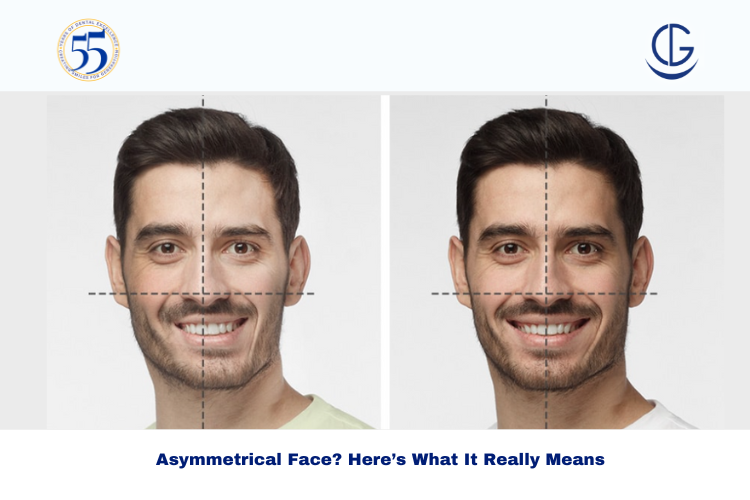
If you’ve caught yourself asking why my face looks asymmetrical — after noticing one eye sitting slightly higher, a cheek that appears fuller on one side, or a jawline that doesn’t quite match — you’re not imagining it, and you’re far from alone. Facial asymmetry is nearly universal. Some degree of facial asymmetry is common, and perfectly matched facial features are unusual.
What most guides won’t tell you is that the cause matters enormously. Some appearance differences related to muscle use or everyday habits may be influenced by behavioural changes, although exercises cannot correct every cause of facial asymmetry, particularly structural or skeletal differences. Asymmetry caused by jaw misalignment or dental issues — one possible contributor— often requires dental assessment to address properly. And asymmetry that appears suddenly can occasionally signal something that needs urgent medical attention.
In this guide, reviewed by Prof. Dr. Snigdha Gowd (MDS, Orthodontics & Dentofacial Orthopaedics), we break down each cause clearly — so you know exactly what you’re dealing with and what options actually apply to your situation.
A symmetrical face means both sides mirror each other closely — in structure, muscle tone, and proportion. However, no one has perfect symmetry. Minor differences are completely natural and can even make a face more unique and expressive.
When someone wonders “why my face looks asymmetrical,” it usually means they’ve noticed more significant imbalances that make one side appear distinctly different from the other. This can range from a subtle tilt to a very asymmetrical face that impacts appearance or function.
It is common to notice small differences in your own face more closely than other people do. You see your reflection repeatedly in mirrors, selfies and video calls, so subtle differences in your jawline, cheeks, eyes or smile can become very familiar to you.
Other people usually see your face as a whole rather than examining individual features for symmetry. Mild facial asymmetry may therefore feel much more obvious to you than it appears during everyday conversations.
Photos can also make these differences seem stronger. Camera distance, lens distortion, lighting, facial expression and the difference between a mirrored image and a photograph can all change how balanced your face appears.
However, how noticeable facial asymmetry is depends on its degree and underlying cause. More pronounced differences involving the jaw, bite or facial movement may be easier to notice and can sometimes have functional effects as well.
Mild asymmetry without pain or functional problems is common. An evaluation becomes more useful when facial asymmetry is associated with jaw discomfort, bite changes, difficulty chewing, changes in facial movement, or when the asymmetry has become noticeably worse over time.
If your concern appears to involve the teeth, bite or jaw, a dental or orthodontic assessment can help determine whether there is a treatable underlying cause.
Knowing what’s behind “why my face looks asymmetrical” helps you figure out if it’s just your natural look or if you should check in with a doctor or specialist.
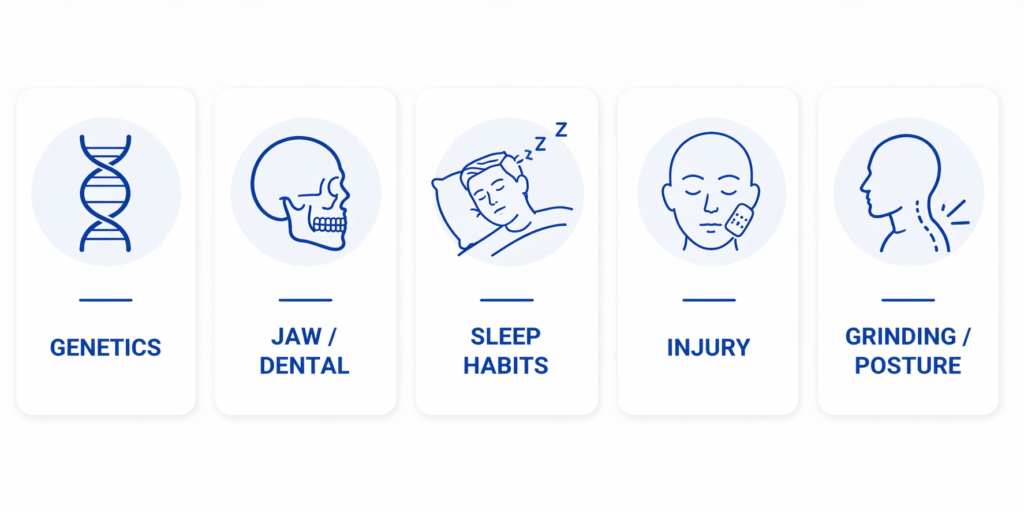
A lot of it comes down to your genes. You might have inherited a slightly smaller eye or a jawline that sits lower on one side. Some developmental conditions can make these differences bigger.
One of the most common specific patterns is one side of the face looking bigger than the other — usually tied to muscle dominance or bite imbalance.
The relationship between your teeth, bite, and facial structure is more direct than most people realise. Teeth, bite relationships and jaw development can contribute to facial imbalance in some people. For example, significant bite discrepancies, dental midline differences, missing teeth or jaw-position differences may affect how the lower face appears or functions. The extent to which these factors influence visible facial symmetry varies from person to person. Conditions like malocclusion (a misaligned bite), unilateral tooth loss, and TMJ disorder all contribute to this pattern. This is also why when facial imbalance has a dental or bite-related component, orthodontic or dental treatment may help address that underlying problem. The amount of visible facial change depends on the cause and severity of the asymmetry.
Possible signs that dental or jaw factors may be involved include:
These signs do not confirm the cause on their own; an examination may be needed to distinguish dental, muscular and skeletal factors.
Habits such as chewing predominantly on one side, jaw clenching and posture may influence muscle use or how facial imbalance appears in some people. The effect of sleeping position on long-term facial symmetry is less straightforward and should not be assumed to be the main cause of an uneven face.
Accidents, nerve problems, or conditions like Bell’s palsy can suddenly change your face’s appearance. If one side droops or hurts out of nowhere, don’t wait—see a doctor right away.
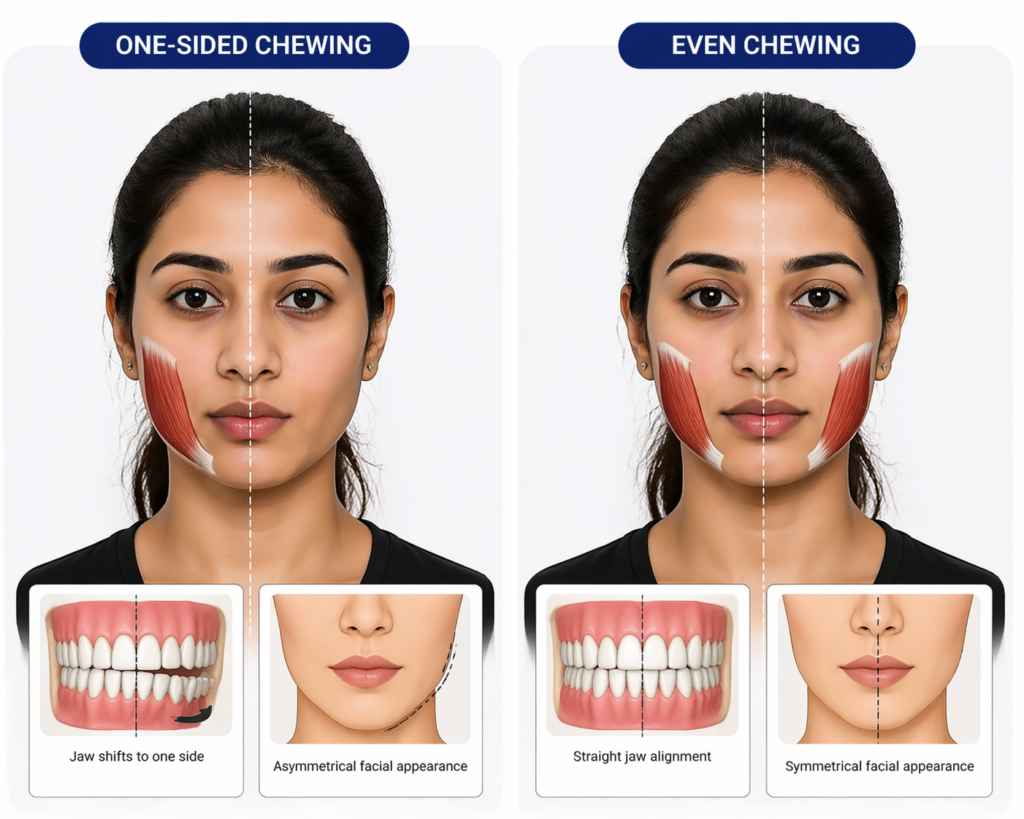
Bruxism (teeth grinding), chronic jaw clenching, mouth breathing, and incorrect tongue posture each place uneven mechanical stress on the face’s muscles and bones. Grinding, in particular, tends to be worse on one side — causing the masseter muscle on that side to hypertrophy (bulk up), creating a visibly wider or more prominent jaw on one side. Mouth breathing changes how the tongue rests, which over time affects palate development and midline alignment. These are habits, not structural conditions — which means they are among the most correctable causes of facial asymmetry when identified early.
How to identify this cause: you wake with jaw soreness or headaches, your partner reports grinding sounds, or your dentist has noted tooth wear patterns.
If you’re looking specifically for at-home approaches, see our guide to exercises and natural approaches for an asymmetrical face.
Many people notice their asymmetry in selfies or videos.
This is due to:
A camera image can differ from how your face appears in person because lens type, distance, lighting and image orientation all affect facial proportions.
For a deeper explanation, see why your face can look more asymmetrical in photos and videos.
Yes — but gradually.
Seek urgent care if you notice:
These may indicate nerve-related or neurological conditions.
Facial symmetry is often discussed in relation to appearance, but perfect symmetry is not a realistic standard. Small differences between the two sides of the face are common and contribute to individual facial characteristics. The more useful question is whether the asymmetry is simply an appearance difference or is associated with jaw, bite, movement or functional concerns.
The right treatment for facial asymmetry depends on what is causing the imbalance. There is no single solution that works for everyone. In some people, the main cause may be related to muscle habits or posture, while in others it may involve the teeth, bite, jaw position, or underlying facial structure.
For that reason, the first step is to identify whether the asymmetry is mainly dental, muscular, skeletal, or soft-tissue related. Once the cause is clear, treatment can be planned more accurately.
If facial imbalance is linked to habits such as chewing mainly on one side, posture, jaw clenching, or muscle overuse, correcting those habits may help reduce the imbalance over time.
Simple measures may include:
These approaches may help with habit-related or muscular imbalance, but they cannot correct every type of facial asymmetry.
For more detailed guidance, see our guide on exercises and natural approaches for an asymmetrical face.
When facial asymmetry has a dental or bite-related component, orthodontic or dental treatment may help address the underlying problem. Depending on the diagnosis, this may involve braces, clear aligners, bite correction or other dental treatment. The amount of visible facial change depends on whether the asymmetry is primarily dental, muscular or skeletal.
Learn more about facial asymmetry treatment in Hyderabad.
Some types of facial imbalance can be managed without surgery, particularly when the cause involves dental alignment, bite relationships, jaw function or selected soft-tissue differences. The appropriate option depends on the underlying diagnosis rather than appearance alone.
See our complete guide to non-surgical treatments for an asymmetrical face.
Significant skeletal or jaw-related asymmetry may require assessment by an appropriate specialist. In selected cases, orthognathic or other surgery may be considered when structural differences affect bite, jaw function or facial balance. Surgery is not required for most mild facial asymmetry.
A very asymmetrical face can have different causes. In some people, the difference is mainly cosmetic, while in others it may be related to the jaw, bite, teeth, muscles, or facial bones.
The amount of visible asymmetry alone does not always indicate how serious the problem is. A mild-looking difference can sometimes be associated with a bite or jaw issue, while a more noticeable difference may not cause any functional problems.
Professional evaluation is especially useful if you notice:
The goal of assessment is to identify the underlying cause before deciding whether treatment is needed.
If you are concerned about why your face looks asymmetrical, the most useful next step is to understand the cause.
At Dr. Gowds Dental Hospitals in Hyderabad, an evaluation can assess whether teeth, bite or jaw-related factors may be contributing to facial asymmetry and whether dental or orthodontic treatment is appropriate.
Book a facial asymmetry consultation to understand whether your concern is mainly dental, muscular, functional, or structural.
Facial asymmetry can develop for many reasons other than injury. Natural bone structure, jaw growth, muscle use, bite differences, tooth alignment, and everyday habits can all contribute to one side of the face looking different from the other.
Mild facial asymmetry may be more noticeable to you because you see your face frequently and tend to focus on small differences. Other people usually see your face as a whole rather than comparing both sides closely. More pronounced asymmetry may be easier to notice, especially if it affects the jaw, smile, or facial movement.
Dental or orthodontic treatment may help when facial asymmetry is related to tooth position, bite imbalance, or jaw function. Treatment may include braces, aligners, bite correction, or other dental approaches depending on the cause.
Some causes of facial asymmetry can be managed without surgery. Options depend on whether the main issue involves dental alignment, bite relationships, jaw function, muscle use or soft-tissue differences.
It can become more noticeable in some people as facial tissues, muscle tone, and bone structure change with age. However, this varies from person to person and depends on the original cause of the asymmetry.
Facial asymmetry should be evaluated if it is getting worse, affects chewing or bite function, causes jaw pain, or is associated with changes in facial movement. Sudden facial drooping, weakness, numbness, or speech difficulty should be treated as a medical emergency.
 Gachibowli Branch