Schedule Appointment

Success Thank you for booking an appointment
Close
By submitting also accept the cookies for better engagement Get help Consult Doctor

Is Teeth Decay Always Painful?

Teeth decay pain is one of the most common reasons people in Hyderabad rush to a dentist, but here’s the surprising truth: tooth decay can grow quietly for weeks or even months without hurting at all.

If you’ve been delaying a check-up because “it doesn’t hurt,” this blog is for you. At Dr Gowds Dental Hospitals, we regularly see patients who felt “nothing” and still had cavities that needed treatment. Early action is usually simpler, faster, and more comfortable.

If you’re unsure whether you have decay—or you suspect painless tooth cavities—book a consultation at Dr Gowds Dental Hospitals today.. If bite issues or crowding are contributing to repeated cavities, you can also talk to an orthodontist and explore aligner treatment options as part of long-term prevention.

Why Teeth Decay Doesn’t Always Hurt

Many people assume cavities equal pain. That assumption is understandable—but not always true. Teeth decay pain typically shows up only after decay reaches deeper layers of the tooth where nerves become irritated.

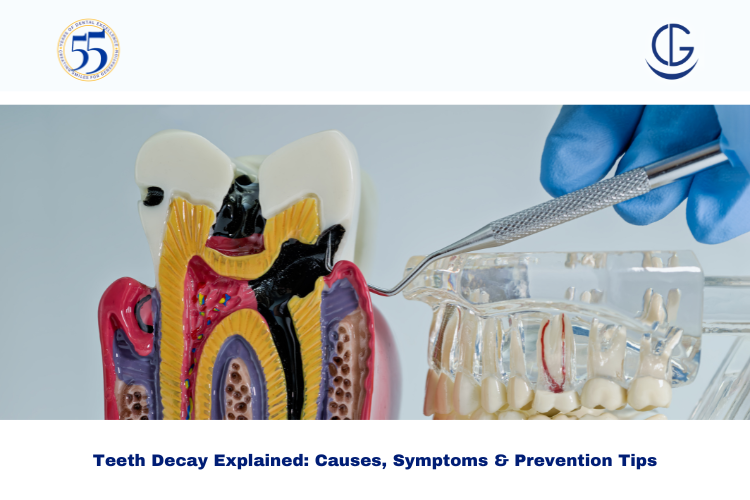
A tooth has layers:

  • Enamel (hard outer layer): no nerves, so early decay is often painless
  • Dentin (middle layer): has tiny tubules that can trigger sensitivity
  • Pulp (inner nerve/blood supply): when decay reaches here, pain can become intense

The key takeaway

You can have painless tooth cavities when decay is still in the enamel or early dentin stage. Pain often means the cavity has progressed.

Early Tooth Decay vs Advanced Tooth Decay Pain

Early-stage decay (often painless)

In the early stage, you might notice:

  • A faint white or chalky spot on a tooth
  • Mild sensitivity to sweets (sometimes)
  • Food getting stuck in one area more often
  • No pain at all

This is where painless tooth cavities can mislead people into waiting.

Mid-stage decay (sensitivity begins)

As decay enters dentin, you may feel:

  • Sensitivity to cold or sweet foods
  • A brief “zap” sensation
  • Discomfort that comes and goes

Late-stage decay (classic teeth decay pain)

When decay reaches the pulp:

  • Pain may be sharp, throbbing, or constant
  • Pain can worsen at night
  • Chewing may hurt
  • Swelling or a bad taste may appear (possible infection)

Signs of Decay Even When There’s No Pain

If you’re not feeling teeth decay pain, watch for these quiet signals:

  • Food trapping between teeth repeatedly
  • Bad breath that doesn’t improve with brushing
  • Dark spots or pits on a tooth
  • Sensitivity to cold, hot, or sweets
  • Rough edges or a “hole” you can feel with your tongue
  • Bleeding gums around a tooth that traps food (sometimes linked to decay + gum irritation)

In Hyderabad, we often see this pattern in people who:

  • Snack frequently during office hours
  • Sip tea/coffee multiple times a day
  • Have late-night meals and fall asleep without brushing
  • Have crowded teeth that are hard to clean

Why Tooth Decay Can Be Painless in Many Hyderabad Patients

Here are the most common reasons cavities don’t hurt early:

The cavity hasn’t reached the nerve

As mentioned, enamel has no nerves. So decay can expand quietly.

The cavity is on a “hidden surface”

Some cavities form:

  • Between teeth (interproximal decay)
  • Under old fillings
  • Near the gumline
  • On back molars where visibility is poor

These areas can develop painless tooth cavities for a long time.

The nerve slowly “adapts” until it can’t

Gradual decay can sometimes create mild, ignored signals—until suddenly the pain becomes severe.

Your pain threshold varies

Two people can have the same cavity and very different symptom experiences.

Common Questions: If It Doesn’t Hurt, Do I Still Need Treatment?

Yes—because waiting can change a simple filling into a more complex (and costly) procedure.

Here’s how treatment typically escalates:

  • Early decay → fluoride guidance / preventive plan (in selected cases)
  • Small cavity → tooth-coloured filling
  • Deep cavity → possible onlay/inlay or advanced restoration
  • Nerve involvement → root canal + crown
  • Severe infection → emergency care, sometimes extraction + replacement

If you’re aiming to avoid teeth decay pain, early detection is your best strategy.

What Causes Teeth Decay Pain to Start Suddenly?

A cavity can feel “fine” and then suddenly become painful due to:

  • Cavity depth reaching the pulp
  • Cracks that expose inner layers
  • Bacterial infection in the nerve space
  • Chewing pressure pushing on inflamed tissues
  • Cold exposure triggering dentin tubules

If you experience sudden pain, don’t self-diagnose. A professional exam is important to confirm whether the issue is decay, a crack, gum recession, or something else.

How Dr Gowds Diagnoses Painless Tooth Cavities Accurately

To detect painless tooth cavities, dentists typically rely on:

  • Clinical examination with proper lighting and tools
  • Digital imaging when indicated (especially for between-teeth decay)
  • Checking old restorations for leakage
  • Bite evaluation (uneven bite can worsen cracks and sensitivity)

Treatment Options Depending on Whether You Have Pain or Not

If decay is painless and early

Common options include:

  • Tooth-coloured filling (most common)
  • Preventive guidance for diet and hygiene
  • Monitoring in very early, non-cavitated lesions (case-dependent)

If you have sensitivity but not severe pain

Treatment may include:

  • Filling + sealing
  • Desensitising protocols (when appropriate)
  • Bite adjustment if a high point is worsening symptoms

If you have significant teeth decay pain

Treatment depends on the diagnosis:

  • Deep filling or onlay (if nerve is not infected)
  • Root canal therapy (if nerve is affected)
  • Crown placement after strengthening the tooth

Hyderabad Lifestyle Triggers That Increase Cavities (And Why They Matter)

Local habits that frequently contribute to cavities:

  • Frequent tea/coffee + sugar
  • Snacking during commute/office hours
  • Soft drinks and packaged juices
  • Late-night eating, then skipping brushing
  • Not flossing (especially when teeth are crowded)

Where orthodontics and aligners fit in

This matters because crowded teeth can trap plaque and make brushing less effective. If you keep getting cavities in the same hard-to-clean zones, it’s worth talking to an orthodontist. In suitable cases, you can explore aligner treatment to improve spacing and cleaning access—helping reduce future decay risk.

How to Prevent Teeth Decay Pain Before It Starts

Use this practical checklist:

  • Brush twice daily with fluoride toothpaste
  • Clean between teeth (floss/interdental brush) daily
  • Reduce frequent snacking and sugary beverages
  • Rinse with water after tea/coffee
  • Don’t ignore food-stuck areas—get them checked
  • Schedule regular dental check-ups (especially if you’ve had cavities before)

If you’re in Hyderabad and want prevention tailored to your habits and bite, a consultation can help you avoid future teeth decay pain.

Conclusion

If you’re worried about teeth decay pain, or you suspect painless tooth cavities, don’t wait for symptoms to worsen. Book a consultation at Dr Gowds Dental Hospitals and visit the nearest branch in GachibowliMadhapurKotiNanakramguda. You’ll get a clear diagnosis, comfort-first treatment options, and guidance to protect your smile long-term. If alignment or crowding is contributing to recurring decay, you can also talk to an orthodontist and explore aligner treatment as a preventive step.

FAQs

1) Can I have a cavity even if I don’t have pain?

Yes. Many cavities are painless early on, especially when decay is limited to enamel. That’s why exams help catch issues before they become serious.

2) What does teeth decay pain feel like when it becomes severe?

It can feel sharp, throbbing, or constant. Some people notice pain while chewing, at night, or with hot/cold foods.

3) How do I know if I have painless tooth cavities?

Common clues include food getting stuck, bad breath, mild sensitivity, dark spots, or a rough area. A dental exam is the most reliable way to confirm.

4) Is cavity treatment painful?

Most cavity treatments are comfortable with local anaesthesia. Early cavities are usually quicker to treat than advanced decay.

5) Why should I trust Dr Gowds Dental Hospitals for cavity diagnosis and care?

Patients choose Dr Gowds for thorough diagnosis, transparent treatment planning, and comfort-focused care. Many locals consider it the Best Dental Hospital in Hyderabad for comprehensive dental services.
Leave a Reply

Your email address will not be published. Required fields are marked *

WhatsApp