

Schedule Appointment

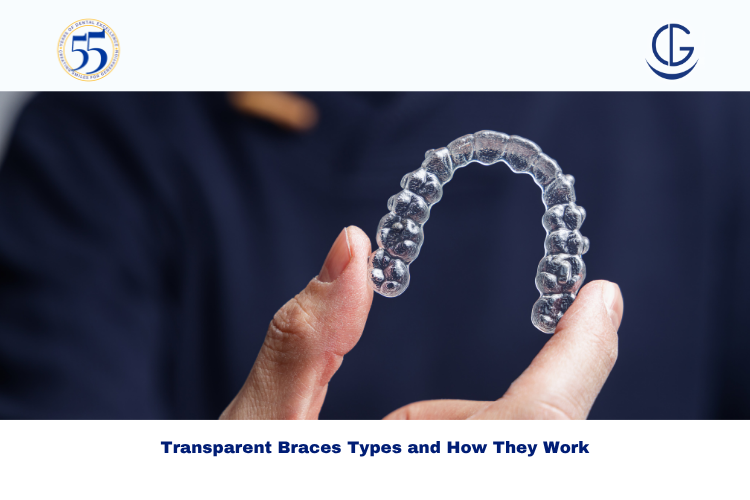
Transparent braces have transformed orthodontic treatment for millions of adults and teenagers who want straighter teeth without the social visibility of traditional metal brackets and wires. If you have been researching your options and feeling overwhelmed by the sheer variety of discreet appliances available — clear aligners, ceramic brackets, lingual braces, transparent retainers — you are not alone. At Dr Gowds Dental Hospitals, this is one of the most common areas of patient confusion we encounter during consultations. The truth is that not all transparent braces are the same appliance, not all of them work the same way, and — critically — not all of them will work equally well for your specific teeth. This guide gives you the clinical clarity you need to make a genuinely informed decision.
| Medically Reviewed by: Prof. Dr. Snigdha Gowd, MDS (Orthodontics & Dentofacial Orthopaedics) |
| 📞 Call: 08065295050 | 📅 Book an Appointment Today |
Transparent braces have moved from a niche preference to the mainstream choice for adult orthodontic treatment over the past decade — and the reasons are entirely understandable. Adult patients are far more conscious of professional and social appearance during treatment than adolescents. The idea of wearing conspicuous metal hardware during client meetings, job interviews, or family occasions is a genuine barrier for many people who would otherwise pursue the straighter smile they want.
Beyond aesthetics, transparent braces of all types tend to cause less soft tissue irritation than traditional metal brackets, and removable varieties (primarily clear aligners) allow for normal eating and oral hygiene without the restrictions imposed by fixed appliances. The result has been a dramatic expansion of the orthodontic treatment-seeking population — particularly adults in their twenties, thirties, and forties who previously felt that treatment was ‘not for them.
Before comparing specific products, it is important to understand that the term ‘transparent braces’ is used colloquially to describe three fundamentally different types of orthodontic appliance. Each works differently, suits different clinical scenarios, and comes with different cost and maintenance implications.
| 1. Clear Removable Aligners Invisalign, ClearCorrect, and domestic Indian aligner brands | |
| Material: Custom-thermoformed medical-grade polyurethane plastic, changed every 1–2 weeks | |
| Visibility: Near-invisible when worn — the most aesthetically discreet of all transparent braces options | |
| Removability: Fully removable for eating, drinking, and oral hygiene | |
| Wear time required: 20–22 hours per day minimum for effective tooth movement | |
| Best suited for: Mild to moderately complex crowding, spacing, and certain bite corrections | |
| Limitations: Compliance-dependent; less effective for severe rotations and certain vertical movements without attachments | |
| Average treatment duration: 6–18 months depending on case complexity | |
| 2. Ceramic (Tooth-Coloured) Bracket Braces Fixed appliances with clear or tooth-coloured brackets | |
| Material: Polycrystalline or monocrystalline ceramic brackets bonded to tooth surfaces, with metal or tooth-coloured wire | |
| Visibility: More visible than aligners but considerably less conspicuous than metal brackets | |
| Removability: Fixed — cannot be removed during treatment | |
| Oral hygiene: Requires diligent cleaning around brackets; food restrictions apply | |
| Best suited for: Moderate to complex orthodontic cases including significant rotations and vertical movements that push the limits of aligner capability | |
| Limitations: Ceramic brackets can stain over time (particularly with coffee, tea, and turmeric); wire may still be visible | |
| Average treatment duration: 12–24 months depending on complexity | |
| 3. Lingual Braces Fixed brackets bonded to the inner (tongue-facing) surface of teeth | |
| Material: Custom metal brackets bonded to the lingual surfaces — completely hidden from external view | |
| Visibility: Truly invisible from the front — the most discreet fixed appliance available | |
| Removability: Fixed — cannot be removed during treatment | |
| Comfort: Can cause temporary tongue irritation and speech adjustment during the first few weeks | |
| Best suited for: Complex orthodontic cases in patients for whom aesthetics are the absolute priority and clear aligners are not clinically appropriate | |
| Limitations: Higher cost than other transparent braces options; requires a specialist trained in lingual appliances; oral hygiene is more challenging | |
| Average treatment duration: 12–24 months | |
The following table summarises the key clinical and practical differences between the three main categories of transparent braces to help you and your orthodontist make the right choice together:
| Feature | Clear Aligners | Ceramic Brackets | Lingual Braces |
| Visibility | Near-invisible | Low — tooth coloured | Zero — fully hidden |
| Removability | Yes — fully removable | No — fixed | No — fixed |
| Eating restrictions | None — remove to eat | Yes — hard/sticky foods | Yes — hard/sticky foods |
| Oral hygiene | Easy — remove to brush | Moderate — clean around brackets | Challenging — specialised tools needed |
| Clinical versatility | Mild to moderate cases | Moderate to complex cases | Moderate to complex cases |
| Speech impact | Minimal — mild lisp initially | None | Temporary lisp (3–4 weeks) |
| Treatment monitoring | Every 6–8 weeks | Every 4–6 weeks | Every 4–6 weeks |
| Best for | Adults, mild-moderate complexity | Moderate-complex, cost-conscious | Adults, high aesthetics priority |
The single most important factor in selecting between transparent braces options is not your preference — it is your clinical picture. A severely rotated tooth, a significant skeletal discrepancy, or a deep impinging bite may simply not respond adequately to clear aligners, regardless of how much you prefer them. At Dr Gowd’s, every patient undergoes a full clinical examination, dental photographs, OPG and lateral cephalometric radiographs, and (where indicated) digital impressions before any transparent braces recommendation is made.
Clear aligners are the most aesthetically discreet transparent braces option — but they are also the most compliance-dependent. They must be worn for 20–22 hours per day to work as planned. Patients who know they will struggle with disciplined wear, who travel frequently, or who have a tendency to remove appliances and forget them should seriously consider fixed transparent braces instead. An aligner you remove too often is less effective than a ceramic bracket you never take off.
Speech is a meaningful consideration for public speakers, teachers, lawyers, and television presenters. Clear aligners produce the mildest speech effect of all transparent braces; lingual braces cause a temporary lisp that takes 2–4 weeks to resolve. Ceramic brackets have virtually no speech impact. If you present professionally every day, discuss this explicitly with your orthodontist.
Transparent braces cost varies significantly across the three categories. Ceramic brackets are generally the most cost-effective of the discreet options, followed by clear aligners, then lingual braces. However, cost should always be evaluated in the context of clinical appropriateness — the cheapest transparent braces option that cannot correct your problem is no saving at all.
Transparent braces have made orthodontic treatment more accessible, more comfortable, and more aesthetically acceptable than at any point in the history of dentistry. But the range of options available also means that choosing the right appliance for your clinical situation matters more than ever. At Dr Gowd’s Dental Hospitals, our orthodontic team has extensive experience across all three categories of transparent braces — from Invisalign clear aligners to ceramic bracket systems and lingual appliances. We do not have a preferred product to sell you; we have a commitment to finding the option that produces the best clinical outcome for your specific teeth. Come in for an assessment, and let us build a treatment plan that genuinely fits both your clinical needs and your life.
| Book Your Transparent Braces Consultation at Dr Gowd’s Dental Hospitals — Full Clinical Assessment, Honest Recommendation, Clear Pricing.You can visit any of our Hyderabad branches: Gachibowli, Madhapur, Koti, Nanakramguda |
Yes — when the appropriate type of transparent braces is selected for the clinical case. Ceramic brackets are biomechanically equivalent to metal brackets. Clear aligners achieve excellent results for mild to moderate cases and, with attachments, can manage many complex movements. The key is correct patient selection, not the appliance material.
Treatment duration varies by case complexity more than by appliance type. Mild clear aligner cases can complete in 6–8 months. Complex fixed appliance cases — ceramic or lingual — may take 18–24 months. Your Dr Gowd’s orthodontist will give you a realistic estimate after a full clinical assessment.
Clear aligners may produce a mild lisp in the first few days of wearing each new tray — this resolves quickly as the tongue adapts. Lingual braces produce a more significant temporary lisp that typically resolves within 2–4 weeks of placement. Ceramic brackets have no meaningful impact on speech.
Yes — in many cases. Clear aligners with precision bite ramps and Class II elastics manage a range of overbite presentations. Ceramic and lingual fixed appliances handle the full range of malocclusions that metal braces can address.
Transparent braces cost at Dr Gowds is provided as a complete, itemised treatment package after your initial clinical assessment — never as a vague estimate before we understand your clinical needs. We offer all three categories of discreet orthodontic appliances and will recommend the option that delivers the best outcome for your specific case and budget.
Yes — without exception. Teeth have a natural tendency to drift back toward their pre-treatment position after any orthodontic appliance, including transparent braces. A retention protocol — typically nightly removable retainers, sometimes supplemented by a fixed lingual wire — is essential to preserve your result long-term.
 Gachibowli Branch