

Schedule Appointment

If you are considering replacing a missing tooth, one of the first questions you will probably ask is:
“How long do dental implants last?”
The short answer is:
Dental implants are designed to last 20–25 years or longer, and many last a lifetime.
In fact, dental implants are currently the longest-lasting tooth replacement option available in modern dentistry.
However, implant lifespan is not automatic. Some implants last decades without problems, while others fail much earlier due to poor oral hygiene, smoking, gum disease, or inadequate bone support.
Understanding what affects dental implant longevity helps you:
At Dr. Gowds Dental Hospitals, patients commonly ask whether implants are truly permanent. The answer depends on several important factors — and this guide explains them in detail.
Modern dental implants have extremely high long-term survival rates.
Research studies following implant patients for 10–20 years consistently report success rates between 90–97%.
On average:
This is why dental implants are considered a long-term solution rather than a temporary fix.
Unlike dentures or bridges, implants integrate directly with the jawbone, creating stable support that can remain functional for decades.
In many patients, yes.
The titanium implant post placed inside the jawbone can potentially last a lifetime if:
However, it is important to understand that the visible crown attached to the implant experiences wear over time from chewing and grinding.
The crown may eventually require replacement after many years, but this does not mean the implant itself has failed.
For many patients, replacing the crown after 15–20 years is a simple maintenance procedure.
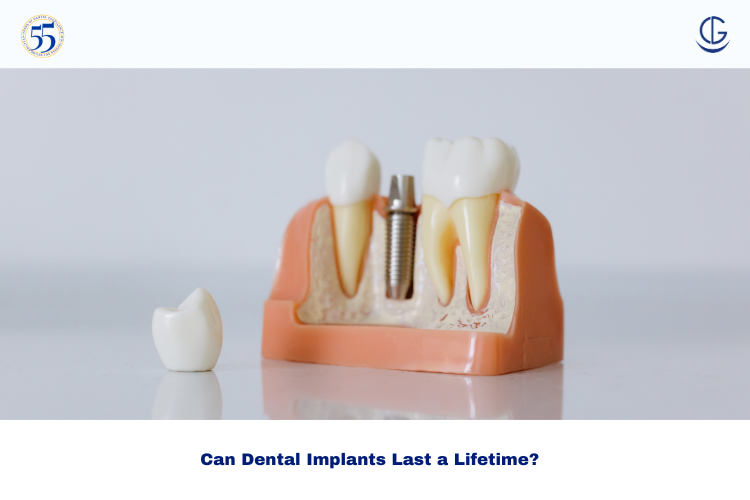
Dental implants are unique because they replace the tooth root, not just the visible tooth.
After placement, the titanium implant fuses with the jawbone through a biological process called osseointegration.
This creates:
Once fully healed, a successful implant functions similarly to a natural tooth root.
This is one major reason why implants last significantly longer than bridges or dentures.
Although implants are highly durable, their lifespan depends on several important factors.
One of the biggest factors affecting dental implant lifespan is oral hygiene.
Many patients mistakenly believe implants cannot develop problems because they are artificial teeth. While implants do not get cavities, the gums and bone around them can still become infected.
Poor cleaning allows bacteria to accumulate around the implant, leading to a condition called peri-implantitis.
Peri-implantitis can cause:
Patients who brush twice daily, floss properly, and attend regular cleanings usually experience dramatically better implant longevity.
If you want to know how to make dental implants last longer, maintaining excellent oral hygiene is the most important step.
Smoking is one of the leading causes of implant failure.
Nicotine restricts blood flow to the gums and bone, which interferes with healing and weakens long-term bone support around the implant.
Studies show smokers may experience:
Patients who stop smoking before implant surgery generally achieve much better long-term outcomes.
For smokers, implant longevity often depends heavily on reducing or quitting tobacco use.
Strong jawbone support is essential for long-lasting implants.
When a tooth is missing for a long time, the surrounding jawbone gradually shrinks through a process called bone resorption.
If bone volume becomes insufficient:
At Dr. Gowd’s Dental Hospital, advanced digital scans are used to evaluate bone density before implant placement.
If needed, bone grafting may be recommended to improve long-term implant success.
Certain health conditions affect healing and implant longevity.
The most important is uncontrolled diabetes.
Poorly controlled diabetes can:
However, patients with well-controlled diabetes often achieve success rates similar to non-diabetic patients.
Other factors that may influence how long dental implants last include:
Proper medical evaluation before treatment helps improve long-term outcomes.
Many patients grind or clench their teeth unconsciously during sleep.
This condition, called bruxism, places excessive force on implants and crowns.
Over time, grinding can lead to:
Patients with bruxism are often advised to wear a night guard to protect their implants during sleep.
Not all implant systems are equal.
Premium implant brands undergo decades of clinical research and long-term testing.
High-quality implant systems are designed for:
At Dr. Gowd’s Dental Hospital, internationally certified implant systems are used because implant quality directly affects long-term performance and durability.
Patients often ask how to maximise dental implant lifespan.
These habits significantly improve long-term success:
Use a soft-bristled toothbrush and non-abrasive toothpaste to protect both the implant and crown.
Cleaning around the implant helps prevent bacterial buildup and gum inflammation.
Interdental brushes and water flossers are especially helpful.
Professional maintenance removes bacterial deposits that home brushing cannot fully eliminate.
Routine cleanings are essential for preventing peri-implantitis.
Avoid:
Excessive force may damage the crown or overload the implant.
Patients who grind their teeth should wear a custom night guard to reduce pressure on implants.
Quitting smoking remains one of the best ways to improve implant longevity and reduce complications.
Age itself is usually not the problem.
Healthy older adults often achieve excellent implant success rates.
What matters more is:
Many patients in their 60s and 70s maintain implants successfully for decades.
If you are considering dental implants and want to understand how long dental implants last in your specific case, the specialist team at Dr. Gowds Dental Hospital can help evaluate your oral health, bone support, and long-term treatment options.
Visit us at-
Dr gowds dental hospital Nanakramguda
Dr gowds dental hospital Gachibowli
Dr gowds dental hospital madhapur
Most dental implants last 20–25 years or longer. Many remain functional for life when maintained properly.
The implant post can potentially last a lifetime, although the crown attached to the implant may eventually need replacement due to normal wear.
Most implant crowns last 15–20 years before replacement may be required.
Peri-implantitis caused by bacterial plaque buildup is one of the leading causes of late implant failure.
Maintaining excellent oral hygiene, attending regular cleanings, avoiding smoking, and protecting implants from excessive force all help improve implant lifespan.
 Gachibowli Branch