

Schedule Appointment


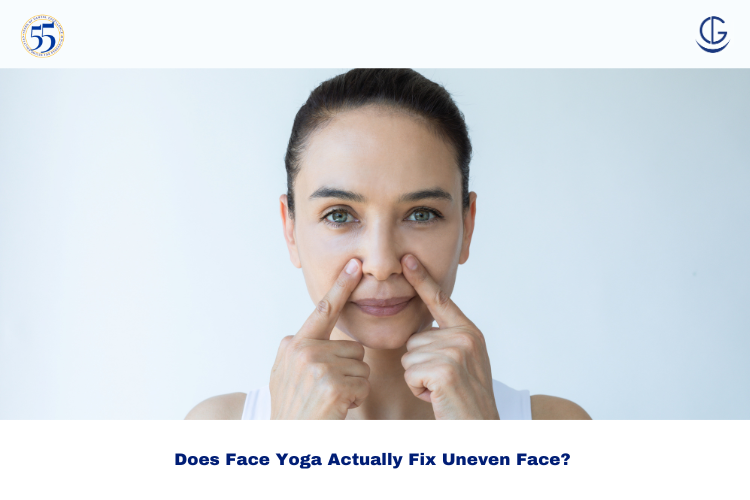
Face yoga for asymmetrical face concerns has become increasingly popular on social media, with many people searching for natural ways to improve facial symmetry without surgery or cosmetic procedures. Videos claiming to fix uneven jaws, lopsided smiles, or facial imbalance through facial exercises are everywhere online.
Medically Reviewed by: Prof. Dr. Snigdha Gowd, MDS (Orthodontics & Dentofacial Orthopaedics)
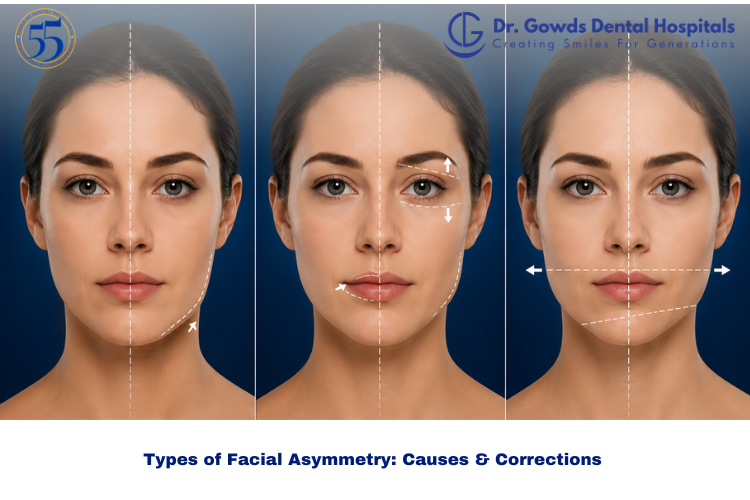
At Dr. Gowds Dental Hospitals, patients often ask whether face yoga can genuinely improve facial asymmetry or whether professional dental and jaw evaluation is still necessary. The reality is that face yoga may help certain mild muscular imbalances, but it cannot correct every cause of facial asymmetry — especially when the issue involves teeth alignment, jaw structure, TMJ disorders, or skeletal imbalance.
The answer depends entirely on the cause of the asymmetry.
Face yoga may help improve:
However, face yoga cannot correct:
This distinction is important because many cases of facial asymmetry are actually related to dental or jaw issues rather than weak facial muscles.
Some people notice mild improvement because face yoga may:
Patients who clench one side of the jaw more heavily may sometimes benefit from relaxation-focused facial exercises.
However, results are usually subtle and gradual.
Many people searching for face yoga for asymmetrical face concerns are looking for simple exercises they can practice at home to improve facial balance naturally. While face yoga cannot change bone structure or correct severe jaw asymmetry, certain exercises may help relax tight muscles, improve facial awareness, and encourage more balanced muscle movement over time.
Consistency is important. Most people who practice face yoga do so daily for several weeks before noticing subtle improvements in facial tension or muscle coordination.
The cheek lift exercise is designed to activate and strengthen the cheek muscles evenly on both sides of the face.
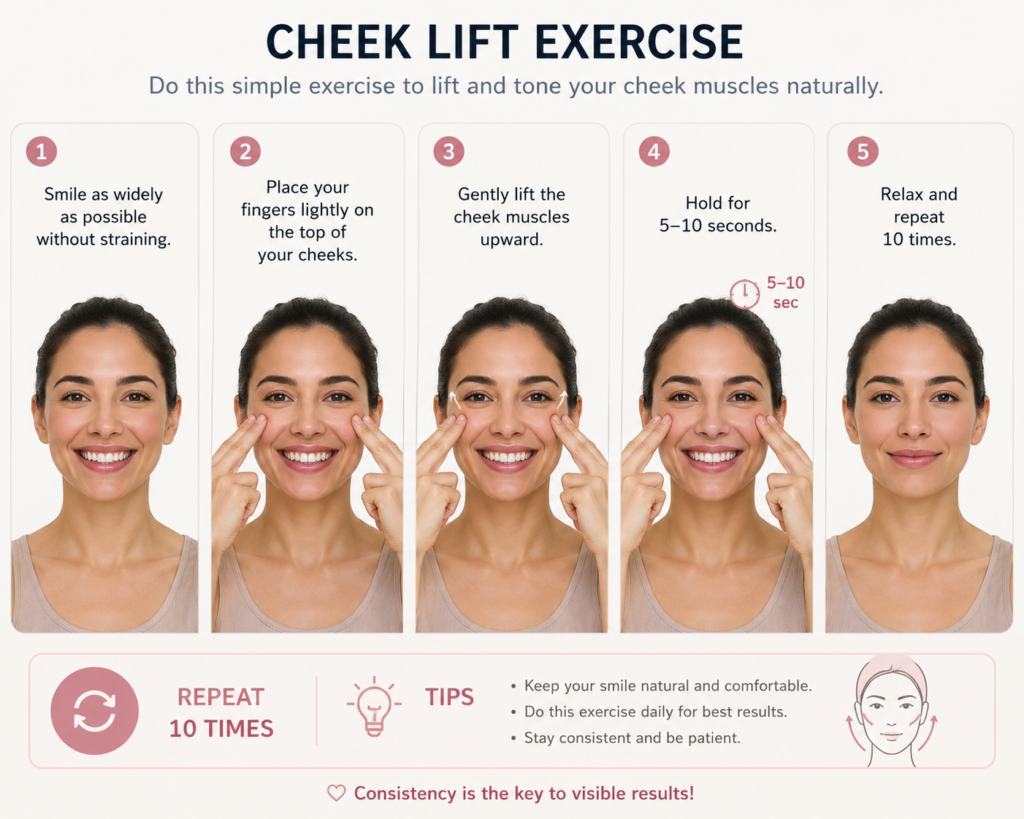
How to do it:
Potential benefits:
This exercise is commonly recommended for people who feel one side of the smile appears weaker or less active.
Jaw tension and clenching can contribute to facial imbalance and asymmetry over time. Jawline stretching exercises aim to relax tight muscles around the jaw and TMJ area.
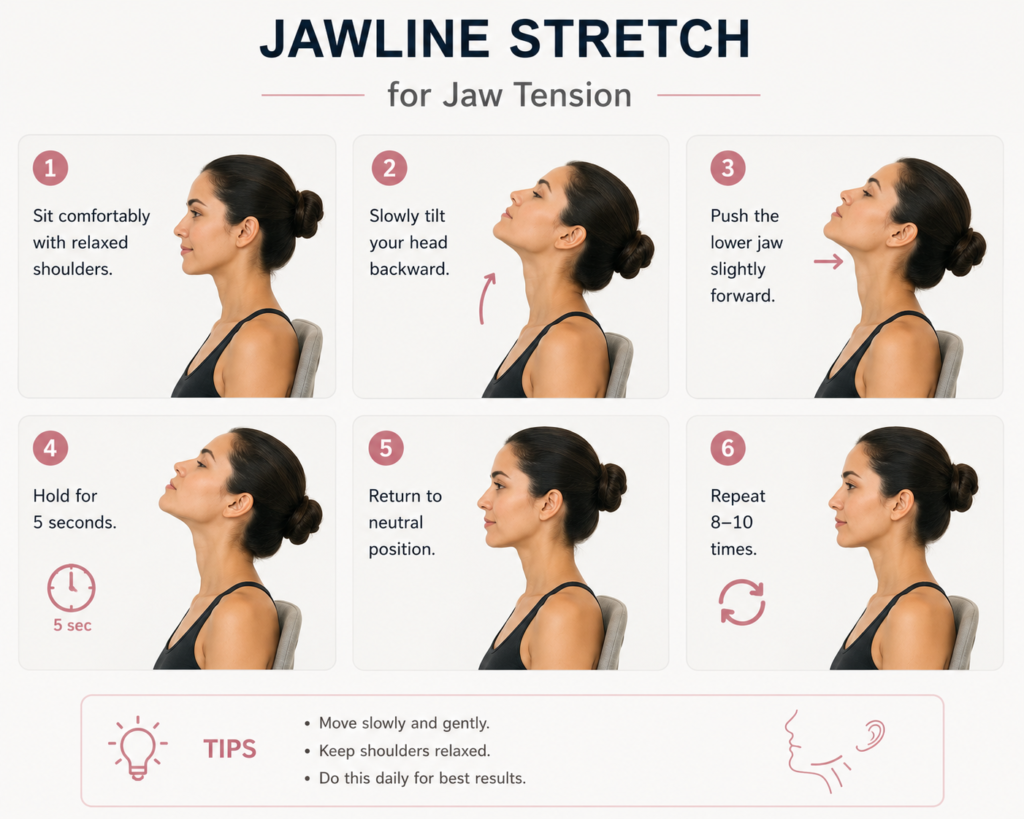
How to do it:
Potential benefits:
Patients with severe TMJ pain should avoid aggressive stretching without professional guidance.
Poor posture and neck tension can affect jaw alignment and facial muscle strain. Neck stretching is often included in face yoga routines because the jaw, neck, and facial muscles work together closely.
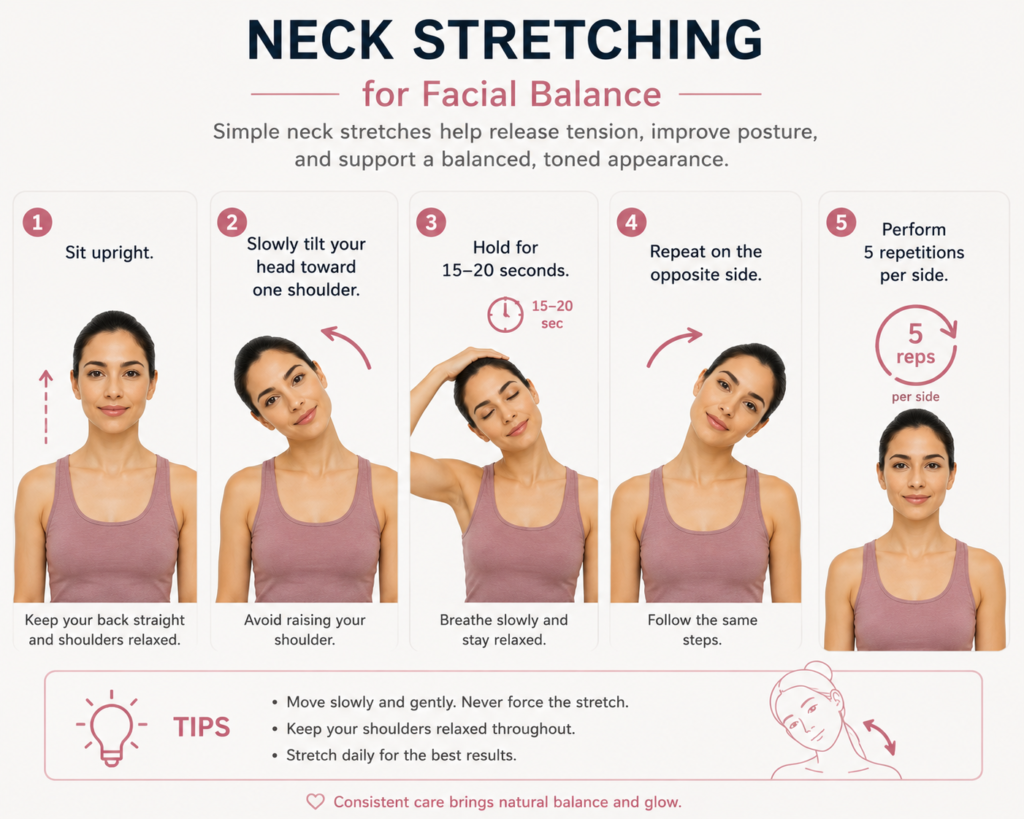
How to do it:
Potential benefits:
Good posture may also help reduce uneven strain on the jaw muscles.
Lip exercises are commonly used to improve coordination around the mouth and smile area.
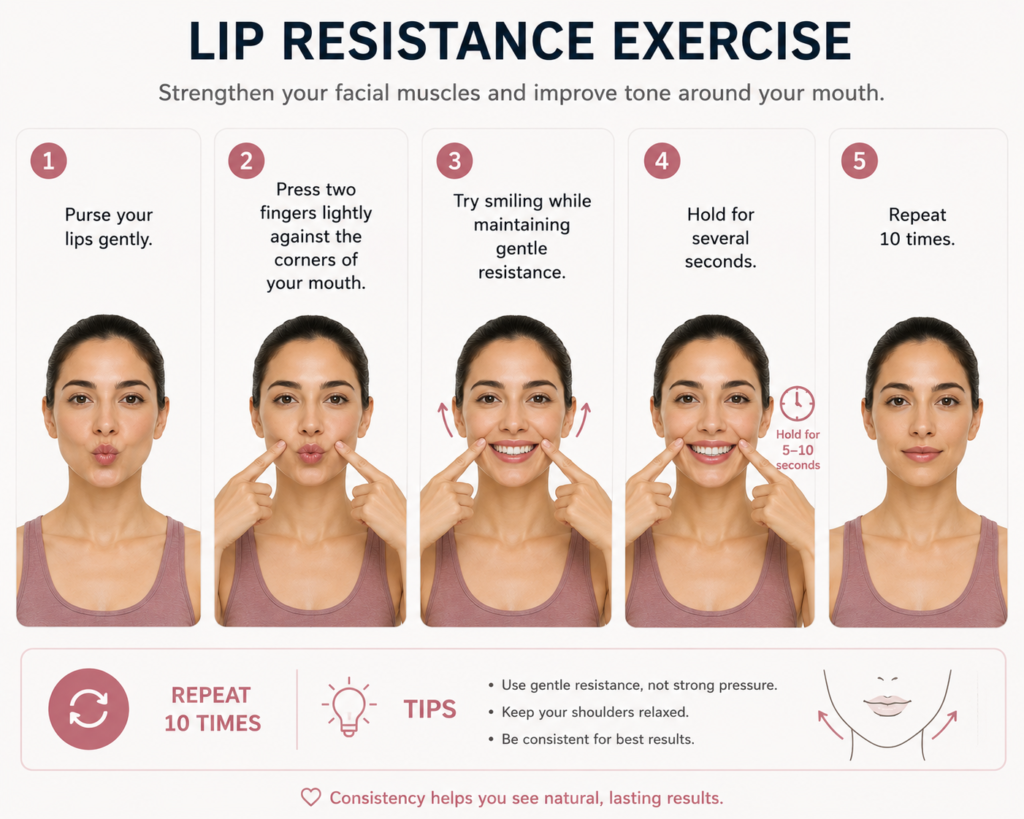
How to do it:
Potential benefits:
This exercise is often used for people concerned about uneven smile lines.
Facial massage is not technically a strengthening exercise, but it is commonly included in face yoga routines because it may help release muscle tightness.
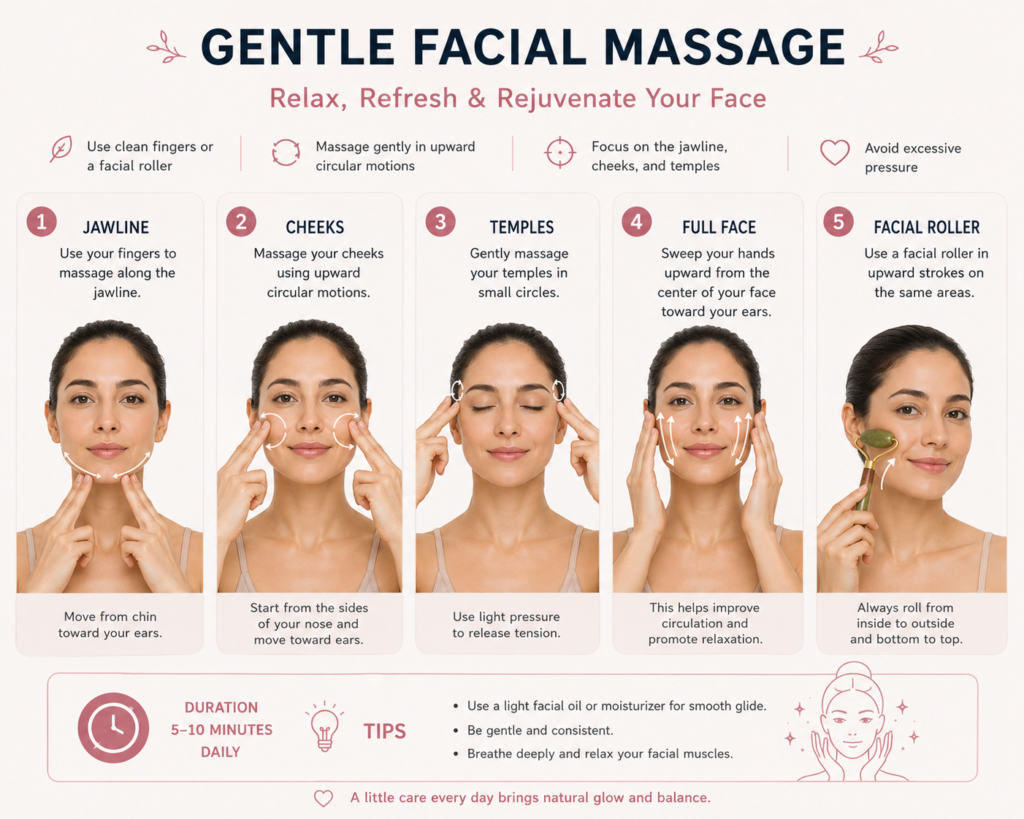
How to do it:
Potential benefits:
Massage is especially popular among patients with stress-related jaw tightness.
Many people unconsciously clench their jaw throughout the day, especially during stress or concentration. Jaw relaxation exercises focus on reducing this muscle tension.
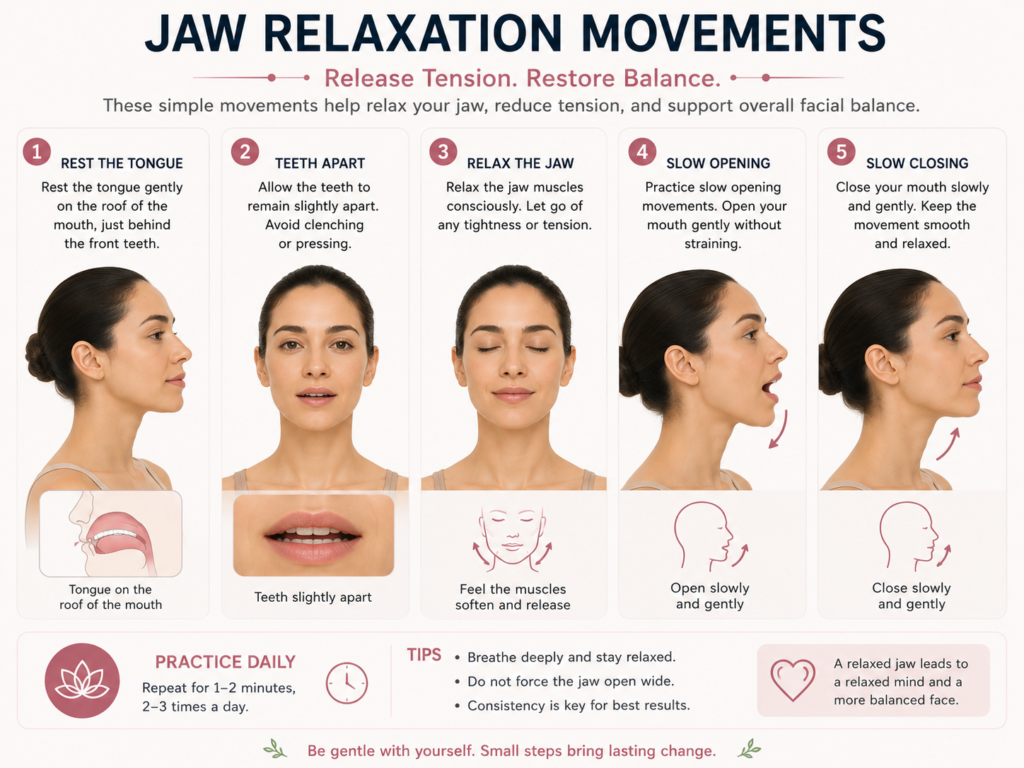
How to do it:
Potential benefits:
Patients with bruxism or TMJ disorders often benefit more from relaxation-focused exercises than strengthening exercises..
Face yoga cannot correct:
Patients expecting major structural changes from exercises alone are often disappointed.
You should seek professional evaluation if facial asymmetry is associated with:
These symptoms may indicate underlying dental or jaw-related issues.
Treatment depends on the underlying cause.
Professional options may include:
The right treatment plan depends on whether the asymmetry is muscular, dental, or skeletal.
Facial symmetry is closely connected to:
If you are concerned about facial asymmetry, jaw imbalance, a lopsided smile, or TMJ-related facial changes, the specialists at Dr. Gowds Dental Hospital can help identify the underlying cause and recommend the most suitable treatment plan for long-term facial balance and oral health.
Visit us at-
Dr gowds dental hospital Nanakramguda
Dr gowds dental hospital Gachibowli
Dr gowds dental hospital madhapur
Face yoga may help improve mild facial muscle imbalance, jaw tension, and facial awareness, especially when asymmetry is caused by muscle tightness or uneven facial habits. However, face yoga cannot change bone structure or correct severe jaw asymmetry, crooked teeth, or bite problems. Results are usually subtle and gradual rather than dramatic.
Most people who practice face yoga consistently may notice mild improvements in facial tension or muscle coordination after several weeks or months. Results vary depending on the cause of the asymmetry, consistency of exercises, and individual facial structure. Structural jaw or dental asymmetry usually requires professional treatment rather than exercises alone.
Face yoga may help improve mild smile imbalance caused by muscle tension or uneven facial movement. However, if a lopsided smile is caused by jaw asymmetry, crooked teeth, TMJ disorders, or bite problems, dental or orthodontic treatment is usually more effective than facial exercises alone.
Face yoga may temporarily improve muscle tone and reduce jaw tension, which can slightly affect facial appearance. However, it cannot permanently reshape the jawbone or dramatically alter facial structure. Jawline shape is mainly determined by genetics, bone structure, muscle size, and body fat distribution.
Yes. Braces and aligners can improve bite alignment and jaw positioning, which often has a greater impact on facial symmetry.
Yes. Mild facial asymmetry is extremely common and natural in almost everyone.
 Gachibowli Branch