

Schedule Appointment


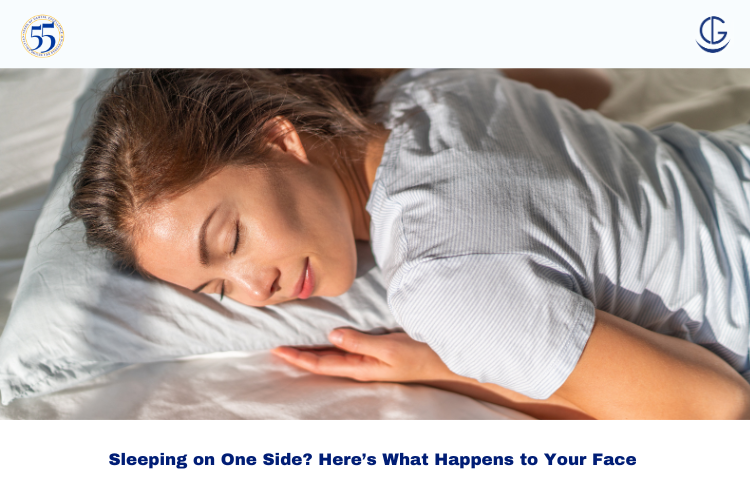
Many people notice uneven cheeks, jawlines, or smile balance in photos and begin wondering: does sleeping on one side cause facial asymmetry? If you consistently sleep with one side of your face pressed against a pillow every night, it is natural to question whether your sleeping position is affecting your facial appearance.
The answer is not completely straightforward. Sleeping on one side may temporarily affect how the face looks because of pressure, fluid distribution, or soft-tissue compression. However, its role in causing long-term facial asymmetry is not straightforward, especially in adults. Persistent facial asymmetry is more often influenced by a combination of natural structure, muscle use, dental or bite factors, jaw relationships, and other individual differences. In adults, side sleeping is unlikely to meaningfully reshape facial bones. Any visible effects are more likely to involve temporary puffiness, skin compression, or soft-tissue appearance rather than major structural change.
At Dr Gowds Dental Hospitals, specialists frequently evaluate patients concerned about facial asymmetry, uneven jawlines, and bite-related imbalance. In many cases, sleeping posture is only one part of a larger combination of dental, muscular, and structural factors.
This guide explains how side sleeping affects the face, when it becomes more significant, and what you can do to reduce facial imbalance.
Sleeping position can influence how the face looks temporarily, especially after several hours of pressure against a pillow.
Possible short-term effects may include:
These effects are usually more noticeable after waking and may reduce later in the day.
Long-term structural facial asymmetry should not automatically be attributed to sleep position. Factors such as natural facial structure, dental and bite relationships, jaw growth, muscle use, ageing, and previous injury may also contribute.
In adults, side sleeping is unlikely to cause meaningful changes to the underlying facial bones.
The facial skeleton is already largely developed, so pillow pressure is not expected to significantly reshape the jaw, cheekbones, or overall facial width.
What may change more noticeably is the appearance of the soft tissues. For example, one side may look temporarily puffier or more compressed after sleep.
If facial asymmetry is persistent throughout the day, gradually increasing, or associated with bite or jaw symptoms, sleep position may not be the main cause and other dental, muscular, structural, or medical factors should be considered.
One side of the face may appear fuller for several reasons, and sleep position is only one possible factor.
Temporary differences may be related to:
- fluid distribution after sleep
- mild soft-tissue compression
- sinus or allergy-related swelling
- dental inflammation or infection
More persistent differences may be related to:
- natural facial structure
- differences in muscle size
- dental or bite factors
- jaw relationships
- previous injury or other structural causes
If the fullness is most noticeable after waking and reduces later in the day, temporary fluid or soft-tissue effects may be contributing.
If it remains constant, becomes more noticeable, or is associated with pain, swelling, bite changes, or jaw symptoms, a professional evaluation may help identify the cause.
If you already have an uneven bite, jaw shift, TMJ symptoms, missing teeth, or a strong chewing preference, sleep position may influence how the face or jaw feels after waking.
However, side sleeping should not be assumed to worsen the underlying dental or skeletal asymmetry.
For example, some people may notice:
If the asymmetry is persistent, worsening, or associated with bite changes, jaw pain, or chewing difficulty, the underlying dental or jaw factors should be evaluated directly rather than attributing the problem to sleep position alone.
In infants and growing children, head shape and facial development are more adaptable than in adults, so persistent positional pressure can matter more during early growth.
However, facial asymmetry in children can have many causes, including normal growth differences, positional head shape changes, bite development, jaw growth, previous injury, and other medical or developmental factors.
If a child has noticeable or increasing facial asymmetry, an evaluation may be appropriate to determine the cause rather than assuming sleep position is responsible.
For infants with concerns about head shape, paediatric medical assessment may be more appropriate than a dental evaluation alone.
Sleep position may be contributing to temporary facial differences if you notice:
These signs may suggest temporary pressure or fluid-related effects rather than structural facial asymmetry.
If the difference remains the same throughout the day, becomes more noticeable over time, or is associated with jaw pain, bite changes, swelling, or difficulty chewing, other causes should also be considered.
Many people blame their pillow when the real issue is related to dental or jaw structure.
More significant facial asymmetry is often associated with:
In these situations, changing sleep posture alone may not fully correct the imbalance.
This is why patients concerned about whether does sleeping on one side cause facial asymmetry should also consider professional dental and orthodontic evaluation.
If you notice that one side of your face looks puffier or more compressed after sleep, a few practical changes may help reduce temporary pressure-related effects.
If one side consistently looks puffier in the morning, you can try varying your sleep position or spending more time sleeping on your back if that is comfortable for you.
This may reduce repeated pressure on the same side of the face, but it should not be expected to correct structural, dental, or skeletal asymmetry.
A pillow that supports the head and neck comfortably may help reduce excessive pressure on one side of the face.
Choose a pillow based on comfort and sleep quality rather than expecting it to reshape the face.
If facial asymmetry is associated with:
those issues should be evaluated directly rather than treated through sleep-position changes alone.
Exercises may help with relaxation or muscle awareness in some cases, but they are not suitable for every cause of facial asymmetry.
Avoid aggressive jaw exercises, especially if you have pain, clicking, locking, or known TMJ problems.
So, does sleeping on one side cause facial asymmetry? In many cases, yes — but usually in a mild and gradual way.
Side sleeping primarily affects:
It rarely causes major skeletal asymmetry in adults by itself. However, if underlying bite imbalance or jaw problems already exist, sleeping posture may make the asymmetry more noticeable over time.
If you are concerned about uneven facial appearance, professional assessment can help determine whether the cause is related to sleep habits, jaw function, dental alignment, or skeletal structure.
At Dr Gowds Dental Hospitals, advanced facial analysis and orthodontic assessment help patients better understand facial asymmetry and explore customized treatment options.
Visit Us at-
Dr gowds dental hospital Nanakramguda
Dr gowds dental hospital Gachibowli
Dr gowds dental hospital madhapur
Side sleeping may contribute to gradual soft tissue imbalance over time, but severe permanent skeletal asymmetry in adults is unlikely from sleeping alone.
Yes. Uneven pressure and muscle activity may cause one cheek to appear fuller or flatter than the other.
If you already have bite imbalance or TMJ problems, sleeping posture may reinforce uneven jaw positioning.
Mild soft tissue imbalance may improve with better sleep posture, facial exercises, and orthodontic treatment if bite problems are involved.
Not necessarily. Side sleeping is common and not harmful for most people. Significant asymmetry usually involves additional dental or structural factors.
 Gachibowli Branch