

Schedule Appointment

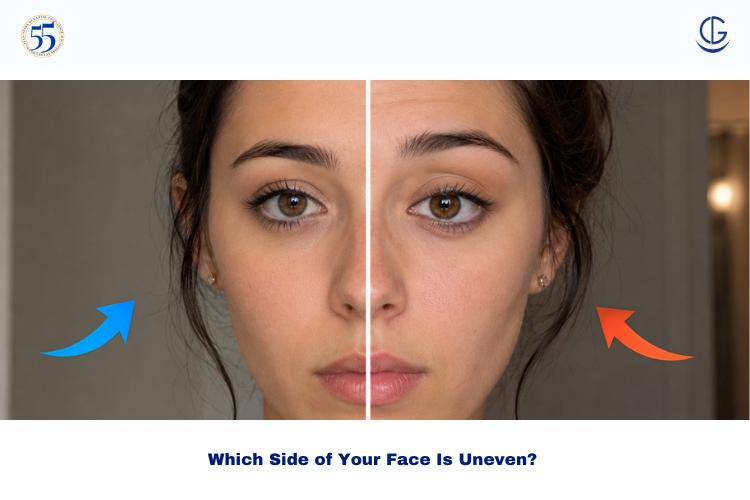
Many people look at photos of themselves and wonder: which side of your face is more asymmetrical? You may notice that one cheek looks fuller, one eye sits slightly higher, or your jawline appears more defined on one side.
In reality, mild facial asymmetry is completely normal. Almost everyone has small differences between the left and right sides of the face. However, understanding which side of your face is more asymmetrical can help identify whether the imbalance is related to chewing habits, jaw alignment, bite problems, muscle development, or facial structure.
At Dr Gowds Dental Hospitals, specialists use advanced digital facial analysis and bite evaluation technology to determine the causes of one-sided facial asymmetry and recommend personalized treatment options.
This guide explains how to identify your dominant facial side, why asymmetry develops, and when professional assessment may help.
Before identifying which side of your face is more asymmetrical, it is important to understand that perfect facial symmetry does not exist. Every face has subtle differences in:
In most people, these differences are minor and not noticeable during daily interactions. However, certain habits and dental conditions can make asymmetry more visible over time.
Several factors influence which side of the face becomes more dominant or appears uneven.
Some people habitually chew more on one side than the other. This may influence how the chewing muscles are used and can sometimes contribute to differences in muscle size or facial appearance.
However, one-sided chewing is not always the cause of facial asymmetry, and a fuller-looking side can also be related to natural bone structure, soft tissue, dental factors, or other causes.
If you notice a strong chewing preference together with jaw discomfort, bite imbalance, or visible muscle differences, a dental evaluation may help clarify whether chewing patterns are contributing.
Differences in the way the upper and lower teeth meet can sometimes be associated with facial or jaw asymmetry.
Examples may include:
An uneven bite can affect how the jaw closes or how chewing pressure is distributed, but it does not automatically mean that the bite is the cause of visible facial asymmetry.
If one side feels different when you bite, or the jaw appears to shift during closure, a dental or orthodontic assessment may help determine whether bite-related factors are involved.
Sleeping on one side may temporarily affect how the face looks because of pressure, fluid distribution, or soft-tissue compression.
However, the long-term effect of sleep position on facial asymmetry is not straightforward, and it should not be assumed to be a major cause of structural facial imbalance.
If asymmetry is persistent, increasing, or associated with bite or jaw symptoms, other causes should also be considered.
Missing or heavily damaged teeth can change how a person chews and how biting forces are distributed.
Possible effects may include:
However, missing teeth do not automatically cause visible facial asymmetry. Whether they contribute depends on factors such as the location of the missing teeth, how long they have been absent, the bite, and the surrounding dental and jaw structure.
A dental examination can help determine whether tooth loss or uneven dental support is contributing to the asymmetry.
Some facial asymmetry is completely natural and inherited.
Genetic differences may include:
These structural variations are common and may not require treatment unless they affect bite function or aesthetics.
A simple straight-on photo can help you compare the two sides of your face.
Use a photo taken:
Then compare:
The goal is not to label one side as “normal” and the other as the “problem side.” A fuller or wider side may simply reflect natural variation, while the less prominent side may also be the one drawing your attention.
For a more structured step-by-step check, check: asymmetrical face test
A simple bite check can help you notice whether your jaw closes evenly.
To try it:
An uneven bite or jaw shift may suggest that dental or jaw-related factors are worth evaluating, but a home bite check cannot tell you which side is “causing” the asymmetry.
If you notice a consistent shift, uneven contact, pain, or chewing difficulty, a dental or orthodontic assessment may help clarify what is happening.
Photos can make one side of the face appear more prominent because of:
Because of this, one photo should not be used to decide which side is truly more asymmetrical.
Compare several straight-on photos taken under similar conditions before drawing conclusions.
For a detailed explanation, read why your face may look asymmetrical in photos and videos.
Certain symptoms can suggest that dental or jaw-related factors may be contributing to facial asymmetry.
Possible signs include:
These signs do not prove that the bite is causing the facial asymmetry, but they can help indicate when a dental or orthodontic evaluation may be useful.
If you want a more detailed explanation of how teeth and bite relationships may relate to facial imbalance, Read our guide on how teeth and bite can contribute to facial asymmetry
Treatment depends on the underlying cause of the asymmetry.
If the difference is related to the teeth, bite, or jaw function, dental or orthodontic treatment may sometimes help address the contributing factor.
If the asymmetry is mainly skeletal, muscular, soft-tissue related, or unrelated to the teeth, a different type of evaluation or treatment may be needed.
Not every facial asymmetry requires treatment, and the amount of visible change varies from person to person.
For a broader overview, read our guide to facial asymmetry treatment in Hyderabad
You should consider professional evaluation if:
At Dr Gowds Dental Hospitals, specialists use digital facial mapping and bite analysis to determine whether asymmetry is:
This helps create personalized treatment plans focused on both appearance and oral function.
Almost everyone has some degree of facial asymmetry, but identifying which side of your face is more asymmetrical can provide important insight into your facial structure, bite alignment, and jaw function.
Simple techniques like the photo split test and bite test can help reveal which side is more dominant. In many cases, asymmetry is connected to chewing habits, bite imbalance, or orthodontic problems that may be treatable.
If you want a more accurate assessment of which side of your face is more asymmetrical, professional facial analysis and bite evaluation can help determine the exact cause and recommend appropriate treatment options.
At Dr Gowds Dental Hospitals, advanced digital facial analysis helps patients better understand facial asymmetry and explore customized treatment solutions.
Visit us at-
Dr gowds dental hospital Nanakramguda
Dr gowds dental hospital Gachibowli
Dr gowds dental hospital madhapur
There is no universal answer. Some studies suggest the right side is often slightly wider, while the left side may appear more expressive. Personal habits and bite function usually play a bigger role.
Yes. Long-term chewing on one side can enlarge jaw muscles on that side and create visible imbalance.
If asymmetry is caused by bite problems or dental misalignment, orthodontic treatment may significantly improve facial balance.
Front-facing smartphone cameras often distort facial proportions and exaggerate asymmetry.
Photo analysis, bite testing, and professional facial assessment are the most effective ways to identify facial imbalance.
 Gachibowli Branch