

Schedule Appointment

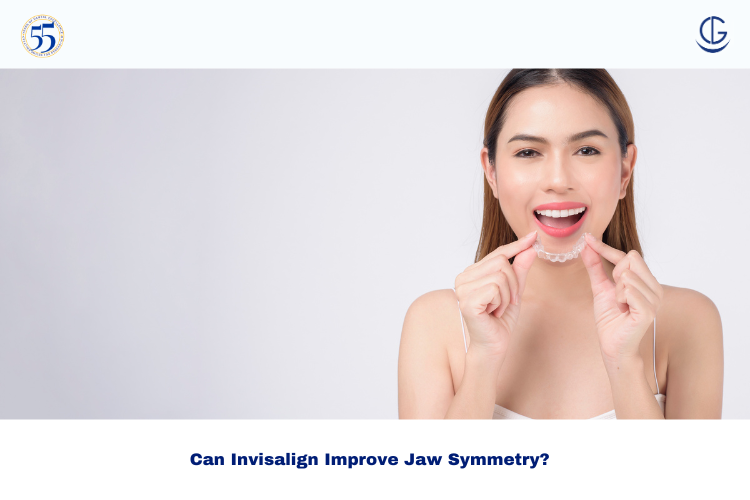
Facial asymmetry can have several causes, including tooth position, bite relationships, jaw growth, muscle activity, TMJ-related factors, and natural facial structure.
Invisalign may help when the asymmetry has a meaningful dental or bite-related component. However, clear aligners cannot correct every cause of facial asymmetry, especially when the main issue is skeletal, muscular, neurological, or unrelated to the teeth.
At Dr Gowds Dental Hospitals, an orthodontic evaluation can help determine whether Invisalign is appropriate for the dental or bite-related part of the problem.
This article explains when Invisalign may help, what types of changes may be realistic, and when another treatment approach may be needed.
Facial asymmetry means there are visible differences between the two sides of the face.
Mild asymmetry is common and often normal. More noticeable differences may involve the smile, dental midlines, jaw position, chin position, or how the teeth meet.
Facial asymmetry can have dental, skeletal, muscular, TMJ-related, neurological, or soft-tissue causes. Because of this, the cause should be identified before deciding whether Invisalign is likely to help.
Invisalign may help when facial asymmetry is related to tooth position or certain bite problems.
Clear aligners work by moving teeth and changing dental relationships. They may be useful for issues such as:
However, Invisalign does not directly correct major skeletal jaw differences, facial bone asymmetry, muscle-related asymmetry, or neurological causes.
The amount of visible facial change depends on the underlying cause and should not be predicted from tooth movement alone.
Invisalign primarily changes tooth position and bite relationships. Any change in facial appearance is usually a secondary effect of those dental changes rather than direct reshaping of the face.
Depending on the case, clear aligner treatment may influence:
The amount of visible change varies. It is usually more limited when the main cause of asymmetry is skeletal, muscular, neurological, or unrelated to the teeth.
Invisalign has limitations and may not be appropriate when facial asymmetry is mainly caused by a significant skeletal or structural difference rather than tooth position or bite alignment.
Examples may include:
In these situations, treatment may require a different approach, such as:
The correct treatment depends on the diagnosis, so an orthodontic assessment is important before deciding whether Invisalign is suitable.
Invisalign may help improve an uneven smile when the difference is related to tooth position, spacing, crowding, dental midline discrepancies, or certain bite problems.
Clear aligners may be useful for correcting:
However, an uneven smile can also be related to jaw structure, muscle activity, facial nerve function, or other non-dental causes. In those cases, Invisalign may have limited effect on the visible asymmetry.
The expected result depends on whether the smile difference is mainly dental or caused by another factor.
If the main concern is a visibly uneven or lopsided smile, see our guide to lopsided smile causes and treatment.
Some bite problems can contribute to an uneven smile or make the jaw appear shifted during closure.
Invisalign may help in selected cases, depending on the type and severity of the bite problem. Not every bite-related facial difference can be corrected with clear aligners alone.
A crossbite means some upper teeth bite inside the lower teeth instead of outside them.
In selected cases, Invisalign may help correct the dental crossbite and improve how the teeth meet. If the apparent asymmetry is mainly caused by a skeletal jaw difference, aligners alone may not be enough.
An increased overbite may affect the way the upper and lower teeth relate to each other.
Invisalign may help in some cases, but any change in facial appearance varies and should not be assumed from bite correction alone.
Mild or moderate dental underbite cases may sometimes be treated with clear aligners.
More significant skeletal underbites may require a different orthodontic approach or combined orthodontic and surgical treatment.
Invisalign may be used for selected open-bite cases when the problem is mainly dental.
If the open bite is strongly related to skeletal growth patterns or other structural factors, additional treatment may be needed.
Invisalign does not directly reshape the jawbone or jawline.
Any visible change in the lower face usually comes from changes in tooth position, bite relationships, or lip support rather than from the aligners changing the underlying facial bones.
Depending on the case, treatment may lead to subtle changes in:
These changes vary from person to person and may be minimal when the main cause of facial asymmetry is skeletal or unrelated to the teeth.
Tooth movement with Invisalign happens gradually, and the timing of visible changes varies from person to person.
Smile changes may become noticeable as the teeth begin to align, but changes in overall facial appearance are less predictable and depend on the original problem.
Treatment duration can vary based on:
Invisalign treatment may take several months to more than a year in some cases, but there is no single timeline that applies to everyone.
Invisalign can be a useful orthodontic option for selected dental and bite problems.
Potential advantages include:
For patients whose facial asymmetry has a meaningful dental component, improving tooth position and bite relationships may also improve smile symmetry.
However, Invisalign should not be presented as a cosmetic facial-asymmetry treatment when the underlying cause is skeletal, muscular, neurological, or unrelated to the teeth.
Invisalign can improve facial asymmetry when the imbalance is related to teeth positioning or bite alignment. By correcting crooked teeth, uneven bites, and smile irregularities, aligners may help create a more symmetrical facial appearance.
However, severe skeletal asymmetry may require additional orthodontic or surgical treatment.
At Dr Gowds Dental Hospitals, orthodontic specialists evaluate facial balance, bite alignment, and smile aesthetics using advanced diagnostic technology to create personalized Invisalign treatment plans.
The best way to determine whether Invisalign can help your specific case is to schedule an evaluation with an experienced orthodontist. A personalized assessment can identify the underlying cause of the asymmetry and recommend the most effective treatment plan.
Visit us at-
Dr gowds dental hospital Nanakramguda
Dr gowds dental hospital Gachibowli
Dr gowds dental hospital madhapur
Invisalign may help when facial asymmetry is related to tooth position or certain bite problems. It cannot correct every cause of asymmetry, especially significant skeletal, muscular, neurological, or non-dental differences.
Invisalign primarily moves teeth and changes bite relationships. Some patients may notice subtle changes in smile appearance, lip support, or lower-face appearance, but clear aligners do not directly reshape the facial bones.
Invisalign may help when an uneven smile is caused by crowding, spacing, tooth-position differences, dental midline discrepancies, or selected bite problems. If the asymmetry is mainly muscular, skeletal, or neurological, aligners may have limited effect.
Tooth alignment changes occur gradually throughout treatment. Smile changes may become noticeable as the teeth move, but the timing and amount of visible facial change vary depending on the underlying problem and treatment plan.
An orthodontic evaluation can help determine whether the asymmetry has a dental or bite-related component that may respond to Invisalign. The assessment may include tooth alignment, dental midlines, bite relationships, jaw function, and facial structure.
 Gachibowli Branch