

Schedule Appointment


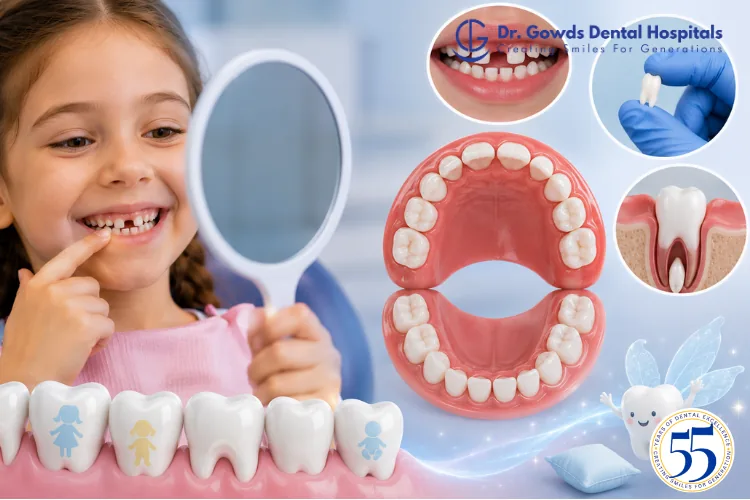
The first teeth a child develops are temporary, but their role is far from insignificant. These early teeth help children learn to chew, contribute to speech development, maintain space within the developing dental arches, and support important oral functions during childhood.
These teeth are known as deciduous teeth, although they are also commonly called baby teeth, primary teeth, or milk teeth.
Deciduous teeth eventually loosen and are replaced by permanent teeth. However, the period during which they remain in the mouth is an important stage of dental development. Problems affecting these teeth can sometimes influence a child’s comfort, eating habits, oral hygiene, and the eruption of permanent teeth.
At Dr Gowds Dental Hospitals, understanding how deciduous teeth develop and why they need care can help parents establish good oral health habits from the earliest stages of childhood.
Deciduous teeth are the first set of teeth that develop and appear in a child’s mouth.
Most children eventually develop 20 deciduous teeth:
The set generally includes:
Unlike permanent teeth, deciduous teeth are designed to serve the child during the early years before gradually being replaced.
The word “deciduous” refers to something that eventually falls away.
In dentistry, the term describes teeth that naturally loosen and are eventually replaced by permanent teeth.
Although they are temporary, deciduous teeth can remain in the mouth for several years.
Their temporary nature does not mean they should be ignored.
Baby teeth begin developing before birth.
Their development occurs within the jaws during pregnancy, even though the teeth are not visible in the baby’s mouth at birth.
After birth, the developing teeth gradually mature and begin erupting through the gums.
This is why dental development begins long before parents see the first tooth.
The exact timing varies between children.
Generally, the first deciduous teeth begin to appear during infancy, often around the middle of the first year.
The lower front teeth are commonly among the first to erupt, followed by upper front teeth and then other teeth.
The back teeth generally appear later.
A simplified sequence is:
Front incisors → lateral incisors → first molars → canines → second molars
However, eruption does not always follow an identical schedule in every child.
Small differences in timing are often normal.
When a tooth is preparing to emerge, a baby may experience changes around the mouth.
Possible signs include:
Some children experience very little discomfort.
Parents should also remember that significant illness should not automatically be attributed to teething. Symptoms such as persistent high fever, repeated vomiting, breathing difficulties, or significant diarrhea require appropriate medical assessment.
The two sets of teeth serve different stages of dental development.
The transition from deciduous to permanent teeth is a gradual developmental process rather than a single event.
Calling baby teeth “temporary” can sometimes lead parents to underestimate their importance.
They perform several functions.
Deciduous teeth allow children to bite and chew a progressively wider variety of foods as they grow.
Teeth help the tongue and lips form certain sounds.
Healthy primary teeth can therefore contribute to normal speech development.
Primary teeth occupy positions that later permanent teeth will use.
When a deciduous tooth is lost significantly earlier than expected, the neighboring teeth may shift into the available space.
This can sometimes complicate the eruption or alignment of the permanent successor.
Teeth contribute to the developing relationship between the jaws, lips, tongue, and other oral structures.
The roots of primary teeth gradually undergo a natural process called resorption as the permanent teeth develop underneath them.
As the supporting root structure reduces, the primary tooth becomes increasingly mobile.
Eventually, the tooth falls out and the permanent successor can erupt into its position.
This process is a normal part of childhood dental development.
A primary tooth may sometimes be lost prematurely because of:
Premature loss can allow neighboring teeth to move into the space intended for the permanent tooth.
In some situations, a dentist may recommend monitoring or a space maintainer to help preserve the appropriate space.
Whether one is required depends on the child’s age, which tooth was lost, the development of the permanent tooth, and the overall dental situation.
Yes.
Primary teeth and permanent teeth are closely connected during dental development.
An untreated infection in a primary tooth can potentially affect the developing permanent tooth underneath.
Similarly, premature loss of a primary tooth can influence the available space for its permanent successor.
This is one reason preventive care for baby teeth matters.
Sometimes a baby tooth remains in the mouth longer than expected.
This may happen for several reasons, including delayed development or absence of the permanent successor.
A retained primary tooth may require monitoring or treatment depending on:
Dental imaging may be useful when the reason for delayed shedding is unclear.
Deciduous teeth are the first set of teeth that develop during childhood and eventually make way for permanent teeth.
Although they are temporary, they have important responsibilities during the years when a child’s mouth and jaws are developing.
They help children chew, support speech development, contribute to oral development, and maintain space for permanent teeth.
Good care begins before all the teeth have erupted. Regular brushing with fluoride toothpaste, sensible dietary habits, professional dental examinations, and prompt attention to dental injuries can help protect primary teeth.
Parents should also remember that differences in eruption and shedding can occur between children. When a tooth appears significantly delayed, remains in place unexpectedly, or causes pain or swelling, a dental examination can clarify what is happening.
At Dr Gowds Dental Hospitals, monitoring primary teeth as part of a child’s overall dental development can help establish healthier foundations for the permanent dentition that follows.
Visit us at-
Dr gowds dental hospital Nanakramguda
Dr gowds dental hospital Gachibowli
Dr gowds dental hospital madhapur
Deciduous teeth are the first set of teeth that develop in childhood. They are also called primary teeth, baby teeth, or milk teeth.
Most children develop 20 deciduous teeth: 10 in the upper jaw and 10 in the lower jaw.
The first deciduous teeth commonly begin erupting during infancy, often around the middle of the first year, although timing varies between children.
They help with chewing and speech, contribute to oral development, and maintain space for the permanent teeth developing beneath them.
Yes. Primary teeth can develop tooth decay, and untreated cavities can cause pain, infection, and other complications.
Their roots gradually undergo resorption as the permanent teeth develop underneath them. This reduces their support and eventually allows the baby teeth to fall out.
 Gachibowli Branch