

Schedule Appointment

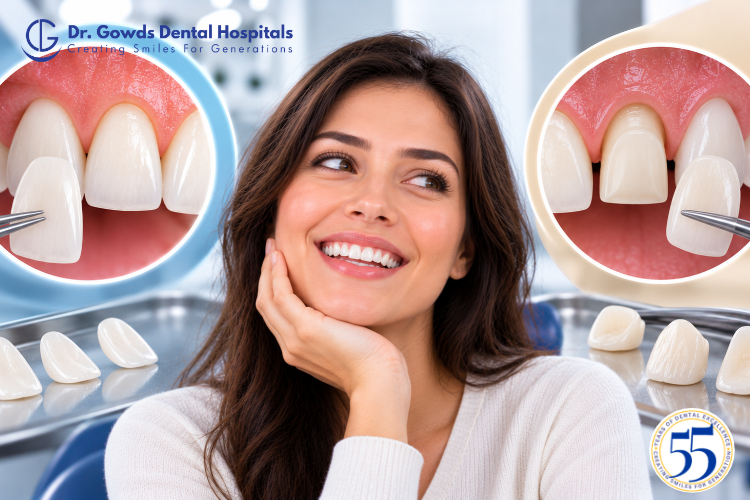
Choosing dental veneers is not simply about selecting the option that sounds more conservative or more advanced. The right choice depends on your teeth, your smile goals, the amount of change you want, and how much preparation is appropriate for the treatment.
No-prep veneers have attracted attention because they are designed with little or no tooth preparation in selected situations. Traditional veneers, on the other hand, generally involve preparing the front surface of the tooth before placing the veneer.
So, which option should you consider?
At Dr Gowds Dental Hospitals, we believe understanding the differences can make your consultation more productive. This guide explains the benefits, limitations, differences, and important considerations when comparing no-prep veneers with traditional veneers.
Want to explore your veneer options?
No-prep veneers are thin dental veneers designed to be placed with little or, in selected cases, no alteration to the natural tooth surface.
The exact amount of preparation can vary depending on the tooth, veneer design, bite, spacing, existing tooth position, and the result being planned. The term “no-prep” therefore should not automatically be interpreted as meaning that every case involves absolutely zero tooth preparation.
They are generally discussed by people who want to change aspects of their smile while keeping tooth preparation to a minimum.
Depending on the individual case and the selected veneer design, they may be considered when someone wants to modify the appearance of:
However, no-prep veneers are not a universal solution for every smile. The existing position and shape of the teeth play an important role in determining whether this approach is suitable.
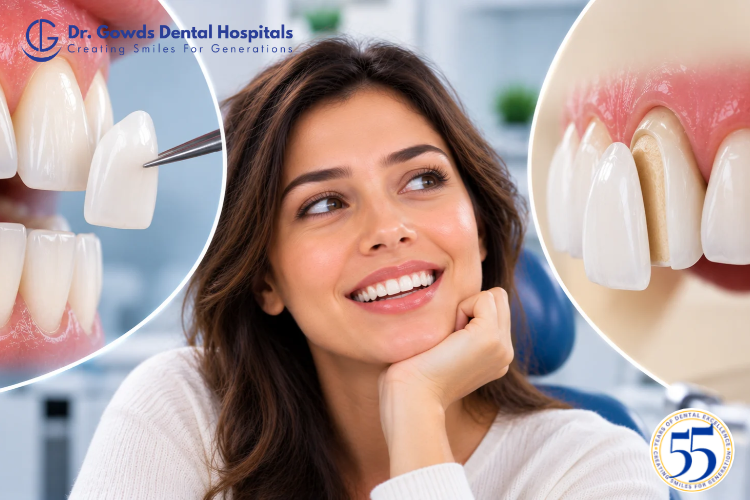
Traditional veneers are thin coverings placed over the visible front surface of teeth. Unlike no-prep veneers, traditional veneers generally involve some degree of preparation of the tooth surface.
Preparation creates the space needed for the planned veneer design and helps the dentist control the final shape and appearance.
Traditional veneers can therefore offer more flexibility in cases where a noticeable change in tooth shape, position, proportion, or appearance is being planned.
The exact preparation required differs from person to person.
Understanding the main differences can make the decision easier.
No-prep veneers:
Designed to require little or no alteration of the tooth surface in selected cases.
Traditional veneers:
Generally require preparation of the front surface of the tooth before placement.
No-prep veneers:
The existing tooth position and shape can place limits on the final design.
Traditional veneers:
The preparation process can provide greater flexibility when a more significant change in shape or appearance is planned.
No-prep veneers:
The veneer design needs to work with the existing tooth position and available space.
Traditional veneers:
Preparation can create space for the planned veneer thickness and contour.
The word “reversible” is sometimes associated with no-prep veneers. However, this should not be assumed automatically.
Whether a veneer treatment can be reversed without changes to the natural tooth depends on the actual preparation performed and the individual treatment plan.
No-prep veneers may be considered in selected situations where the existing teeth provide an appropriate foundation for the desired result.
Traditional veneers may be considered when the desired changes require more control over tooth shape, contour, or overall appearance.
No-prep veneers can be appealing for several reasons.
One of the main reasons people ask about no-prep veneers is the possibility of reducing or avoiding preparation of the natural tooth surface in suitable cases.
This can be an important consideration for someone who wants a cosmetic change while retaining as much of the existing tooth structure as appropriate.
When the existing teeth already have a suitable position and shape, a no-prep approach may provide an option that involves less alteration.
However, this depends on the individual case rather than simply the name of the veneer.
For suitable cases, the treatment plan may involve a more straightforward approach to changing the appearance of selected teeth.
The actual process still requires careful evaluation of the smile, tooth position, bite, and desired result.
People often want to know how much of their natural tooth will be altered during cosmetic dental treatment.
No-prep veneers can be worth discussing when preservation of the existing tooth structure is an important part of the patient’s priorities.
No-prep veneers also have limitations that should be understood before choosing them.
The biggest misconception is that no-prep veneers are automatically suitable for anyone who wants veneers.
If the teeth are significantly positioned, have limited available space, or require a substantial change in shape, a no-prep approach may not provide the desired result.
Because little or no tooth preparation may be involved, the veneer has to work with the existing tooth shape and available space.
This means the final design needs to be considered carefully to avoid creating an appearance that does not match the surrounding teeth.
When a person wants a major change in tooth shape or smile proportions, traditional veneers may provide more design flexibility.
This is one reason why the most conservative-sounding option is not necessarily the best option for every individual.
“No-prep” does not mean that every case follows exactly the same procedure.
Some cases may involve minor preparation or adjustment depending on the design and clinical requirements. It is therefore better to discuss the actual treatment plan rather than choosing a veneer type based only on its name.
Traditional veneers remain an option for people looking for more control over the final design.
Preparation can create the space needed for a planned veneer shape and contour.
This can be useful when the desired change goes beyond a small modification.
Traditional veneers can be designed to modify the visible proportions and contours of selected teeth according to the treatment plan.
When multiple aspects of the smile need to be considered together, traditional veneers may provide greater flexibility than a no-prep approach.
The suitability still depends on the individual’s teeth and treatment goals.
Traditional veneers also require careful consideration.
Unlike no-prep veneers, traditional veneers usually require preparation of the tooth surface.
For patients who strongly prefer minimal alteration of their natural teeth, this may be an important factor when comparing options.
The amount of preparation is connected to the planned veneer design. Therefore, choosing the veneer material and appearance should be part of a complete treatment discussion rather than an isolated decision.
The number of teeth involved, tooth position, desired appearance, bite, and other individual factors can all influence the treatment plan.
There is no single answer to whether no-prep veneers or traditional veneers are better.
The more useful question is:
Which option is appropriate for your teeth and the result you want to achieve?
No-prep veneers may be worth discussing when minimal tooth preparation is a priority and the existing teeth are suitable for the planned design.
Traditional veneers may be worth considering when greater changes in tooth shape, proportion, contour, or overall smile appearance are being planned.
A dental consultation allows these factors to be assessed before deciding between the two approaches.
Before deciding on no-prep or traditional veneers, consider the following:
The position of your existing teeth can influence which veneer design is practical.
Think about whether you want a subtle adjustment or a more noticeable change in shape and appearance.
If preserving as much natural tooth structure as appropriate is a major priority, ask specifically about the preparation involved in your proposed treatment.
Ask which veneer material is being proposed and why it has been selected for your treatment plan.
The shape, size, proportion, and contour of veneers should be considered alongside the rest of your smile rather than individually.
Ask what routine care and maintenance your proposed veneers will require and what you should expect after treatment.
Considering veneers in Hyderabad? Speak with the dental team at Dr Gowds Dental Hospitals to compare your available options and understand which approach suits your smile goals.
Before proceeding, you can ask:
These questions can help you understand the difference between the treatment options instead of making a decision based only on the term “no-prep.”
No-prep veneers and traditional veneers serve different treatment needs. No-prep veneers can be attractive when minimal preparation is an important priority and the existing teeth allow the desired design.
Traditional veneers may provide greater flexibility when more substantial changes are being considered.
Rather than choosing based solely on which option sounds less invasive, focus on the condition and position of your teeth, your desired result, the planned veneer design, and the amount of preparation involved.
A personalised consultation is the best place to compare these factors and make an informed decision.
Looking for veneer options in Hyderabad? Book a consultation with Dr Gowds Dental Hospitals at our Nanakramguda, Gachibowli, Madhapur, koti to discuss your smile goals and explore suitable veneer options.
No. No-prep veneers are designed to involve little or no tooth preparation in selected cases, while traditional veneers generally involve preparation of the tooth surface. The exact approach depends on the individual treatment plan.
No. Suitability depends on factors such as existing tooth position, tooth shape, available space, bite, and the changes a person wants to make to their smile.
The main difference is the amount of tooth preparation and the flexibility available when designing the final result. No-prep veneers focus on minimal or no preparation in suitable cases, while traditional veneers generally involve tooth preparation.
Not necessarily. Whether treatment can be reversed without changes to the natural tooth depends on the actual preparation performed. The term “no-prep” should not automatically be taken to mean completely reversible.
The appearance depends on factors such as veneer design, material, tooth proportions, colour selection, and how the veneers are planned with the surrounding teeth. A consultation is important for discussing the desired appearance.
Neither option is automatically better for everyone. The appropriate choice depends on the existing teeth, desired changes, available space, preparation requirements, and overall treatment plan.
They can be designed to modify the visible appearance of selected teeth in appropriate cases. However, the amount of change possible depends on the existing tooth shape and available space.
Discuss your desired smile changes and the amount of tooth preparation you are comfortable with during a dental consultation. Your dentist can explain which veneer design is appropriate for your individual situation.
 Gachibowli Branch