

Schedule Appointment


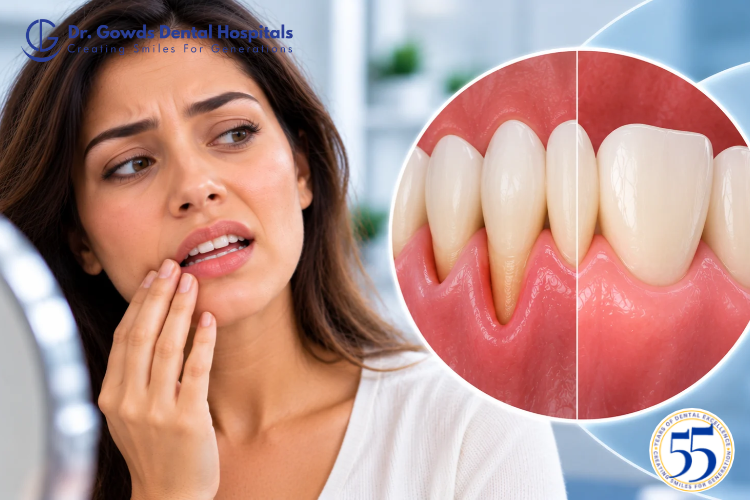
Noticing that your teeth appear longer than they used to, or that the gum line looks lower around certain teeth, can be concerning. One of the most common questions people ask after noticing this change is: can receding gums grow back naturally?
The answer is not always straightforward. Gum recession can happen for different reasons, and whether the gum line can return to its previous position depends on the underlying situation and the extent of the change.
Understanding what gum recession looks like, what may contribute to it, and when to seek a professional assessment can help you decide what to do next. Dr Gowds Dental Hospitals provides dental consultations across Hyderabad, with branches in Nanakramguda, Gachibowli, Madhapur, koti.
Noticing changes in your gum line?
Gum recession refers to a change in the position of the gum line, making more of the tooth surface visible than before. It may affect one tooth, several teeth or a larger area of the mouth.
Some people notice gum recession while brushing or looking closely at their teeth. Others may notice that a particular tooth looks longer or that the gum line appears uneven.
Common signs people associate with receding gums include:
Because several factors can be involved, it is better not to assume the reason based only on appearance.
This is the key question behind most searches for “can receding gums grow back.”
Gum tissue that has moved away from its previous position should not be expected to simply return to its original position without understanding why the recession occurred.
The important point is that gum recession is not one single condition with one universal cause. The right approach depends on factors such as the location of the recession, how noticeable the change is, oral hygiene habits, brushing technique and other individual dental factors.
For this reason, home remedies should not be treated as a guaranteed way to make receding gums grow back.
Instead, the first step is understanding what is happening around the affected tooth or teeth.
There can be more than one factor behind a receding gum line. Some are related to everyday oral care, while others may be associated with the way the teeth and gums are positioned.
Brushing is an important part of oral hygiene, but the way you brush matters. Using excessive pressure or an unsuitable brushing technique may contribute to irritation around the gum line.
If you notice recession, discuss your brushing technique with a dental professional rather than simply brushing harder or avoiding the area altogether.
The area where the teeth and gums meet needs regular cleaning. If plaque or other deposits accumulate around the gum line, the gums may become irritated.
Maintaining a consistent oral hygiene routine is therefore an important part of looking after the gum line.
The position of an individual tooth can influence how the gum line appears around it. This is one reason why receding gums around one tooth may look different from recession affecting several teeth.
Certain habits can place repeated pressure on the teeth or surrounding tissues. A dental examination can help identify whether a particular habit may be relevant to the change you are noticing.
Not everyone’s gums look exactly the same. Gum thickness, tooth shape and the natural position of the gum line can vary between individuals.
This means that an uneven gum line does not automatically indicate the same issue in every person.
If you are searching for “can receding gums be reversed,” it is important to separate two different goals.
The first is preventing the contributing factors from continuing.
The second is addressing the appearance or position of the gum tissue that has already changed.
These are not necessarily the same thing.
A dentist can examine the gum line and determine what may be contributing to the recession. Depending on the individual situation, the focus may involve improving oral hygiene practices, reviewing brushing habits, addressing contributing dental factors or discussing appropriate professional options.
The sooner a noticeable change is assessed, the easier it can be to understand what is happening instead of relying on assumptions or home remedies.
Many people specifically ask whether gums can grow back after recession.
The answer depends on the individual circumstances. Gum recession can vary in location, extent and appearance, so there is no single answer that applies to everyone.
If the gum line has changed, a dental professional can evaluate the area and discuss what options may be appropriate.
It is also important to remember that preventing further changes and restoring the appearance of the gum line are separate considerations.
If you have noticed a change in your gum line, everyday oral care still matters.
Avoid treating a receding area by scrubbing it aggressively. Gentle, consistent brushing is preferable to applying excessive pressure.
Pay attention to the areas where your teeth meet your gums. A consistent oral hygiene routine can help keep these areas clean.
Search results may suggest oils, abrasive ingredients or other home methods for how to fix receding gums. These approaches should not be assumed to restore gum tissue.
If you are unsure what to do, a dental consultation is a more useful starting point.
Take note if the recession appears to be changing, particularly if it is becoming more noticeable around a particular tooth.
A change in the gum line is worth discussing with a dentist when it is new, noticeable or causing concern.
Consider arranging a dental assessment if you notice:
A professional examination can provide a clearer picture than trying to identify the cause from photographs or online searches.
A dental consultation for gum recession generally begins with a discussion about what you have noticed and when the change became apparent.
The dentist may then examine the teeth and gum line, paying attention to the affected areas and the surrounding tissues.
The discussion may cover:
The purpose is to understand the situation before deciding what should be done next.
A small change can be easy to dismiss, particularly when there is little discomfort.
However, if you notice that your gum line looks different, it is useful to understand why rather than assuming that it will automatically return to normal.
Searching for “can gums grow back naturally” may give you many different answers online, but individual situations can vary considerably.
A dental assessment gives you an opportunity to discuss the specific change you have noticed and understand your available options.
Prevention starts with understanding what may be contributing to the change.
Some practical habits include:
The goal is not to make your routine complicated. Consistency and appropriate technique are more useful than aggressive cleaning.
Whether gum tissue can return to its previous position depends on the individual situation. Receding gums should not automatically be expected to grow back naturally. A dental assessment can help determine what is happening.
The approach to gum recession depends on its cause, location and extent. Some situations may focus on preventing further changes, while professional options may be considered for others.
Gum recession can vary from person to person. If you notice that the gum line has changed, a dentist can assess the area and explain what options may be suitable.
Several factors can be associated with changes in the gum line, including brushing habits, oral hygiene concerns, tooth positioning and individual differences in gum and tooth anatomy.
Gentle brushing, consistent oral hygiene, avoiding excessive brushing pressure and addressing noticeable changes early can all be useful parts of maintaining your gum health.
A change affecting one tooth can have different contributing factors from changes affecting several teeth. If one tooth appears to have a lower gum line than the others, a dental examination can help clarify the situation.
Commonly noticed signs include a tooth appearing longer, a visible change in the gum line, an uneven gum contour or increased sensitivity around a particular area.
Consider seeing a dentist if you notice a new or noticeable change in your gum line, particularly if the change appears to be progressing or is accompanied by sensitivity or discomfort.

 Gachibowli Branch