

Schedule Appointment

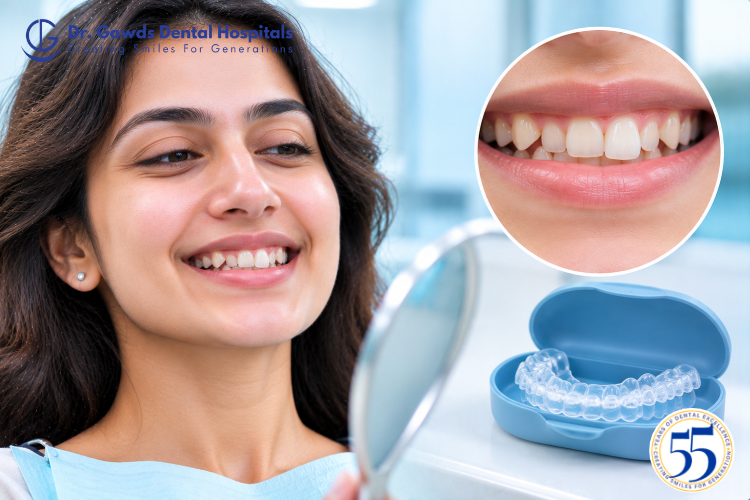
Getting braces removed early can leave you wondering whether your teeth are actually ready for the next stage of treatment. Sometimes braces are removed because of a change in circumstances, while in other situations treatment may end before the original plan is fully completed.
Whatever the reason, removing braces is more than simply taking the brackets and wires off. The teeth still need to be assessed, and the next steps matter for maintaining the alignment achieved during treatment.
In this guide, Dr Gowds Dental Hospitals explains what can happen when braces are removed early, why the timing of removal matters, what you should ask your orthodontist, and what to expect after the braces come off.
Considering early braces removal?
Braces are normally part of a planned orthodontic process. The treatment plan may involve gradually adjusting the position of the teeth and then moving into the retention stage.
When braces are removed before treatment is complete, the teeth may not have reached the position originally planned for them.
Early removal can happen for different reasons, such as:
The important point is that “the teeth look straighter” and “the orthodontic treatment is complete” are not necessarily the same thing.
The outcome can vary from person to person. It depends on how far treatment had progressed, which teeth were being moved, the original treatment objectives and what happens after removal.
If braces are removed before the planned movements are finished, some teeth may remain slightly rotated, tilted, spaced or crowded.
This means the final appearance may differ from what was originally expected when treatment began.
One of the biggest concerns after early braces removal is unwanted tooth movement.
Teeth are not necessarily fixed permanently in the exact position they occupy immediately after braces are removed. Without an appropriate post-treatment plan, changes in alignment can occur over time.
This is why the transition from braces to the next stage should not be overlooked.
Orthodontic treatment is not only about making the front teeth look straight.
The way the upper and lower teeth meet is also part of the overall orthodontic assessment. If braces are removed early, the final bite may need to be reviewed to determine whether additional treatment or monitoring is appropriate.
Every orthodontic treatment plan has specific objectives. These can include improving alignment, spacing, tooth rotation and the relationship between the upper and lower teeth.
Removing braces before those objectives are reached can mean that some planned corrections remain incomplete.
People often assume that once the brackets are removed, the treatment is finished permanently. However, the post-braces period is an important part of orthodontic care.
After braces are removed, the teeth can be susceptible to changes in position. This is why orthodontists may recommend a retainer after braces.
A retainer is designed to help maintain the position of the teeth after orthodontic treatment. The type and wearing schedule can vary depending on the individual treatment plan.
If braces were removed early, the orthodontist may need to determine whether a retention plan alone is appropriate or whether further orthodontic treatment should be considered.
In some situations, additional orthodontic treatment may be considered after braces have been removed.
The appropriate approach depends on the current position of the teeth and how much of the original treatment has been completed.
An orthodontic assessment can help determine whether the next step should involve:
There is no single solution for everyone who has had braces removed before treatment is complete.
If braces have been removed earlier than expected, avoid assuming that nothing needs to be done.
Understand whether the removal represents the planned end of treatment or whether treatment ended earlier than originally intended.
Ask which parts of the original treatment plan have been completed and whether any planned movements remain.
Ask whether you need a retainer and what the recommended retention plan is for your situation.
If some teeth have not reached their intended positions, ask whether additional orthodontic treatment should be considered.
A follow-up allows the orthodontic team to assess how your teeth are responding after the braces are removed.
If you are unsure whether your braces were removed too early, an orthodontic evaluation can help clarify your current alignment and available next steps.
The difference between planned and early removal is mainly about whether the orthodontic objectives have been addressed.
| Planned Braces Removal | Early Braces Removal |
| Treatment has reached the planned stage | Treatment may end before the original plan is completed |
| Final alignment is assessed | Remaining alignment issues may need assessment |
| Retention planning follows | Retention planning still needs to be considered |
| Treatment goals have been reviewed | Some original goals may remain unfinished |
| Follow-up is planned | Additional treatment may need to be discussed |
The appearance of the teeth alone should not be the only factor used to decide whether orthodontic treatment is complete.
Not necessarily.
The result depends on several factors, including the position of the teeth when the braces were removed, how much treatment had been completed and what happens afterward.
Some people may maintain much of the alignment they achieved, while others may notice changes in tooth position.
The key issue is that braces removed early does not automatically tell you what your final result will be. An orthodontic assessment is more useful than trying to predict the outcome based only on appearance.
Retainers are commonly discussed as part of the stage after braces.
Their purpose is to help maintain the position of the teeth after active orthodontic treatment. If braces are removed early, the orthodontist can determine whether a retainer is appropriate and explain how it fits into the overall plan.
It is also important to understand that a retainer does not replace unfinished orthodontic treatment. If the teeth have not reached the intended positions, the orthodontist may need to discuss additional treatment separately.
If you are considering removing your braces before the planned treatment is complete, talk to your orthodontist before making the decision.
Ask questions such as:
Understanding these points can help you make a more informed decision instead of focusing only on whether the teeth look straight.
The final assessment is an important opportunity to review the condition and alignment of the teeth after braces.
If treatment ended earlier than planned, this assessment can help identify what has been completed and what still needs attention.
It can also provide clarity about the next stage, whether that involves retention, additional orthodontic treatment or routine monitoring.
If your braces were removed early or you are considering early removal, contact Dr Gowds Dental Hospitals in Hyderabad for an orthodontic assessment and discuss the most appropriate next step for your teeth.
Whether braces are removed according to plan or earlier than expected, maintaining the result requires attention after removal.
Consider these practical steps:
The most useful approach is to understand exactly where your treatment stands rather than judging the result only by looking at your smile.
Having braces removed early does not automatically mean that something will go wrong, but it can mean that the original orthodontic treatment goals have not all been completed.
The teeth may not be in their planned final positions, and changes in alignment may occur after the braces are removed. A proper assessment can help determine whether retention, additional orthodontic treatment or monitoring is appropriate.
If you are considering early braces removal, or your braces have already been removed before the planned completion of treatment, discussing your options with an orthodontic team is the best way to understand what comes next.
Looking for orthodontic care in Hyderabad? Dr Gowds Dental Hospitals offers dental and orthodontic care at its Nanakramguda, Gachibowli, Madhapur, koti branches.
If braces are removed before the planned treatment is complete, some teeth may not have reached their intended positions. An orthodontic assessment can help determine whether further treatment or retention is appropriate.
Yes, changes in tooth position can occur after braces are removed. The extent of movement can vary, which is why the post-braces plan and follow-up are important.
Additional orthodontic treatment may be considered if the original treatment goals were not completed. The appropriate approach depends on the current position of the teeth and the remaining treatment needs.
A retainer may be recommended after braces, but the appropriate plan depends on your individual orthodontic situation. If treatment ended early, the orthodontist may first assess whether further tooth movement is needed.
Not necessarily. The outcome varies between individuals. However, if planned tooth movements were not completed, the final alignment may differ from the original treatment goal.
You can discuss early removal with your orthodontist. Before making a decision, ask about the treatment completed so far, remaining goals, possible next steps and the retention plan.
Arrange an orthodontic assessment and ask which parts of your original treatment plan have been completed. You can also discuss whether further treatment or a retention plan is appropriate.
Follow the post-treatment instructions provided by your orthodontic team. If a retainer is recommended, use it according to the advised schedule and attend follow-up appointments.
 Gachibowli Branch