

Schedule Appointment

If you are searching for braces after 40, you may be wondering whether you have missed your chance to straighten your teeth. Perhaps you considered braces when you were younger but postponed the decision. Or maybe your interest in orthodontic treatment has simply changed with age.
The good news is that turning 40 does not automatically mean you have to stop considering orthodontic treatment. The more important question is whether a particular treatment option suits your current dental situation, goals and lifestyle.
At Dr Gowds Dental Hospitals, adults in Hyderabad can discuss their orthodontic concerns and explore suitable options at the Gachibowli, Puppalaguda, Madhapur and Koti branches.
Ready to explore your options?
Braces are often associated with teenagers, but adults may also consider orthodontic treatment at different stages of life.
Some people have lived with crowded or uneven teeth for years. Others may have postponed treatment because of studies, work, family responsibilities or simply because it was not a priority at the time.
Common reasons adults explore braces include:
Adults also tend to have different expectations from orthodontic treatment. Work commitments, social situations, appearance and daily routines may all influence the type of treatment they want to consider.
Age alone does not answer whether braces are suitable.
If you are asking, “Can you get braces at 40?”, the more useful question is what your current dental situation looks like and what you want to achieve.
An orthodontic consultation may consider:
This is why there is no single answer that applies to everyone over 40. Two adults of the same age may have very different dental histories and treatment requirements.
The basic concept of orthodontic treatment does not depend on a person’s birthday. However, adults may have more dental history to consider when planning treatment.
For example, an adult may already have fillings, crowns, previous orthodontic treatment or other dental work. These details can form part of the consultation and treatment planning process.
Lifestyle can also influence the decision.
A working professional may want an option that is less noticeable during meetings. Another person may prefer a fixed appliance because it does not need to be removed during the day. Someone else may simply want to understand every available option before making a decision.
Instead of asking, “What are the best braces for people over 40?”, it is more useful to ask, “Which orthodontic option suits my teeth, goals and lifestyle?”
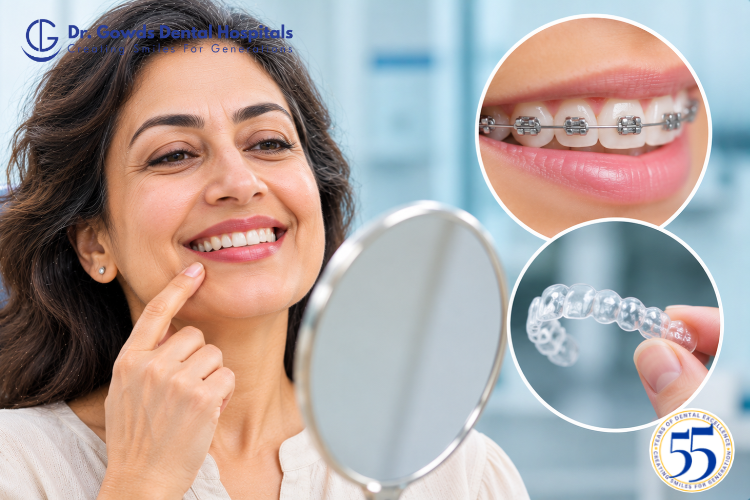
Adults searching for teeth straightening after 40 often come across traditional braces and clear aligners.
Traditional braces use brackets and wires as part of a planned orthodontic treatment approach. They remain attached during the treatment period and are adjusted as required.
Some adults prefer fixed braces because they do not have to manage a removable appliance as part of their daily routine.
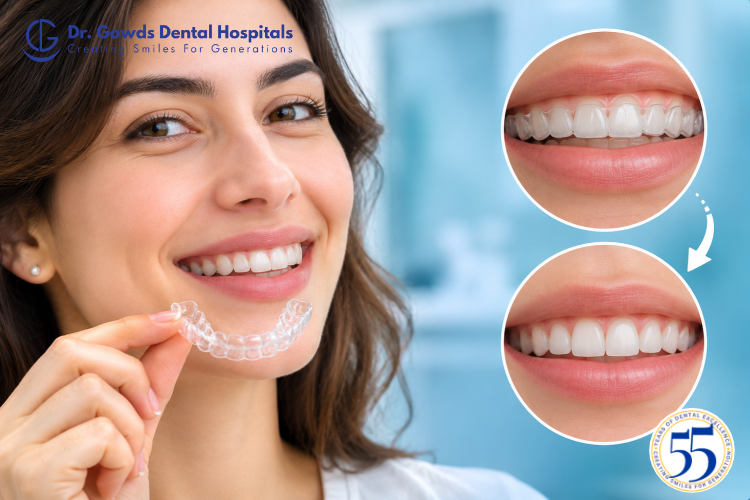
Clear aligners are removable trays designed as part of a planned sequence. Their appearance is one reason some adults explore them, particularly when they want to consider a more discreet orthodontic option.
They also require the wearer to follow the recommended wearing and care routine.
Neither option should be selected simply because it is popular. The appropriate choice depends on the individual’s dental situation, treatment goals and professional assessment.
If you have never had an orthodontic consultation as an adult, you may have several questions before your first appointment.
A consultation may involve:
You do not have to make a decision simply because you attend a consultation. The purpose is to understand your options clearly and decide what makes sense for your situation.
Adults frequently search for terms such as “braces at 45” or “braces at 50” because they want to know whether age itself creates a barrier.
There is no need to base the decision on age alone. A person in their 40s or 50s may still choose to discuss orthodontic treatment, but the starting point can vary considerably from one individual to another.
Your dental history, existing dental work, treatment goals and overall dental situation all matter when discussing treatment options.
This is also why online comparisons such as braces at 40 vs braces at 50 can only provide general information. A personalised consultation can give you information that is more relevant to your own situation.
Before starting orthodontic treatment, consider asking:
Writing down your questions before your appointment can make the consultation more useful.
Thinking about braces after 40? Speak with Dr Gowds Dental Hospitals to discuss your orthodontic concerns and available treatment options in Hyderabad.
There is no universal answer to whether orthodontic treatment is “worth it.” The decision depends on what you want to address, the options available for your situation and how well the treatment fits your expectations and lifestyle.
For some adults, the biggest obstacle is simply assuming that they are too old to ask about braces.
For others, the decision may involve comparing traditional braces with clear aligners, understanding the expected treatment process or considering how orthodontic treatment fits into their routine.
If you have been thinking about orthodontic treatment for years, turning 40 does not have to be the point where you stop considering it. It can simply be the point where you start asking the right questions.
Choosing an orthodontic provider is about more than finding a dental clinic close to home. Adults may want a team that understands their concerns, considers their dental history and explains available options clearly.
Dr Gowds Dental Hospitals has four branches in Hyderabad:
If you are searching for adult braces in Hyderabad or considering braces after 40, you can book a consultation with Dr Gowds Dental Hospitals to discuss your concerns and understand the orthodontic options available for you.
Age alone does not determine whether braces are suitable. An orthodontic consultation can help assess your teeth, bite, dental history and treatment goals before discussing suitable options.
Adults at 45 can discuss orthodontic treatment. The suitable approach depends on the individual’s dental situation, previous dental work and treatment goals.
Being 50 does not automatically mean orthodontic treatment cannot be considered. A consultation can help you understand whether braces or another orthodontic option may be appropriate for your situation.
Clear aligners are one option that some adults consider for teeth straightening. Whether they are suitable depends on the individual situation and the goals of treatment.
The basic orthodontic approach is similar, but adult treatment planning may need to take into account previous dental work, dental history, lifestyle and individual treatment goals.
There is no single treatment duration for every adult. The expected timeline depends on the individual treatment plan and the orthodontic concerns being addressed.
Ask about your current dental situation, existing fillings or crowns, bite, available treatment options, appointments, retainers, daily responsibilities and overall treatment cost.
 Gachibowli Branch