

Schedule Appointment


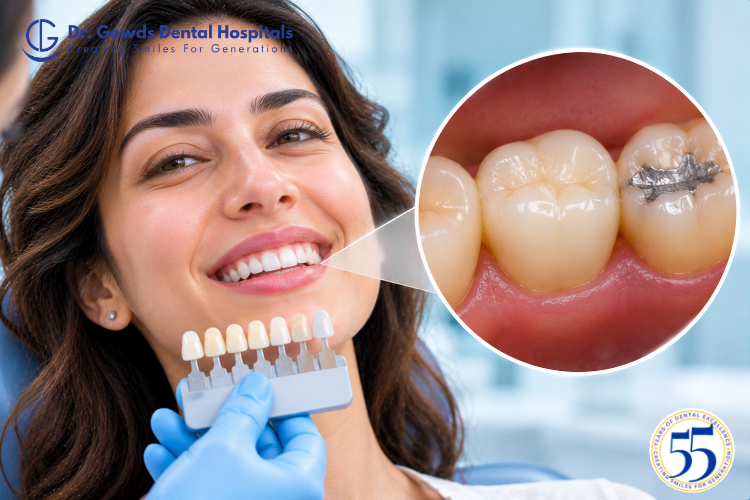
You may be thinking about teeth whitening to brighten your smile, but there is one important question if you already have dental crowns or fillings: will whitening change their colour too?
The short answer is that teeth whitening and dental restorations do not respond in exactly the same way. Whitening products are designed to change the shade of natural teeth, while crowns and many tooth-coloured fillings are made from restorative materials with a fixed shade.
This difference can matter if you have visible crowns or fillings, particularly on your front teeth. Understanding how whitening interacts with restorations can help you plan your smile treatment more thoughtfully.
At Dr Gowds Dental Hospitals, patients in Hyderabad can discuss their existing crowns, fillings and whitening goals before deciding on the right approach for their smile.
Considering teeth whitening on crowns and fillings?
Generally, whitening is intended to lighten natural tooth structure. A dental crown, on the other hand, is a restoration made from a material such as ceramic or another dental material selected for its appearance and function.
Because of this difference, whitening does not simply lighten a crown in the same way it lightens a natural tooth.
The same consideration applies to many tooth-coloured fillings. Their existing shade does not usually change in the same manner as natural teeth during a whitening treatment.
This means that if you have both natural teeth and visible restorations, it is worth considering the existing shade of those restorations before starting a whitening treatment.
Imagine that your natural teeth have become darker over time and you decide to whiten them.
The natural teeth may become lighter, while an existing crown or filling remains at its original shade. The difference may then become more noticeable.
For example:
This does not mean that whitening is unsuitable for someone with crowns or fillings. It simply means that the restorations should be considered when planning the desired shade.
A common question is, “Can you whiten dental crowns?”
In general, teeth whitening is not a method for changing the established shade of an existing crown.
If a crown is already in place, its colour is part of the restoration itself. Whitening the natural teeth around it may change the surrounding tooth shade without changing the crown’s shade.
This is especially important when a crown is located towards the front of the mouth and is easily visible when you smile.
If you are considering replacing a crown and also want a brighter smile, discussing the desired tooth shade beforehand can help with planning.
The answer depends on what type of filling you have and where it is located, but whitening should not be expected to change a filling’s shade in the same way as natural teeth.
Tooth-coloured fillings are selected to blend with the surrounding tooth at the time they are placed. If the natural tooth later becomes lighter through whitening, the existing filling may not change along with it.
This can sometimes make an older filling appear different from the surrounding tooth.
If a visible filling no longer matches the surrounding tooth after a change in tooth shade, a dentist can assess the restoration and discuss whether any further treatment is appropriate.
If you are planning both teeth whitening and new crowns, the order can be an important part of the discussion.
The reason is simple: the shade of natural teeth can influence the shade selected for a new tooth-coloured restoration.
A general approach is to discuss the desired final tooth colour before the restoration is made. This gives the dental team a clearer idea of the shade you want to achieve.
Your dentist can then consider:
The goal is to plan the colour of your smile as a whole rather than looking at whitening and restorations as completely separate decisions.
Having crowns or fillings does not automatically mean you cannot consider teeth whitening.
Instead, start by looking at where the restorations are located and how visible they are when you smile.
Crowns or fillings on visible front teeth deserve particular attention because even a small shade difference can be easier to notice.
Restorations towards the back of the mouth may be less noticeable when you smile, so shade matching may have a different level of importance.
If you have several crowns or fillings, the overall colour of your teeth and restorations should be considered together before making a decision about whitening.
If you whiten your natural teeth and an existing crown no longer blends with the surrounding teeth, there are several factors a dentist may consider.
The first step is usually to assess the colour difference and the condition of the existing restoration.
Depending on the situation, the discussion may include:
There is no single approach that applies to every person. The location, type and condition of the restoration all matter.
If you are considering both, planning them together can make the process more straightforward.
For instance, someone who wants a brighter smile and is also considering a new front crown may benefit from discussing the desired final shade before the crown is made.
This is particularly relevant when the restoration is highly visible.
Rather than asking only, “How white can my teeth become?”, it can be more useful to think about the overall colour balance of your smile.
A few simple considerations can help you avoid unexpected shade differences.
If you have a front crown or filling, consider how it may look alongside your natural teeth after whitening.
If you are planning to whiten your natural teeth, discuss the desired final shade before choosing the shade for a new visible restoration.
Natural teeth and restorative materials are different. Their colour can behave differently during whitening.
A smile is viewed as a whole. The relationship between natural teeth, crowns and fillings can be just as important as the shade of an individual tooth.
Teeth whitening is only one part of planning a brighter-looking smile when crowns or fillings are involved.
At Dr Gowds Dental Hospitals, patients can discuss their existing restorations and smile goals with the dental team before deciding on their next step.
With branches in Nanakramguda, Gachibowli, Madhapur, koti, Dr Gowds Dental Hospitals serves patients across Hyderabad.
Whether you are considering whitening, a new crown, or simply want to understand why an existing restoration looks different from your natural teeth, a dental consultation can help you understand the options available for your individual situation.
So, does teeth whitening work on crowns and fillings?
The important distinction is between natural teeth and dental restorations. Whitening is designed to change the shade of natural teeth, while existing crowns and many tooth-coloured fillings generally do not change shade in the same way.
If you already have crowns or fillings, particularly on visible teeth, it is worth considering their shade before starting a whitening treatment.
And if you are planning a new crown as well as whitening, discussing the desired final tooth colour beforehand can help with shade planning.
Looking for teeth whitening or dental shade guidance in Hyderabad? Visit Dr Gowds Dental Hospitals to discuss your smile goals with the dental team.
Teeth whitening is designed to change the shade of natural teeth. An existing crown generally does not change colour in the same way, so whitening should not be expected to lighten the crown.
Many tooth-coloured fillings do not change shade in the same way as natural teeth during whitening. If the natural tooth becomes lighter, an existing filling may appear different from the surrounding tooth.
Whitening is not generally used to change the established shade of an existing crown. If the crown is noticeably different from the surrounding teeth, the restoration can be assessed separately.
Whitening should not be expected to lighten a tooth-coloured filling in the same way as natural tooth structure. The condition and shade of the filling can be assessed if there is a noticeable difference.
If you are considering both whitening and a new crown, discuss the desired final tooth shade before the crown is made. This can help with planning the shade of the new restoration.
If natural teeth become lighter while an existing crown remains at its original shade, the difference may become more noticeable. A dentist can assess the restoration and discuss suitable options.
Having crowns or fillings does not automatically rule out whitening. The location and visibility of the restorations should be considered when planning the desired overall tooth shade.
 Gachibowli Branch