

Schedule Appointment


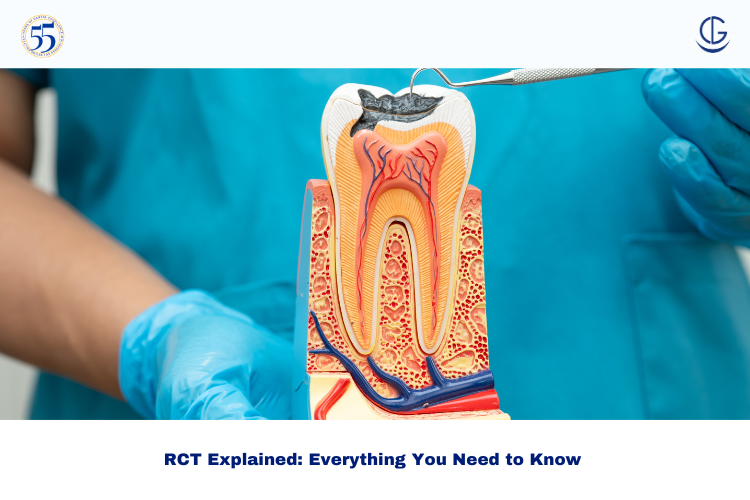
Most people hear “root canal” and brace themselves for the worst. The truth? A modern RCT (Root Canal Treatment) is no more uncomfortable than getting a routine filling — and it can save a tooth that would otherwise be lost.
Medically Reviewed by: Prof. Dr. Snigdha Gowd, MDS (Orthodontics & Dentofacial Orthopaedics)
At Dr. Gowds Dental Hospitals, advanced digital diagnostics, rotary endodontics, and painless dentistry techniques help patients undergo comfortable and effective root canal treatment with minimal discomfort.
This guide covers everything you need to know: what RCT actually is, the step-by-step procedure, whether it hurts, how much it costs in India, and what to expect during recovery. If your dentist has just recommended a root canal, read this first.
RCT stands for Root Canal Treatment — a dental procedure that removes the infected or damaged pulp from inside a tooth, cleans and disinfects the canals, and seals the space to prevent further infection.
To understand why this matters, a quick bit of anatomy: inside every tooth, beneath the hard enamel and dentine, is a soft core called the pulp. The pulp contains nerves, blood vessels, and connective tissue. It runs from the crown of the tooth down into the roots through narrow channels called root canals.
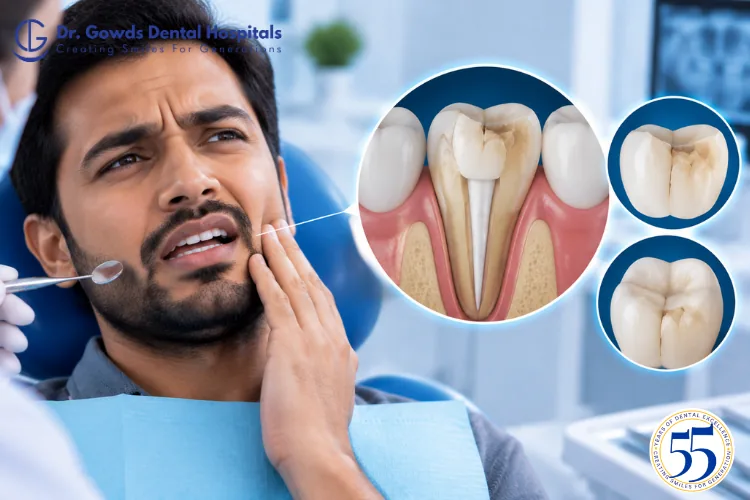
When the pulp becomes infected or inflamed — due to deep decay, a crack, repeated dental procedures, or trauma — it cannot heal on its own. Left untreated, the infection spreads, causes severe pain, and can lead to abscess or tooth loss. RCT removes the damaged pulp while preserving the tooth’s structure.
Not all infected pulp announces itself loudly. Here are the most common warning signs:
• Severe, throbbing toothache — especially when biting or chewing
• Prolonged sensitivity to hot or cold that lingers after the source is removed
• Darkening or discolouration of the affected tooth
• Swollen, tender, or red gums near the tooth
• A persistent pimple or small bump (called a sinus tract) on the gum
• A loose tooth in an adult with no obvious trauma
Important: sometimes there are no symptoms at all. A routine X-ray may be the only way to detect an infection forming at the root. This is one reason regular dental check-ups matter — catching the issue early makes treatment simpler and less expensive.
Understanding the procedure in advance removes most of the fear. Here is exactly what happens during an RCT appointment at Dr Gowds Dental Hospital.
Step 1: X-ray and diagnosis
The dentist takes a digital X-ray to assess the shape of the root canals and check for signs of infection in the surrounding bone. This determines how many canals need treatment and how complex the case is.
Step 2: Local anaesthesia
The area around the tooth is numbed with a local anaesthetic. This is the most important step for patient comfort — once the anaesthesia takes effect (usually within two minutes), you should feel nothing more than pressure during the procedure. Modern anaesthetics are highly effective, even for teeth that have been severely infected.
Step 3: Pulpectomy — removing the infected pulp
A small opening is made in the crown of the tooth. Using precision rotary instruments, the dentist removes the infected or damaged pulp from the main chamber and each root canal. This is the core of the RCT procedure.
Step 4: Cleaning, shaping, and disinfecting
The empty canals are carefully cleaned, shaped, and flushed with an antibacterial solution to eliminate any remaining bacteria. This step is critical for preventing reinfection.
Step 5: Filling and sealing
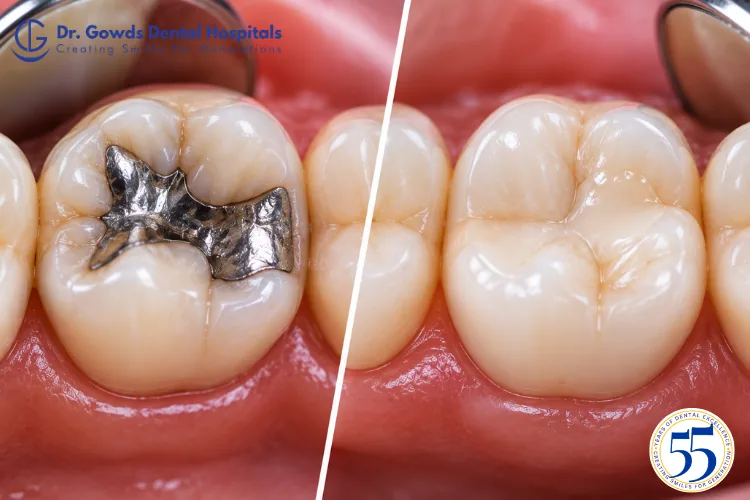
The cleaned canals are filled with a biocompatible rubber-like material called gutta-percha, then sealed with dental cement. A temporary or permanent filling is placed to close the access point. In most cases, a dental crown is fitted over the treated tooth in a separate appointment, restoring its full strength and appearance.
| Short answerNo — not during the procedure. With modern anaesthesia, patients feel pressure but not pain while the treatment is happening. Post-procedure soreness is mild and manageable with standard painkillers. |
The idea that root canal treatment is agonising is one of dentistry’s most persistent myths. Here is what is actually going on:
Once the local anaesthetic takes effect, the tooth and surrounding tissues are numb. You may feel the pressure of instruments working and the vibration of the handpiece, but not pain. Most patients are surprised by how uneventful it feels.
For patients with dental anxiety, a dentist can discuss additional comfort options such as intravenous sedation or nitrous oxide.
Some tenderness and mild soreness in the treated area for 2–3 days after the appointment is completely normal. This is your body responding to the procedure, not a sign that something has gone wrong. It is typically managed with:
• Over-the-counter ibuprofen or paracetamol
• Avoiding chewing on the treated side for a day or two
• Eating soft foods until the soreness settles
• Mild soreness and tenderness around the treated tooth is normal
• Avoid chewing on the treated side until the sensitivity settles
• Stick to soft foods: yoghurt, rice, dal, soft bread, bananas
• Avoid very hot, very cold, or very hard foods
• Take prescribed pain relief or anti-inflammatories as directed
• Sensitivity should reduce noticeably by day 3
• Brush and floss gently but normally — good oral hygiene helps healing
• Return for your crown fitting appointment (usually scheduled 1–2 weeks after RCT)
The cost of root canal treatment in India can vary depending on several important factors, including which tooth needs treatment, how complex the infection is, and whether a dental crown is required after the procedure.
Generally:
Other factors that may influence the overall treatment cost include:
At Dr. Gowds Dental Hospitals, patients receive a detailed treatment evaluation before the procedure so they clearly understand the recommended treatment plan, number of visits, and restoration options involved.
If you have been told you need RCT — or if you are experiencing tooth pain and suspect an infection — our team at Dr Gowds Dental Hospital, Hyderabad, is here to help. We offer painless root canal treatment using the latest rotary endodontic technology, same-week appointments, and transparent pricing.
Visit us at-
Dr gowds dental hospital Nanakramguda
Dr gowds dental hospital Gachibowli
Dr gowds dental hospital madhapur
RCT stands for Root Canal Treatment. It is a procedure that removes the infected pulp from inside a tooth, cleans and seals the root canals, and preserves the natural tooth.
Most straightforward root canal treatments are completed in 1 to 2 appointments. Cases involving severe infection, multiple canals, or curved roots may require a third sitting. Your dentist will advise you after the initial X-ray assessment.
Yes, when combined with a dental crown, a properly performed RCT can last a lifetime. The success rate for root canal treatment is over 95% in most studies. Maintaining good oral hygiene and attending regular check-ups helps protect the treated tooth long-term.
You can eat, but stick to soft foods on the opposite side of your mouth for the first 24–48 hours. Avoid anything hard, crunchy, sticky, or very hot or cold until any soreness has settled. Once your crown is fitted, you can eat normally.
Without treatment, the infection will continue to spread. This can lead to a dental abscess, severe bone loss around the root, and eventually the complete loss of the tooth. In rare cases, untreated dental infections can spread beyond the jaw. Early treatment is always simpler, less painful, and less expensive than waiting.
Yes. At Dr Gowds Dental Hospital, we use modern rotary instruments and effective local anaesthesia to ensure a comfortable experience. The vast majority of our patients feel little to no pain during the procedure.
 Gachibowli Branch