

Schedule Appointment


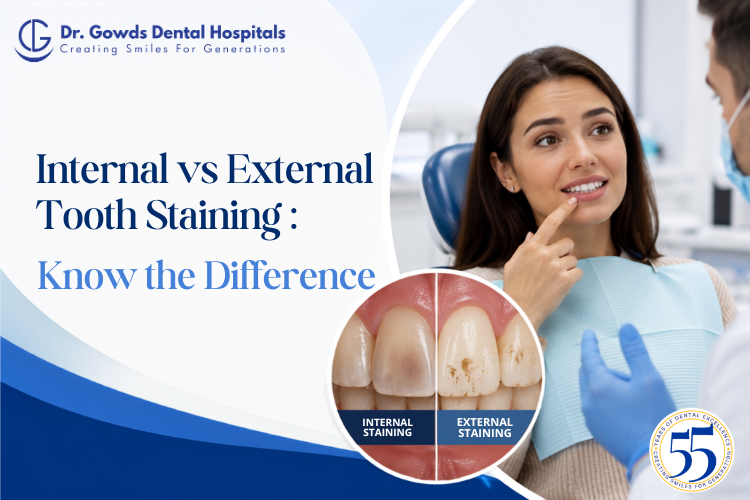
Internal vs External Tooth Staining refers to two different types of tooth discoloration that have different causes and require different treatments. External stains develop on the outer surface of the enamel due to foods, beverages, tobacco, or poor oral hygiene, and they often respond well to professional teeth whitening. Internal stains, however, occur within the tooth structure itself and are usually caused by trauma, certain medications, excessive fluoride exposure, aging, or previous dental treatment. Because these stains are located inside the tooth, conventional whitening treatments may have limited effectiveness or may not work at all.
At Dr. Gowds Dental Hospitals, identifying whether a stain is internal or external is the first step in recommending the most appropriate cosmetic or restorative treatment.
Tooth staining, also called tooth discoloration, refers to a change in the natural color of a tooth or multiple teeth.
Healthy teeth naturally vary in shade, but when they become noticeably darker, yellow, brown, gray, or white in certain areas, the discoloration may be caused by either external or internal staining.
Understanding the difference is important because treatment depends on the source of the discoloration.
External tooth staining (also known as extrinsic staining) affects the outer enamel surface.
These stains develop when pigments from foods, drinks, or tobacco attach to the enamel over time.
Because the discoloration is located on the surface, it is often easier to remove.
External stains commonly result from:
These stains gradually accumulate, especially if oral hygiene is inconsistent.
Internal tooth staining (also called intrinsic staining) develops inside the tooth rather than on its surface.
The discoloration affects the dentin or internal tooth structure, making it much more difficult to remove with standard whitening treatments.
Several conditions can lead to intrinsic discoloration.
These include:
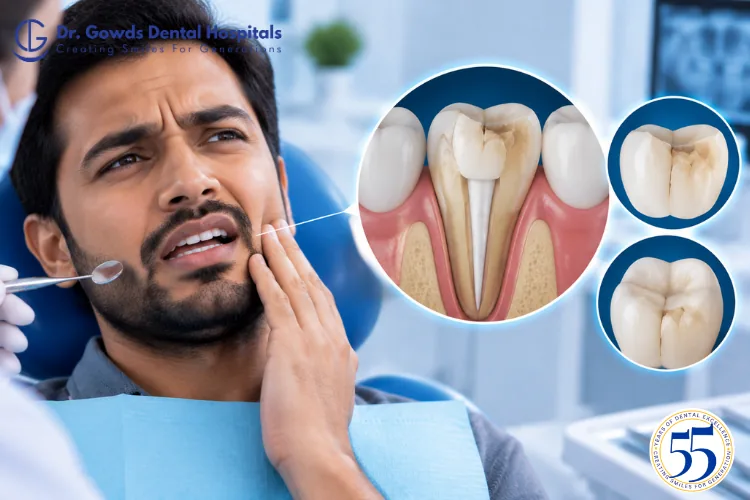
An injury may damage the pulp inside the tooth, causing it to darken over time.
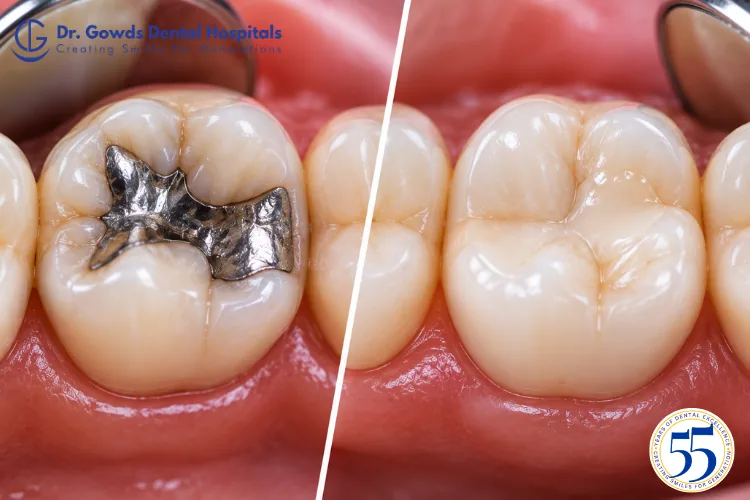
A tooth that has undergone root canal treatment may gradually change color due to changes within the tooth structure.
Some antibiotics, particularly when taken during tooth development, can contribute to intrinsic staining.
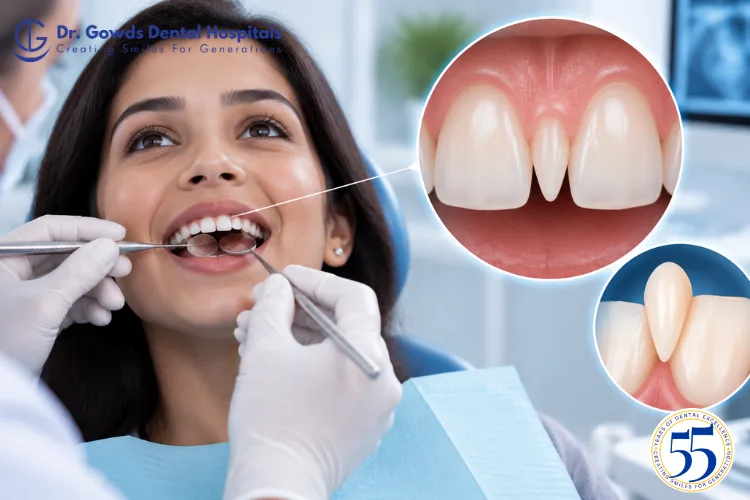
High fluoride exposure while permanent teeth are forming may cause dental fluorosis, resulting in white, brown, or mottled discoloration.
Certain developmental conditions can affect enamel or dentin formation and alter tooth color.
As people age, enamel naturally becomes thinner, allowing the naturally darker dentin underneath to become more visible.
| Feature | External Tooth Staining | Internal Tooth Staining |
| Location | Surface of enamel | Inside the tooth |
| Common Causes | Food, drinks, tobacco, plaque | Trauma, aging, fluorosis, medications, root canal treatment |
| Visibility | Surface discoloration | Deeper discoloration |
| Whitening Response | Usually good | Often limited |
| Professional Cleaning | May remove many stains | Does not remove intrinsic stains |
Although both affect appearance, they require different treatment approaches.
Many people assume that whitening products can remove every type of stain.
This is one of the most common misconceptions in cosmetic dentistry.
Professional whitening works by breaking down stain molecules within enamel and dentin.
However, the outcome depends largely on the type of discoloration.
Professional whitening is generally effective for:
Whitening may produce limited improvement in cases involving:
In these situations, alternative cosmetic treatments may provide better results.
Yes.
Although conventional whitening may not always work, several treatment options are available depending on the cause.
These may include:
For selected teeth that have undergone root canal treatment, internal bleaching may improve discoloration.
Composite resin may be used to mask localized discoloration.
Veneers can improve the appearance of teeth with intrinsic stains that do not respond to whitening.
In cases involving extensive structural damage or severe discoloration, crowns may provide both cosmetic and functional improvement.
In many cases, yes.
Treatment may include:
Scaling and polishing remove plaque, tartar, and many surface stains.
Certain superficial stains respond well to air polishing techniques.
Dentist-supervised whitening can significantly improve many extrinsic stains.
Understanding Internal vs External Tooth Staining is essential before choosing any whitening treatment. While external stains caused by food, beverages, or tobacco often respond well to professional cleaning and whitening, internal stains originate within the tooth and usually require different cosmetic or restorative solutions. Identifying the cause of discoloration ensures that treatment is both effective and appropriate.
If you are concerned about stained or discolored teeth, consult the experienced dental team at Dr. Gowds Dental Hospitals. A thorough evaluation can determine the type of staining and help you achieve a healthier, more confident smile with the most suitable treatment option.
Visit us at-
Dr gowds dental hospital Nanakramguda
Dr gowds dental hospital Gachibowli
Dr gowds dental hospital madhapur
External tooth staining occurs on the enamel surface due to food, drinks, tobacco, or plaque, while internal tooth staining develops inside the tooth because of trauma, aging, medications, fluorosis, or previous dental treatment.
Professional whitening is most effective for external stains. Internal discoloration often requires treatments such as internal bleaching, bonding, veneers, or crowns.
In some cases, internally bleached root canal-treated teeth may improve in color. Your dentist will determine whether this option is suitable.
No. Professional cleaning removes plaque, tartar, and many external stains but cannot eliminate discoloration that develops within the tooth.
A dentist evaluates your dental history, examines the teeth, and may recommend digital X-rays when necessary to identify the source of discoloration and recommend the most appropriate treatment.
 Gachibowli Branch