

Schedule Appointment

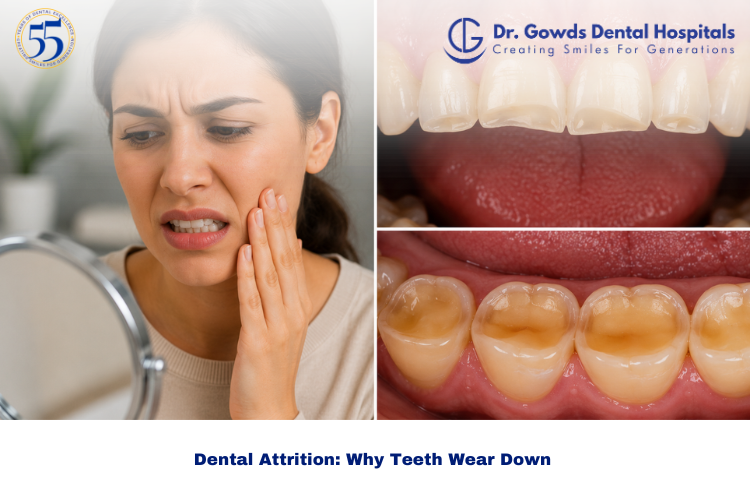
Have your teeth started looking shorter, flatter, or more worn than they used to? You may be experiencing dental attrition, a common form of tooth wear caused by teeth grinding, clenching, bite problems, or long-term tooth-to-tooth contact.
Dental attrition is the gradual loss of tooth structure due to friction between teeth. While mild wear can occur naturally over time, excessive attrition can lead to tooth sensitivity, chipped edges, changes in your bite, difficulty chewing, and significant damage that may require restorative treatment.
At Dr. Gowds Dental Hospitals, Hyderabad, dental attrition is frequently diagnosed during routine dental examinations, allowing early intervention before severe tooth wear develops.
Dental attrition is the gradual wearing down of teeth caused by tooth-to-tooth contact. It commonly occurs due to teeth grinding (bruxism), jaw clenching, bite problems, or long-term wear. Early signs include flattened teeth, sensitivity, and shortened tooth edges. Treatment may involve night guards, dental bonding, crowns, orthodontics, or full-mouth rehabilitation depending on the severity of wear.
Because dental attrition develops slowly, many people do not realize their teeth are wearing down until noticeable damage has already occurred.
A small amount of tooth wear occurs naturally as we age. However, excessive wear that affects the shape, function, or health of your teeth is considered dental attrition.
Normal wear develops gradually over decades and rarely causes symptoms.
Dental attrition, on the other hand, can lead to:
When these symptoms appear, professional evaluation becomes important.
Many patients search this question after noticing their teeth appear shorter or flatter than before.
The most common causes include:
Bruxism is one of the leading causes of dental attrition.
Many people grind their teeth during sleep without realizing it. This constant friction gradually wears away enamel.
Common signs include:
Even without grinding, excessive clenching can place tremendous pressure on teeth.
Over time, these forces accelerate tooth wear and increase the risk of fractures.
An uneven bite can cause certain teeth to absorb more force than others.
Conditions such as:
may contribute to accelerated attrition.
Missing teeth alter how chewing forces are distributed.
The remaining teeth often experience excessive stress, leading to abnormal wear patterns.
Some degree of tooth wear is expected over time. However, severe attrition should never be dismissed as “just aging.”
Excessive wear often indicates an underlying problem requiring treatment.
Many patients confuse these conditions because all involve tooth wear.
| Condition | Cause | Common Signs |
| Dental Attrition | Teeth rubbing against teeth | Flat chewing surfaces |
| Dental Erosion | Acid dissolving enamel | Smooth, shiny enamel loss |
| Dental Abrasion | External friction | Notches near the gumline |
| Tooth Decay | Bacterial acids | Cavities and holes |
Correct diagnosis is important because treatment differs significantly for each condition.
Recognizing dental attrition early can prevent extensive restorative treatment later.
Common Early Symptoms
As attrition progresses, the inner dentin layer becomes exposed, increasing sensitivity to hot, cold, and sweet foods.
Dental attrition often causes visible changes to the shape of teeth.
Common signs include:
These changes may affect both appearance and function.
Yes. As enamel wears away, the softer dentin underneath becomes exposed.
Dentin contains microscopic channels connected to the tooth’s nerve center.
This can lead to discomfort when consuming:
Sensitivity is often one of the earliest warning signs that tooth wear is becoming significant.
At Dr. Gowds Dental Hospitals, diagnosis typically involves:
Identifying the underlying cause is essential for preventing further damage.
Yes. Although lost enamel cannot grow back naturally, modern dentistry offers several effective solutions.
Treatment may include:
Treatment options may include:
Advanced cases may require:
The earlier attrition is diagnosed, the more conservative treatment can be.
According to Prof. Dr. M.S. Gowd, B.D.S., M.D.S., F.I.C.D. (USA), Founder and Chairman of Dr. Gowds Dental Hospitals:
“Many patients assume worn teeth are simply a part of getting older. While minor wear is natural, excessive dental attrition is often linked to grinding, bite imbalances, or functional issues that should be treated early to prevent irreversible damage.”
His expertise in full-mouth rehabilitation has helped thousands of patients restore worn and damaged teeth while preserving long-term oral health.
Visit us at-
Dr gowds dental hospital Nanakramguda
Dr gowds dental hospital Gachibowli
Dr gowds dental hospital madhapur
Preventing excessive tooth wear starts with addressing the root cause.
Patients with bruxism can significantly reduce tooth wear by using a custom-made night guard.
Stress often contributes to grinding and clenching habits.
Helpful strategies include:
Orthodontic treatment may help distribute chewing forces more evenly.
Dental implants and bridges can restore proper bite balance and reduce stress on remaining teeth.
Routine examinations help detect wear before major damage occurs.
Dental attrition is the gradual wearing down of teeth caused by tooth-to-tooth contact, most commonly from grinding, clenching, or bite problems. While lost enamel cannot be replaced naturally, early diagnosis and treatment can prevent further damage and restore both function and appearance. If you notice flattened teeth, sensitivity, or signs of grinding, seeking professional dental care early can help protect your smile for the future.
Dental attrition is the gradual loss of tooth structure caused by tooth-to-tooth contact, usually from grinding, clenching, or bite issues.
Yes. Lost enamel cannot regenerate naturally. However, restorative dental treatments can rebuild worn teeth.
Teeth grinding (bruxism) is one of the most common causes of excessive tooth wear.
Yes. As enamel wears away and dentin becomes exposed, teeth often become sensitive to hot, cold, sweet, or acidic foods.
Treatment may include night guards, dental bonding, crowns, orthodontics, or full-mouth rehabilitation depending on the severity of wear.
 Gachibowli Branch