

Schedule Appointment

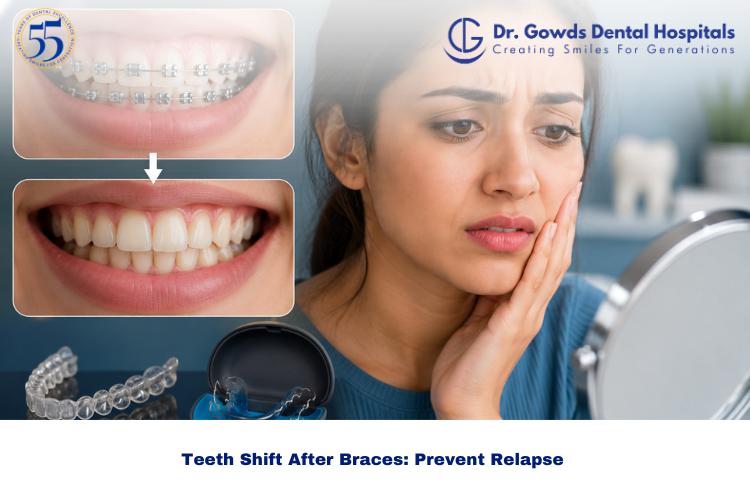
Yes, teeth can shift after braces, even after successful orthodontic treatment. This process is known as orthodontic relapse and occurs because the tissues, ligaments, and bone around the teeth need time to stabilize in their new positions. Without proper retainer use, teeth naturally tend to move back toward their original alignment.
The good news is that most post-braces shifting can be prevented with consistent retainer wear and regular dental follow-ups.
At Dr. Gowds Dental Hospitals, one of the most common questions patients ask after braces removal is: “Will my teeth stay straight forever?” The answer depends largely on how well the retention phase is managed.
Braces move teeth by applying gentle, continuous pressure over time. As teeth move, the surrounding bone and periodontal ligaments gradually remodel to support their new positions.
However, when braces come off, these supporting structures are not immediately stable.
Several factors can cause teeth to shift after orthodontic treatment.
Every tooth is attached to the jawbone by tiny fibers called periodontal ligaments.
During orthodontic treatment:
After braces are removed, these fibers naturally attempt to pull teeth back toward their original locations.
This biological tendency is one of the primary reasons orthodontic relapse occurs.
Many patients assume treatment ends when braces come off.
In reality, the retention phase is equally important.
Even after teeth appear straight:
This process can take several months to years.
Retainers help maintain alignment while stabilization occurs.
This is by far the most common reason teeth shift after braces.
Retainers are designed to:
Patients who stop wearing retainers prematurely often notice:
Even minor changes can affect smile aesthetics over time.
Teeth continue to move throughout life—even in people who never had braces.
As we age:
These factors can contribute to gradual tooth movement over decades.
This explains why some adults notice crowding in their lower front teeth despite having straight teeth earlier in life.
Many people believe wisdom teeth automatically push other teeth out of alignment.
Modern research suggests wisdom teeth are usually not the primary cause of post-braces shifting.
While impacted wisdom teeth can create dental problems, most orthodontic relapse is related to:
A professional evaluation can determine whether wisdom teeth require removal.
Excessive pressure from:
can contribute to tooth movement over time.
These habits place continuous forces on teeth, potentially affecting alignment.
Patients with grinding habits may benefit from night guards in addition to retainers.
Healthy gums help keep teeth stable.
When gum disease develops:
In severe cases, teeth may drift significantly from their original positions.
Maintaining gum health is essential for long-term orthodontic stability.
Teeth can begin moving surprisingly quickly.
Minor movement may occur within:
if retainers are not worn properly.
The first year after braces removal carries the highest risk of relapse.
This is why orthodontists place strong emphasis on retainer compliance during this period.
Common signs include:
Usually appears in the lower front teeth.
Spaces between teeth may gradually reappear.
Previously corrected teeth may begin turning slightly.
The way upper and lower teeth fit together may feel different.
Early intervention can often prevent more significant relapse.
Yes. The appropriate treatment depends on the severity of movement.
May be corrected with:
May require:
May require comprehensive orthodontic treatment again.
At Dr. Gowds Dental Hospitals, orthodontists evaluate relapse individually and recommend the least invasive correction possible.
This is the most important step.
Follow your orthodontist’s instructions regarding:
Broken or loose retainers cannot effectively hold teeth in place.
If your retainer no longer fits properly, schedule an evaluation promptly.
Healthy gums and supporting bone contribute to stable tooth positions.
Daily habits should include:
Regular orthodontic reviews help identify early signs of relapse before significant movement occurs.
Patients with bruxism may require protective appliances to reduce unwanted forces on teeth.
If you’ve noticed your teeth shifting after braces, you’re not alone. Orthodontic relapse is a natural biological tendency, but it can often be prevented with proper retainer use and regular follow-up care.
The key is understanding that braces straighten teeth, but retainers help keep them straight.
Whether you’ve recently completed orthodontic treatment or are concerned about movement years later, seeking professional advice early can help protect your smile and avoid more extensive treatment in the future.
At Dr. Gowds Dental Hospitals, our orthodontic specialists help patients maintain their treatment results and address post-braces concerns before minor shifts become major problems.
Visit us at-
Dr gowds dental hospital Nanakramguda
Dr gowds dental hospital Gachibowli
Dr gowds dental hospital madhapur
Yes. Minor tooth movement after braces is common, especially if retainers are not worn as recommended. Significant shifting should be evaluated by an orthodontist.
Most orthodontists recommend long-term retainer use, often at night indefinitely, to maintain alignment and prevent relapse.
Yes. Natural aging, reduced retainer use, gum disease, and bite changes can cause teeth to move even years after treatment.
Retainers may correct very minor movement if used early. More significant shifting usually requires orthodontic treatment or clear aligners.
Teeth may gradually move back toward their original positions, increasing the risk of orthodontic relapse and the need for additional treatment.
 Gachibowli Branch