

Schedule Appointment


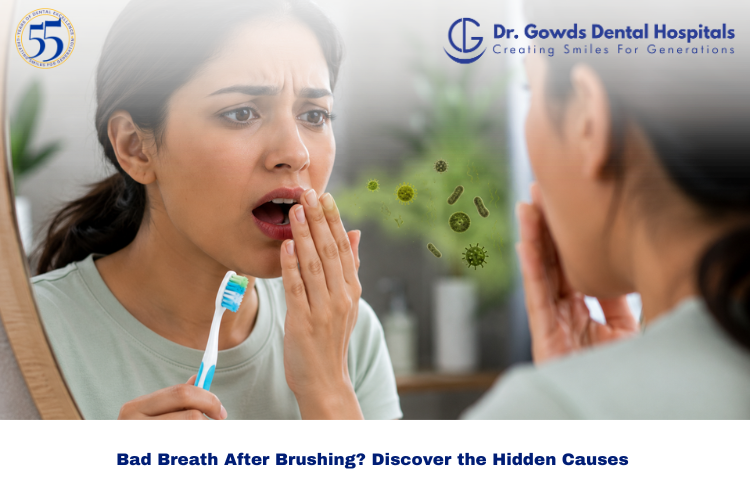
If you have bad breath after brushing, the problem is often not your toothbrush or toothpaste. Persistent bad breath is usually caused by bacteria on the tongue, gum disease, tooth decay, dry mouth, trapped food particles, dental infections, or sometimes an underlying medical condition.
Brushing is an essential part of oral hygiene, but it only cleans certain surfaces of the mouth. If the source of the odor remains untouched, bad breath can continue even immediately after brushing.
At Dr. Gowds Dental Hospitals, one of the most common concerns patients report is persistent bad breath despite maintaining a regular brushing routine. In many cases, identifying the underlying cause is the first step toward long-term fresh breath.
Occasional bad breath can happen to anyone, especially after waking up, eating strongly flavored foods, or going several hours without eating or drinking.
However, if your breath still smells unpleasant shortly after brushing and this happens regularly, it may indicate an underlying oral health issue that needs attention.
Bad breath that persists for weeks or months should never be ignored.
Many people brush their teeth thoroughly but forget about their tongue.
The tongue contains tiny grooves and crevices where bacteria, dead cells, and food debris can accumulate. These bacteria produce sulfur compounds that create unpleasant odors.
Using a tongue scraper or gently brushing your tongue daily can significantly improve breath freshness.
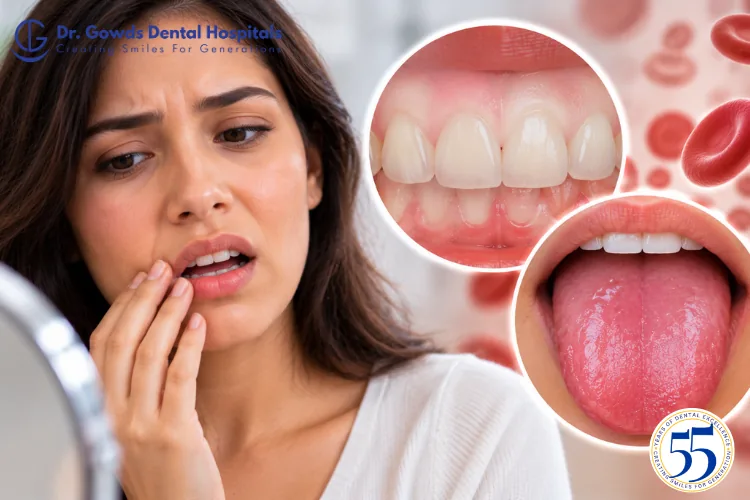
Gum disease is one of the leading causes of chronic bad breath.
When plaque accumulates around the gumline, bacteria begin to multiply. These bacteria release toxins that irritate the gums and produce foul-smelling compounds.
At Dr. Gowds Dental Hospitals, gum disease is frequently identified as the hidden cause behind long-standing bad breath complaints.
Even the most thorough brushing cannot always remove food particles trapped between teeth.
As food breaks down, bacteria feed on it and release odor-producing gases.
Foods that commonly get trapped include:
This is why flossing is just as important as brushing.
Saliva acts as the mouth’s natural cleansing system.
It helps:
When saliva production decreases, bacteria multiply rapidly and bad breath becomes more noticeable.
Many patients notice that their breath is worst in the morning because saliva production decreases during sleep.
Cavities create small spaces where bacteria and food particles become trapped.
These areas are difficult to clean with a toothbrush and often become breeding grounds for odor-producing bacteria.
As decay progresses, bad breath may worsen alongside symptoms such as:
An infected tooth can cause persistent bad breath that brushing cannot eliminate.
Dental infections often involve bacterial buildup deep inside the tooth or surrounding tissues.
Dental infections require immediate professional treatment.
Tonsil stones are small deposits that form in the crevices of the tonsils.
They contain:
Many people are unaware they have tonsil stones until they experience persistent bad breath that does not improve with brushing.
Smoking contributes to bad breath in several ways.
It can:
Even excellent brushing habits may not fully overcome tobacco-related bad breath.
Crowns, bridges, dentures, implants, and orthodontic appliances can trap plaque and food particles if not cleaned properly.
Over time, bacteria accumulate around these areas and produce unpleasant odors.
Regular professional check-ups help ensure restorations remain clean and healthy.
Sometimes the source of bad breath is not inside the mouth.
Conditions that may contribute include:
If your dentist cannot identify an oral cause, further medical evaluation may be recommended.
A tongue scraper removes bacteria that regular brushing may miss.
Flossing removes trapped food particles and plaque from between teeth.
Drinking water throughout the day helps maintain healthy saliva flow.
Professional cleaning removes tartar and plaque that cannot be eliminated through brushing alone.
Addressing gum disease, cavities, or infections often provides the most effective long-term solution.
Experiencing bad breath after brushing can be frustrating, especially when you feel you are doing everything right.
The reality is that brushing alone may not remove bacteria hiding on the tongue, between teeth, beneath the gums, or inside cavities. Identifying the true cause is essential for lasting results.
If bad breath continues despite maintaining good oral hygiene, a professional evaluation at Dr. Gowds Dental Hospitals can help uncover the source and provide effective treatment to restore fresh breath and a healthy smile.
Visit us at-
Dr gowds dental hospital Nanakramguda
Dr gowds dental hospital Gachibowli
Dr gowds dental hospital madhapur
Bad breath after brushing is often caused by tongue bacteria, gum disease, cavities, dry mouth, food trapped between teeth, or dental infections that brushing alone cannot eliminate.
Yes. Gum disease allows bacteria to accumulate around the gums and inside gum pockets, producing unpleasant odors that may persist despite brushing.
Yes. The tongue can harbor large amounts of odor-producing bacteria. Daily tongue cleaning can significantly improve breath freshness.
Yes. Cavities trap food particles and bacteria, creating odors that may not disappear with regular brushing.
You should see a dentist if bad breath lasts more than two weeks, keeps returning despite good oral hygiene, or is accompanied by symptoms such as bleeding gums, tooth pain, or swelling.
 Gachibowli Branch