

Schedule Appointment

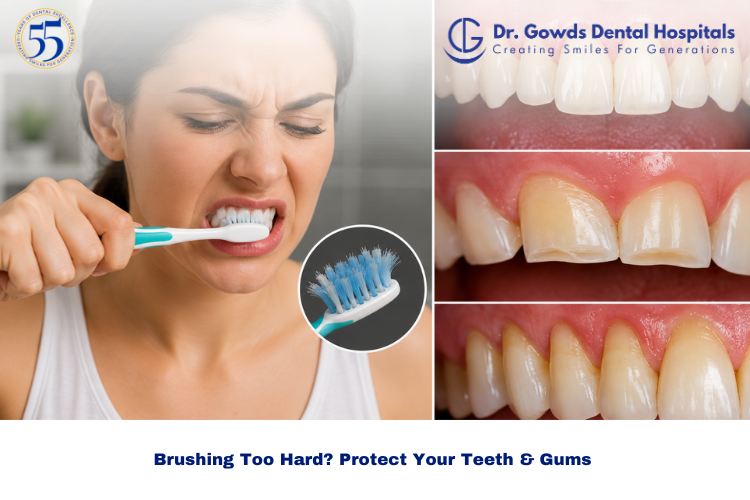
Yes, brushing too hard can damage your teeth and gums. While brushing is essential for good oral health, applying excessive pressure or using aggressive scrubbing motions can wear away tooth enamel, cause gum recession, increase tooth sensitivity, and even lead to long-term dental problems.
Many people believe that brushing harder cleans better. In reality, dentists recommend gentle brushing with a soft-bristled toothbrush because plaque can be removed effectively without excessive force.
At Dr. Gowds Dental Hospitals, one of the most common causes of unexplained tooth sensitivity and gum recession is overly aggressive brushing habits that patients often do not realize they have.
Most people brush too hard because they think more pressure equals cleaner teeth.
Common reasons include:
Unfortunately, your teeth and gums are not designed to withstand constant abrasive force.
Over time, aggressive brushing can damage both the teeth and the surrounding gum tissue.
Enamel is the hard outer layer that protects your teeth from decay and sensitivity.
When you brush too aggressively:
Unlike other tissues in the body, enamel does not regenerate once it is lost.
One of the earliest signs of brushing too hard is gum recession.
Excessive brushing pressure can cause the gum tissue to slowly pull away from the teeth, exposing the roots underneath.
Symptoms may include:
Gum recession can increase the risk of root decay and may require professional treatment if severe.
When enamel wears down or roots become exposed, the nerves inside the teeth become less protected.
This can lead to:
Many patients mistakenly assume sensitivity is caused by cavities when aggressive brushing may be the real culprit.
Toothbrush abrasion refers to physical wear caused by repeated aggressive brushing.
It typically appears as:
Once abrasion occurs, the damaged tooth structure cannot grow back naturally.
While gum disease is a common cause of bleeding gums, brushing too hard can also irritate delicate gum tissue.
If your gums frequently feel sore after brushing, excessive pressure may be contributing to the problem.
You may be brushing too aggressively if you notice:
A toothbrush should typically last around three months. If your bristles flatten or spread out much sooner, you may be applying too much pressure.
Dentists recommend a gentle, controlled brushing technique rather than vigorous scrubbing.
A soft-bristled brush effectively removes plaque while minimizing damage to teeth and gums.
Hard-bristled brushes are rarely necessary and can increase the risk of abrasion.
Position the toothbrush where the teeth meet the gums.
This angle helps remove plaque effectively without traumatizing the gum tissue.
Avoid aggressive back-and-forth scrubbing.
Instead:
Think of massaging your gums rather than scrubbing a surface.
Many people brush harder because they brush too quickly.
A proper two-minute brushing session allows effective plaque removal without excessive force.
Many modern electric toothbrushes include pressure sensors that alert you when you’re brushing too hard.
These devices can help improve brushing habits and reduce the risk of enamel and gum damage.
The answer depends on the type and severity of the damage.
Often improves once brushing technique is corrected.
May improve with desensitizing toothpaste and better brushing habits.
Cannot be naturally restored, although fluoride treatments may help strengthen remaining enamel.
Mild cases can be managed, but severe recession may require periodontal treatment or gum grafting procedures.
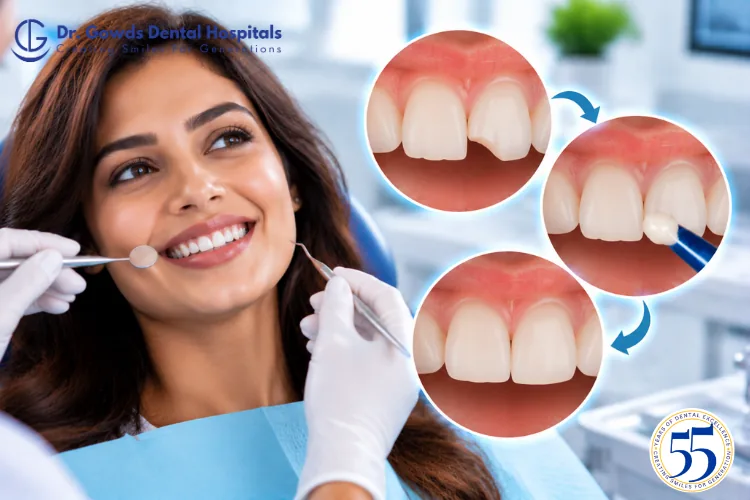
Damaged areas may need restoration using tooth-colored fillings or bonding.
Early intervention is always the best approach.
To prevent brushing-related damage:
At Dr. Gowds Dental Hospitals, we often help patients identify brushing habits that may be contributing to sensitivity, gum recession, and enamel wear before permanent damage occurs.
According to Prof. Dr. M.S. Gowd, B.D.S., M.D.S., F.I.C.D. (USA), Founder and Chairman of Dr. Gowds Dental Hospitals, proper brushing is about technique, not force.
Many patients assume aggressive brushing leads to cleaner teeth, but excessive pressure can cause irreversible damage to enamel and gum tissues. A gentle approach combined with regular professional dental care is the safest and most effective way to maintain long-term oral health.
Brushing your teeth is one of the most important daily habits for maintaining oral health, but more pressure does not mean better cleaning.
Brushing too hard can damage enamel, cause gum recession, increase tooth sensitivity, and lead to long-term dental problems. The safest approach is to use a soft-bristled toothbrush, gentle circular motions, and proper brushing technique.
If you are experiencing sensitivity, gum recession, or signs of toothbrush abrasion, the team at Dr. Gowds Dental Hospitals can help identify the cause and recommend appropriate treatment to protect your smile.
Visit us at-
Dr gowds dental hospital Nanakramguda
Dr gowds dental hospital Gachibowli
Dr gowds dental hospital madhapur
Yes. Aggressive brushing can wear away enamel and cause gum recession. While some symptoms can improve, lost enamel does not grow back naturally.
Common signs include frayed toothbrush bristles, tooth sensitivity, receding gums, bleeding gums, and visible grooves near the gumline.
No. Dentists generally recommend soft-bristled toothbrushes because they remove plaque effectively while being gentler on teeth and gums.
Yes. Repeated excessive pressure can gradually wear away gum tissue, exposing tooth roots and increasing sensitivity.
Use a soft-bristled toothbrush, hold it at a 45-degree angle, make gentle circular motions, and brush for two minutes twice daily.
 Gachibowli Branch