

Schedule Appointment

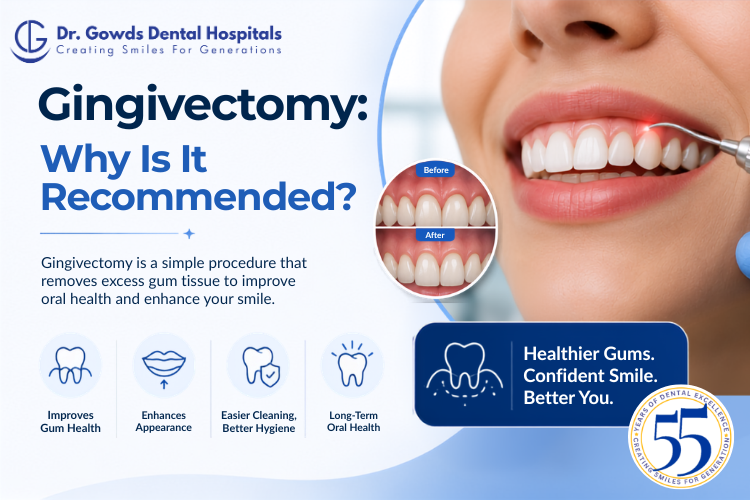
A Gingivectomy is a minor periodontal surgical procedure that removes excess or diseased gum tissue to improve oral health, restore gum contours, or enhance the appearance of the smile. Dentists and periodontists commonly recommend a gingivectomy for patients with advanced gum disease, enlarged gums, or a “gummy smile.” The procedure is performed under local anesthesia, is generally comfortable, and usually takes less than an hour, depending on the number of teeth being treated.
At Dr. Gowds Dental Hospitals, our experienced periodontists perform gingivectomy procedures using modern techniques and precise treatment planning to improve both gum health and smile aesthetics.
A Gingivectomy is a dental procedure that involves carefully removing a small amount of gum tissue around one or more teeth.
The goal may be to:
Unlike procedures that reshape both the gum and underlying bone, a gingivectomy focuses only on removing soft gum tissue.
A dentist or periodontist may recommend a Gingivectomy for several reasons.
Advanced gingivitis or periodontitis can cause gum pockets that trap bacteria.
Removing infected tissue helps reduce bacterial buildup and supports healing.
Some people naturally have gums that cover too much of their teeth, making them appear short.
A gingivectomy can expose more of the natural tooth surface and improve the smile’s proportions.
Certain medications may cause excessive gum growth, including:
A gingivectomy can remove excess tissue that interferes with cleaning or chewing.
Sometimes dentists perform a gingivectomy before placing:
This provides better access to the tooth and helps create healthier gum margins.
Patients with a “gummy smile” may benefit from a gingivectomy to achieve a more balanced and attractive smile.
Your dentist may recommend a Gingivectomy if you have:
A comprehensive examination helps determine whether this procedure is appropriate.
Understanding the procedure can help reduce anxiety before treatment.
Your dentist or periodontist examines your:
Digital X-rays or periodontal measurements may be taken if necessary.
The treatment area is numbed using local anesthesia to ensure comfort throughout the procedure.
Most patients remain awake but experience little or no pain.
The dentist identifies the exact amount of gum tissue to be removed while preserving healthy gum architecture.
Careful planning helps achieve both functional and aesthetic results.
The excess or diseased tissue is carefully removed using one of several techniques, including:
The choice depends on your clinical needs and the dentist’s recommendation.
After removing the tissue, the gums are carefully sculpted to create smooth, natural contours around the teeth.
This improves both appearance and oral hygiene.
The dentist ensures the area is clean and bleeding is controlled.
In some cases, a periodontal dressing may be placed to protect the surgical site during early healing.
Before you leave, your dentist provides detailed instructions regarding:
These instructions help promote comfortable healing.
Most patients are surprised to find that a Gingivectomy is not as uncomfortable as they expected.
Because local anesthesia is used, you should not feel pain during the procedure.
After treatment, mild symptoms such as:
are common and usually improve within a few days.
Your dentist may recommend pain-relieving medication if needed.
Healing time varies depending on the amount of tissue removed.
Most patients experience:
Your dentist will monitor healing during follow-up visits.
A Gingivectomy offers both health and cosmetic benefits.
These include:
Like any surgical procedure, a gingivectomy has some potential risks, although serious complications are uncommon.
Possible risks include:
Following your dentist’s instructions greatly reduces these risks.
A Gingivectomy is a safe and effective procedure for removing excess or diseased gum tissue, improving both oral health and smile appearance. Whether performed to treat gum disease, reduce gum overgrowth, or enhance aesthetics, the procedure allows for healthier gums, easier oral hygiene, and better long-term dental outcomes.
With today’s advanced techniques and proper aftercare, recovery is generally smooth, and most patients return to normal activities within a few days. Early treatment also helps prevent more serious periodontal problems in the future.
If you have enlarged gums, deep gum pockets, or are concerned about a gummy smile, consult the experienced periodontists at Dr. Gowds Dental Hospitals. We can assess your oral health and recommend the most appropriate treatment to help you achieve healthier gums and a confident smile.
Visit us at-
Dr gowds dental hospital Nanakramguda
Dr gowds dental hospital Gachibowli
Dr gowds dental hospital madhapur
A Gingivectomy is a periodontal surgical procedure that removes excess or diseased gum tissue to improve gum health, reduce deep gum pockets, or enhance the appearance of the smile.
No. The procedure is performed under local anesthesia, so you should not feel pain during treatment. Mild soreness afterward is normal and usually resolves within a few days.
Most patients feel significantly better within one week, while the gums continue to heal over the following two to three weeks.
Yes. A gingivectomy can remove excess gum tissue, exposing more of the natural tooth surface and creating a more balanced smile when excessive gum tissue is the primary cause.
A gingivectomy is typically performed by a periodontist or a dentist with training and experience in periodontal surgery, depending on the complexity of the case.


 Gachibowli Branch