

Schedule Appointment


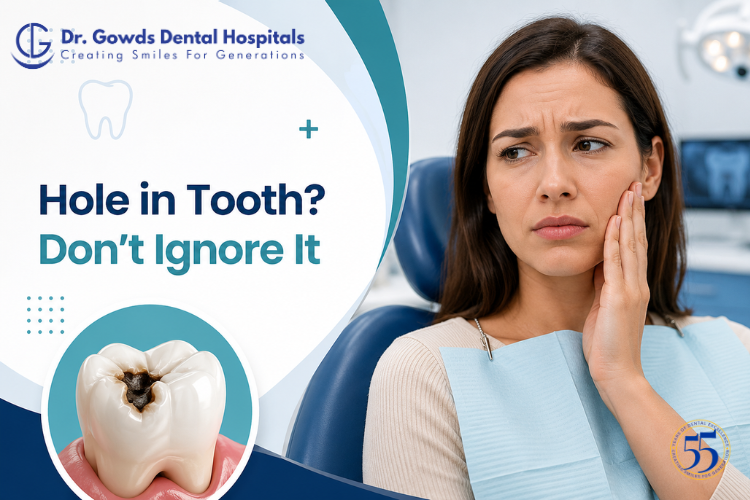
A hole in tooth is usually a sign of tooth decay (a cavity), but it can also result from a chipped tooth, worn enamel, dental erosion, or an old filling that has failed. Regardless of the cause, a hole in a tooth should never be ignored because it can worsen over time and lead to pain, infection, or tooth loss if left untreated.
At Dr. Gowds Dental Hospitals, dentists use advanced digital diagnostics to identify the cause of a hole in a tooth and recommend the most effective treatment to restore your oral health and protect your natural teeth.
A hole in a tooth is an area where part of the tooth structure has been lost.
The damage may be:
A hole can affect any part of the tooth, including:
Some holes develop gradually over months, while others appear suddenly after trauma or a broken filling.
Several dental conditions can create a hole in a tooth.
The most common reason for a hole in a tooth is dental decay.
Bacteria feed on sugars left in the mouth and produce acids that gradually dissolve tooth enamel.
Over time:
Without treatment, the decay continues spreading toward the tooth’s nerve.
Years of chewing, teeth grinding, and acidic foods can gradually wear away enamel.
As enamel becomes thinner, small defects or holes may develop.
Enamel does not grow back naturally.
Accidents, biting hard foods, or weakened teeth can fracture unexpectedly.
A broken tooth may appear as:
Prompt dental evaluation helps prevent further damage.
Acids from:
can slowly dissolve enamel.
Unlike cavities caused by bacteria, erosion results from direct acid exposure.
Old fillings may eventually:
When this happens, a hole may appear where the filling once protected the tooth.
People who clench or grind their teeth place tremendous pressure on tooth surfaces.
Over time, this may create:
Some holes cause no symptoms initially.
As the damage progresses, you may notice:
Pain when consuming:
Food frequently becomes trapped inside cavities.
This often leads to bad breath and further decay.
Pain during biting may indicate deeper tooth damage.
Persistent pain may suggest the cavity has reached the inner pulp.
Bacteria inside a cavity can produce unpleasant odors.
Many cavities appear as:
However, not all cavities are dark in color.
No. Unlike bone, tooth enamel cannot regenerate once it is lost.
A cavity will not close naturally.
Without treatment, the hole usually becomes larger.
Early treatment is simpler, less invasive, and helps preserve more natural tooth structure.
Delaying treatment allows bacteria to continue damaging the tooth.
Possible complications include:
Small cavities gradually become deeper.
Bacteria may eventually reach the dental pulp, causing infection.
Untreated infections can lead to pus formation, swelling, and severe pain.
Weakened teeth are more likely to crack or break.
In advanced cases, the tooth may no longer be restorable and require extraction.
Treatment depends on the size and cause of the hole.
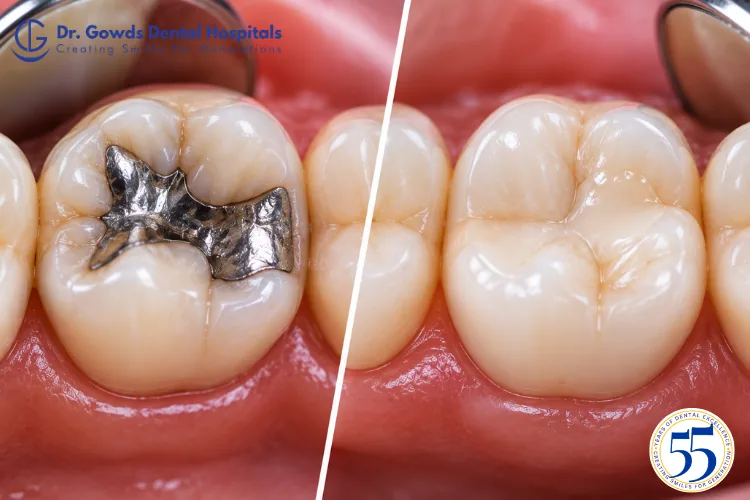
Small cavities are usually repaired with tooth-colored composite fillings.
These restore:
Moderately damaged teeth may require custom restorations that preserve more natural tooth structure than crowns.
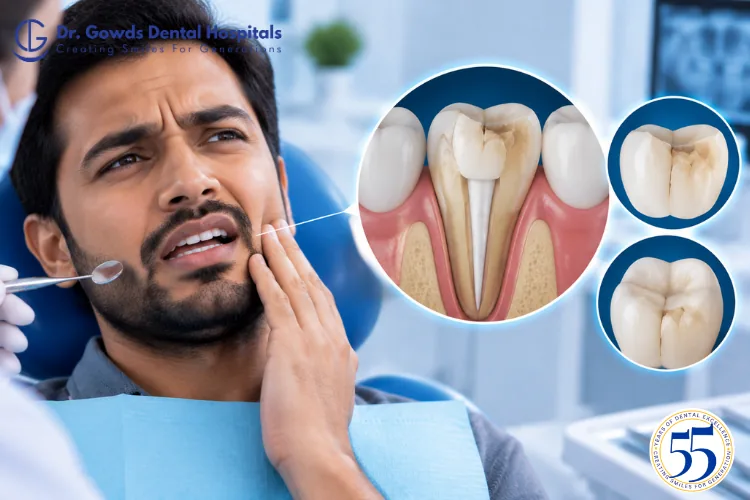
Large cavities or fractured teeth often require crowns to protect the remaining tooth.
If decay reaches the dental pulp, root canal treatment removes the infected tissue before restoring the tooth.
When the tooth cannot be saved, extraction may be necessary.
Replacement options such as dental implants or bridges can restore the missing tooth.
A hole in tooth is often the first visible sign that something is affecting your dental health. Whether it is caused by tooth decay, enamel erosion, a broken filling, or trauma, it should never be ignored. Small cavities can quickly progress into deeper infections if left untreated, leading to more complex and expensive dental procedures.
Seeking prompt care helps protect your natural tooth and prevents unnecessary complications. If you notice a hole, persistent sensitivity, or pain while chewing, the experienced dental team at Dr. Gowds Dental Hospitals can diagnose the underlying cause and provide personalized treatment to restore your smile.
Visit us at-
Dr gowds dental hospital Nanakramguda
Dr gowds dental hospital Gachibowli
Dr gowds dental hospital madhapur
Small cavities may not cause pain until they reach the deeper layers of the tooth. Even painless holes should be examined by a dentist.
No. Tooth enamel cannot regenerate, so a cavity or hole requires professional dental treatment.
No. While cavities are the most common cause, holes can also result from fractures, worn enamel, erosion, or a lost filling.
Treatment depends on the cause and severity. Options include fillings, inlays, onlays, crowns, root canal treatment, or extraction if the tooth cannot be saved.
Seek immediate dental care if the hole is accompanied by severe pain, swelling, pus, fever, or difficulty chewing, as these may indicate an infection requiring urgent treatment.
 Gachibowli Branch