

Schedule Appointment

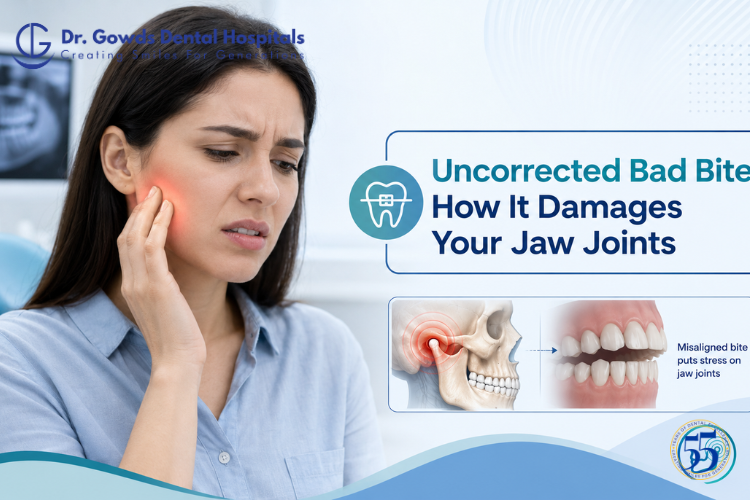
An uncorrected bad bite can place excessive stress on your jaw joints, muscles, and teeth. Over time, this uneven pressure may contribute to jaw pain, clicking sounds, headaches, tooth wear, difficulty chewing, and temporomandibular joint (TMJ) disorders. While not everyone with a bad bite develops TMJ problems, correcting bite misalignment can reduce unnecessary strain on the jaw and improve long-term oral function.
At Dr. Gowds Dental Hospitals, orthodontists and dental specialists evaluate bite alignment using advanced digital diagnostics to identify whether an uncorrected bad bite is contributing to jaw joint problems and recommend personalized treatment solutions.
A bad bite, also known as malocclusion, occurs when the upper and lower teeth do not meet correctly when the mouth closes.
An uncorrected bad bite means this misalignment has not been treated, allowing abnormal chewing forces to continue over months or years.
Common types of bad bites include:
Some people are born with bite problems, while others develop them due to habits, tooth loss, trauma, or jaw growth differences.
The temporomandibular joints (TMJs) connect the lower jaw (mandible) to the skull on both sides of the face.
These joints help you:
Because the TMJs work every time you move your jaw, even small bite problems can place repeated stress on these joints over time.
When your teeth do not fit together properly, your jaw muscles and TMJs often compensate to achieve a comfortable bite.
Over time, this compensation may lead to excessive strain on the joints and surrounding muscles.
A balanced bite distributes chewing forces evenly.
An uncorrected bad bite can cause:
Repeated stress may contribute to jaw discomfort in susceptible individuals.
The muscles responsible for chewing work harder when the bite is uneven.
This may lead to:
When teeth do not align properly, the jaw may shift during opening and closing.
Repeated abnormal movement can place additional stress on the TMJs.
Many people with bite problems unconsciously grind or clench their teeth.
Bruxism increases pressure on:
This may worsen existing symptoms.
Symptoms often develop gradually.
Common warning signs include:
Clicking sounds while opening or closing the mouth are common TMJ symptoms.
Pain may occur:
Muscle tension from bite problems may contribute to headaches in some individuals.
The jaw may feel tired after:
Some people notice limited jaw movement or stiffness.
Uneven bite forces may gradually wear down tooth enamel.
It can contribute, but it is not always the sole cause.
TMJ disorders are usually influenced by multiple factors, including:
An uncorrected bad bite may increase strain on the TMJs, particularly when combined with these other factors.
Without treatment, some patients may experience progressive problems.
Uneven chewing forces can wear certain teeth more quickly than others.
Excessive pressure may increase the likelihood of chipped or cracked teeth.
Persistent muscle tension may lead to ongoing jaw discomfort.
Poor bite alignment can make chewing less efficient and more tiring.
As teeth wear or shift, bite problems may gradually worsen.
Persistent jaw pain and chewing difficulties can affect daily comfort and confidence.
For patients whose symptoms are related to bite problems, correcting the underlying malocclusion may reduce stress on the TMJs and improve comfort.
However, TMJ disorders are often multifactorial, so treatment may involve a combination of orthodontic care, bite therapy, and muscle management.
A comprehensive evaluation helps determine the most appropriate approach.
An uncorrected bad bite may do more than affect the appearance of your smile. Over time, uneven bite forces can place additional stress on the jaw joints and surrounding muscles, contributing to symptoms such as jaw clicking, discomfort, tooth wear, headaches, and chewing difficulties. Although not every TMJ disorder is caused by bite misalignment, addressing significant bite problems early can improve oral function and reduce unnecessary strain on the jaw.
If you notice persistent jaw pain, clicking, or changes in your bite, the specialists at Dr. Gowds Dental Hospitals can evaluate your condition and recommend a personalized treatment plan to protect your jaw joints and preserve your long-term oral health.
Visit us at-
Dr gowds dental hospital Nanakramguda
Dr gowds dental hospital Gachibowli
Dr gowds dental hospital madhapur
An uncorrected bad bite may contribute to TMJ disorders by placing uneven stress on the jaw joints, although TMJ problems often have multiple contributing factors.
Common signs include jaw clicking, pain near the ears, headaches, difficulty chewing, facial muscle fatigue, and excessive tooth wear.
Yes. Orthodontic treatment can improve bite alignment, distribute chewing forces more evenly, and reduce stress on the jaw joints in appropriate cases.
It may improve symptoms if bite misalignment is a contributing factor. However, TMJ disorders can have multiple causes, so a comprehensive evaluation is important.
You should consult a dentist or orthodontist if you have persistent jaw pain, clicking, difficulty chewing, noticeable tooth wear, or changes in your bite, as early treatment may help prevent further complications.
 Gachibowli Branch