

Schedule Appointment


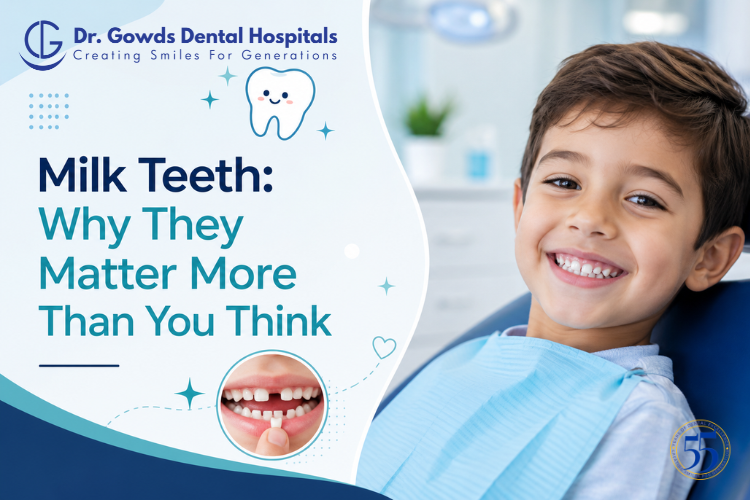
Milk teeth play a vital role in your child’s growth, speech development, nutrition, jaw development, and the proper eruption of permanent teeth. Although they eventually fall out, healthy milk teeth are essential for maintaining space for adult teeth and preventing future dental problems. Protecting milk teeth with good oral hygiene, healthy eating habits, and regular dental visits helps reduce the risk of early childhood caries and supports lifelong oral health.
At Dr. Gowds Dental Hospitals, our pediatric dentists help parents protect their children’s milk teeth through preventive dental care, early diagnosis, and personalized treatment plans that encourage healthy smiles from infancy through adolescence.
Milk teeth, also called primary teeth or baby teeth, are the first set of teeth that develop in children.
Most babies begin getting their first milk teeth around six months of age, although the timing varies from child to child.
By the age of three years, most children have 20 milk teeth, including:
These teeth remain in place until they are gradually replaced by permanent teeth between the ages of 6 and 12 years.
Although temporary, milk teeth perform several essential functions that directly influence a child’s overall health and future smile.
Many parents believe that milk teeth do not require much attention because they eventually fall out.
This is one of the biggest misconceptions in pediatric dentistry.
Healthy milk teeth are essential for proper oral development.
Children need strong milk teeth to chew food efficiently.
Painful or decayed teeth may cause children to avoid nutritious foods, increasing the risk of poor nutrition and delayed growth.
Many speech sounds depend on proper tooth positioning.
Healthy milk teeth help children pronounce words correctly as they learn to speak.
Premature tooth loss may affect speech development in some children.
One of the most important functions of milk teeth is maintaining space for adult teeth.
Each milk tooth acts as a natural placeholder until the permanent tooth underneath is ready to erupt.
If a milk tooth is lost too early due to decay or injury, nearby teeth may drift into the empty space, increasing the risk of:
Healthy milk teeth stimulate normal jawbone development during childhood.
Proper chewing encourages balanced growth of the facial bones and dental arches.
A healthy smile contributes to a child’s confidence during school, social interactions, and everyday activities.
Painful or damaged teeth may affect smiling, speaking, and self-esteem.
Although every child develops differently, the general eruption timeline is:
| Tooth Type | Average Age |
| Lower central incisors | 6–10 months |
| Upper central incisors | 8–12 months |
| Lateral incisors | 9–16 months |
| First molars | 13–19 months |
| Canines | 16–23 months |
| Second molars | 23–33 months |
Most children have all 20 milk teeth by their third birthday.
One of the biggest threats to milk teeth is early childhood caries (ECC).
Early childhood caries is severe tooth decay that affects infants and young children.
It often develops rapidly and may involve multiple teeth if not treated early.
Several factors increase the risk of early childhood caries.
Allowing children to sleep with bottles containing milk, juice, or sweetened drinks exposes the teeth to sugars for prolonged periods.
Not cleaning milk teeth regularly allows plaque and bacteria to build up.
Constant snacking throughout the day increases acid attacks on developing teeth.
Parents or caregivers can unknowingly transfer cavity-causing bacteria by sharing spoons or cleaning pacifiers with their mouths.
Fluoride helps strengthen enamel and reduce the risk of cavities when used appropriately.
Parents should watch for:
Early treatment helps preserve milk teeth and prevents more serious complications.
Premature loss of milk teeth can create long-term dental problems.
Possible complications include:
In some cases, your dentist may recommend a space maintainer to preserve the gap until the permanent tooth erupts.
Yes.
Although milk teeth eventually fall out, cavities should never be ignored.
Treatment depends on the severity of decay and may include:
Early decay may sometimes be managed with preventive fluoride treatments.
Small cavities can often be restored with tooth-coloured fillings.
Larger cavities may require stainless steel or aesthetic pediatric crowns to protect the tooth.
If decay reaches the nerve, pulp therapy may help preserve the tooth until it naturally falls out.
Severely damaged milk teeth that cannot be saved may need extraction.
Space maintainers may then be recommended to protect future tooth alignment.
Although they are temporary, milk teeth are incredibly important for your child’s overall development. They help children chew comfortably, speak clearly, support healthy jaw growth, and guide permanent teeth into their proper positions. Ignoring cavities or delaying treatment can lead to pain, infections, premature tooth loss, and future orthodontic problems.
By encouraging healthy brushing habits, limiting sugary foods, scheduling regular dental check-ups, and treating early childhood caries promptly, parents can protect their child’s smile for years to come. If you have concerns about your child’s milk teeth, the experienced pediatric dentists at Dr. Gowds Dental Hospitals are here to provide expert guidance and personalized care.
Visit us at-
Dr gowds dental hospital Nanakramguda
Dr gowds dental hospital Gachibowli
Dr gowds dental hospital madhapur
Most babies begin developing milk teeth around six months of age, and all 20 primary teeth usually erupt by three years.
Milk teeth help children chew, speak clearly, maintain space for permanent teeth, and support healthy jaw development.
Yes. Milk teeth are vulnerable to cavities, especially if oral hygiene is poor or children consume sugary foods and drinks frequently.
Early childhood caries is a form of severe tooth decay that affects infants and young children, often caused by prolonged exposure to sugary liquids and inadequate oral hygiene.
Children should have their first dental visit by their first birthday or within six months after their first milk tooth appears. This helps establish healthy oral habits and allows early detection of dental problems.
 Gachibowli Branch