

Schedule Appointment


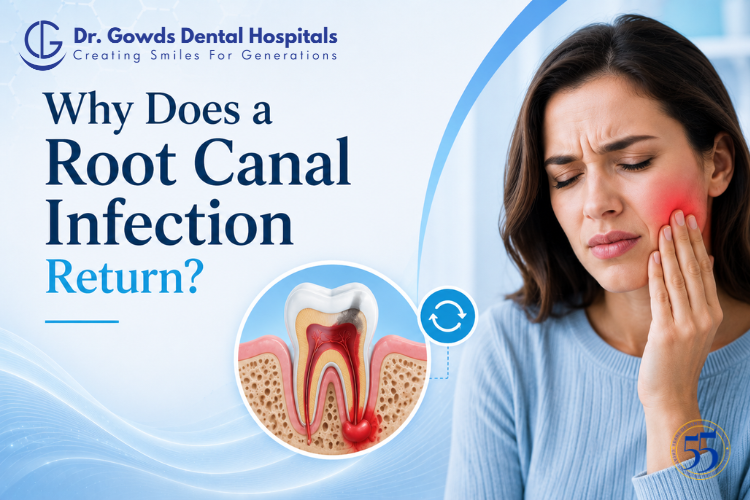
A root canal infection can sometimes return even after successful treatment if bacteria remain inside the tooth, a new infection develops, the tooth cracks, or the restoration fails. Although root canal treatment has a high success rate, no procedure is 100% guaranteed. Persistent pain, swelling, or a recurring dental abscess should be evaluated promptly because early retreatment can often save the tooth.
At Dr. Gowds Dental Hospitals, our experienced endodontists use advanced digital imaging and modern techniques to diagnose and treat recurring root canal infections, helping preserve natural teeth whenever possible.
A root canal infection occurs when bacteria enter the pulp—the soft tissue inside the tooth that contains nerves and blood vessels.
The infection may develop because of:
When bacteria reach the pulp, inflammation develops and may eventually lead to an abscess around the root tip if left untreated.
Root canal treatment removes the infected pulp, disinfects the canals, and seals the tooth to prevent future infection.
Yes.
Although root canal treatment is highly successful, a root canal infection can occasionally return months or even years after treatment.
This happens when bacteria find a way back into or remain inside the treated tooth.
A recurring infection does not always mean the original procedure failed. In many cases, new problems develop after the initial treatment.
Fortunately, retreatment or other advanced procedures can often resolve the infection while preserving the tooth.
Several factors may cause a recurring root canal infection.
Root canal systems are extremely complex.
Some teeth contain tiny accessory canals that are difficult to clean completely.
If bacteria remain in these hidden areas, they may multiply over time and cause another infection.
Many teeth require a dental crown after root canal treatment.
If the tooth is left without proper protection for too long, bacteria can enter through small openings and contaminate the treated canals again.
A crack may develop after treatment because root canal-treated teeth become more brittle over time.
The crack allows bacteria to enter the tooth and surrounding tissues, causing another infection.
Old fillings or damaged crowns may develop tiny gaps.
These gaps allow saliva and bacteria to enter the tooth, increasing the risk of reinfection.
Even after a root canal, the outer tooth structure remains vulnerable to cavities.
Untreated decay may expose the sealed canals to bacteria.
Sometimes the tissues around the root require several months to heal completely.
A small area of inflammation may persist before full healing occurs.
Regular follow-up appointments help monitor recovery.
Symptoms of a recurring root canal infection may resemble those experienced before the original treatment.
Common warning signs include:
Some patients may have no noticeable symptoms, with the infection detected only during routine dental X-rays.
Not every discomfort after treatment indicates reinfection.
| Normal Healing | Returning Root Canal Infection |
| Mild soreness for a few days | Pain that returns weeks, months, or years later |
| Gradual improvement | Increasing pain or swelling |
| No pus discharge | Gum abscess or drainage |
| Normal healing on X-rays | Persistent infection around root tip |
| Temporary sensitivity | Continuous discomfort while chewing |
If symptoms worsen instead of improving, a dental evaluation is recommended.
Treatment depends on the cause and severity of the infection.
Many recurring infections can be treated by repeating the root canal procedure.
During retreatment, the dentist:
Retreatment often allows patients to keep their natural teeth.
If the infection is caused by a leaking crown or filling, replacing the restoration may prevent further bacterial contamination.
In some situations, the tooth cannot be saved because of:
Extraction is considered only when other treatment options are unlikely to succeed.
The missing tooth may later be replaced with:
This is one of the most common misconceptions.
Antibiotics alone cannot cure a root canal infection.
While antibiotics may temporarily reduce swelling or help control the spread of infection in certain situations, they cannot remove bacteria trapped inside the root canal system.
Definitive dental treatment is necessary to eliminate the source of infection.
A root canal infection can occasionally return even after successful treatment, but it does not always mean the tooth must be removed. Persistent bacteria, cracked teeth, leaking restorations, or new decay can all lead to a recurring abscess.
The good news is that modern dentistry offers highly effective solutions, including root canal retreatment, apicoectomy, and advanced restorative procedures that can often save the affected tooth. Early diagnosis is the key to preventing further complications and preserving your oral health.
If you notice pain, swelling, or a recurring abscess around a tooth that has already undergone root canal treatment, don’t delay seeking professional care. The experienced team at Dr. Gowds Dental Hospitals can accurately diagnose the cause and recommend the most appropriate treatment to restore your smile and comfort.
Visit us at-
Dr gowds dental hospital Nanakramguda
Dr gowds dental hospital Gachibowli
Dr gowds dental hospital madhapur
Yes. Although root canal treatment has a high success rate, a root canal infection can return if bacteria remain inside the tooth, a new infection develops, or the tooth becomes cracked or poorly sealed.
An abscess may persist because of hidden bacteria, incomplete healing, a cracked tooth, a leaking crown or filling, or a new infection. A dental examination is needed to determine the exact cause.
No. Antibiotics may temporarily control swelling in certain cases, but they cannot eliminate bacteria trapped inside the root canal. Definitive dental treatment is required.
Root canal retreatment involves reopening the treated tooth, removing the previous filling material, cleaning and disinfecting the canals again, and resealing them to eliminate persistent infection.
Extraction may be recommended if the tooth has extensive fractures, severe decay, advanced bone loss, or cannot be successfully restored. Your dentist will consider extraction only after evaluating whether the tooth can be saved.
 Gachibowli Branch