

Schedule Appointment

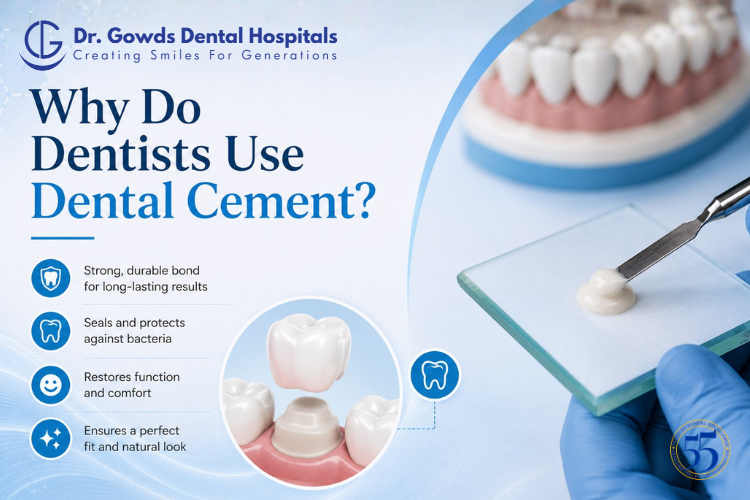
Dental cement is a special dental material used to secure restorations such as crowns, bridges, veneers, inlays, onlays, and orthodontic appliances. It creates a strong seal between the tooth and the restoration, helping restore function, protect the tooth from bacteria, and improve the longevity of dental treatment. Depending on the procedure, dentists may use either temporary or permanent dental cement. If the cement becomes loose or wears away, the restoration may shift or fall off and should be evaluated by a dentist.
At Dr. Gowds Dental Hospitals, high-quality dental cement is selected based on each patient’s treatment needs to ensure durable, comfortable, and long-lasting restorations.
Dental cement is a specially formulated adhesive material that bonds dental restorations to natural teeth or dental implants.
Unlike household glue, dental cement is designed to withstand constant chewing forces, temperature changes, moisture, and bacteria inside the mouth.
Modern dental cements also help seal tiny spaces between the tooth and restoration, reducing the risk of bacterial leakage and future decay.
Dentists choose different types of dental cement depending on the restoration being placed and the patient’s oral condition.
One of the primary purposes of dental cement is to securely attach dental restorations while protecting the underlying tooth.
It serves several important functions.
Dental cement firmly attaches:
A secure fit helps restore normal chewing and speaking.
Dental cement fills microscopic gaps between the restoration and tooth surface.
This seal helps prevent:
Some types of dental cement release fluoride, which may help reduce the risk of decay around the restoration.
A properly cemented restoration is more stable, comfortable, and durable, contributing to successful long-term treatment.
When Is Dental Cement Needed?
Dentists use dental cement in many restorative and cosmetic procedures.
Crowns are one of the most common restorations that require dental cement.
The cement securely bonds the crown over the prepared tooth, restoring its strength, shape, and appearance.
Dental bridges replace one or more missing teeth by attaching to neighboring teeth or implants.
Dental cement helps stabilize the bridge and distribute chewing forces evenly.
Porcelain veneers are bonded to the front surface of teeth using specialized adhesive cements that provide both strength and aesthetics.
These custom restorations repair damaged teeth while preserving more natural tooth structure than full crowns.
Dental cement secures them in place.
Some braces and orthodontic bands are attached using dental cement designed specifically for orthodontic treatment.
Temporary crowns and bridges are held in place using temporary dental cement until the permanent restoration is ready.
Different clinical situations require different materials.
Temporary dental cement is designed for short-term use.
It allows restorations to be removed easily when permanent treatment is completed.
Temporary cement is commonly used for:
Although durable enough for daily function, it is not intended for permanent use.
Permanent dental cement creates a long-lasting bond between the restoration and tooth.
It is commonly used for:
Permanent cements are formulated to provide excellent strength and resistance to moisture.
The lifespan of dental cement depends on several factors, including:
Temporary dental cement usually lasts:
Permanent dental cement may last:
Regular dental examinations help ensure restorations remain secure.
Yes.
Over time, dental cement may gradually weaken because of:
When cement deteriorates, bacteria may enter beneath the restoration and increase the risk of decay or infection.
You should contact your dentist if you notice:
Prompt treatment often prevents further damage.
Yes.
Modern dental cement materials are extensively tested for safety and biocompatibility.
Dentists select products that are:
All materials are chosen based on individual clinical needs.
Dental cement plays a vital role in modern dentistry by securely attaching crowns, bridges, veneers, inlays, onlays, and other restorations while protecting the underlying tooth from bacteria and damage. Although it is not visible once treatment is complete, it is one of the most important components in ensuring the success and longevity of restorative dental procedures.
Whether temporary or permanent, dental cement should always be placed and evaluated by a qualified dental professional. If you notice a loose crown, sensitivity, or a restoration that feels unstable, prompt dental care can often prevent more serious complications.
At Dr. Gowds Dental Hospitals, our experienced dental team uses high-quality dental cement and advanced restorative techniques to provide durable, comfortable, and natural-looking results that help protect your smile for years to come.
Visit us at-
Dr gowds dental hospital Nanakramguda
Dr gowds dental hospital Gachibowli
Dr gowds dental hospital madhapur
Dental cement is used to attach crowns, bridges, veneers, inlays, onlays, orthodontic appliances, and some implant restorations while sealing the tooth against bacteria.
There are both temporary and permanent types of dental cement. Your dentist chooses the appropriate material depending on the treatment.
Temporary dental cement may last a few weeks or months, while permanent dental cement can last many years with proper oral hygiene and regular dental check-ups.
Keep the crown safe, avoid chewing on the affected side, maintain good oral hygiene, and schedule a dental appointment as soon as possible. Do not use household glue to reattach the crown.
Yes. If the cement becomes worn, loose, or damaged, your dentist can often clean the restoration and recement it or recommend replacement if necessary.
 Gachibowli Branch