

Schedule Appointment


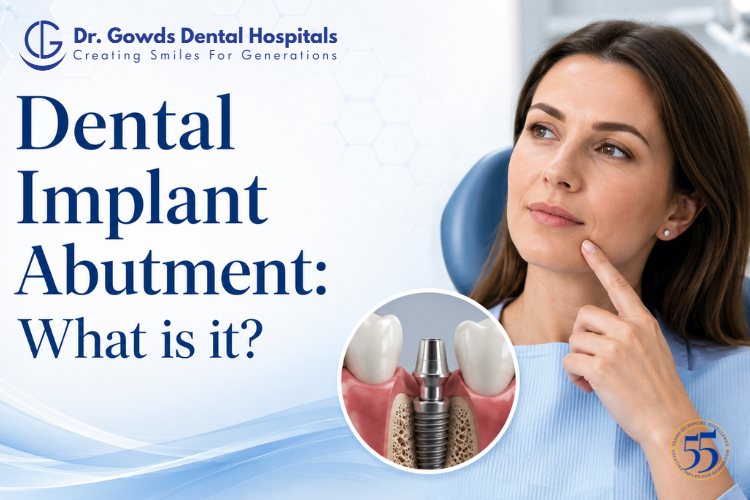
A dental implant abutment is the connector that joins a dental implant to the final restoration, such as a crown, bridge, or denture. After the implant has fused with the jawbone, the abutment is attached to the implant to support the replacement tooth. It plays a critical role in providing stability, proper bite function, and a natural-looking smile. Without a dental implant abutment, the crown or denture cannot be securely attached to the implant.
At Dr. Gowds Dental Hospitals, experienced implant specialists use high-quality dental implant abutments and advanced digital planning to ensure durable, functional, and aesthetically pleasing implant restorations.
A dental implant abutment is a small connector placed between the dental implant and the final restoration.
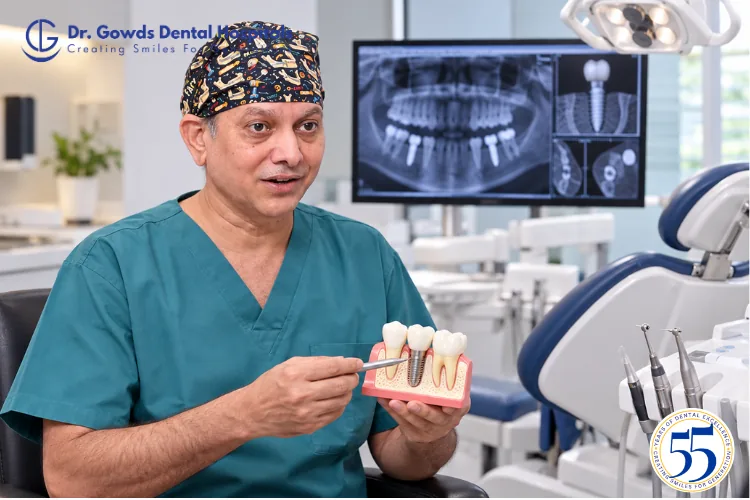
A dental implant treatment generally consists of three main parts:
The implant is surgically placed into the jawbone, while the abutment connects it to the final prosthetic tooth.
Although the abutment is usually hidden beneath the crown, it is one of the most important components of the entire implant system.
The dental implant abutment provides a secure foundation for the final restoration.
Without it, the replacement tooth would have no stable connection to the implant.
The abutment helps:
It functions as the bridge between the implant and your new tooth.
Once the implant has successfully fused with the jawbone through a process called osseointegration, the dentist attaches the abutment to the implant.
The final crown, bridge, or denture is then secured to the abutment.
This creates a strong and stable replacement that closely resembles the function of a natural tooth.
The result is improved chewing, speaking, and smile aesthetics.
The timing depends on your individual treatment plan.
In many cases, the implant is first placed into the jawbone and allowed to heal for several months.
After successful healing, the dental implant abutment is attached during a second minor procedure.
The gums then heal around the abutment before the permanent crown is placed.
For selected patients with sufficient bone and ideal clinical conditions, the abutment may be placed at the same time as the implant.
Your implant specialist will determine the safest approach after evaluating your oral health.
Different patients require different types of dental implant abutments depending on the restoration and aesthetic requirements.
A healing abutment is temporarily attached after implant placement or during the second-stage procedure.
Its purpose is to:
Once healing is complete, it is replaced with the permanent abutment.
Stock abutments are prefabricated components available in different sizes and shapes.
They are commonly used in routine implant cases where standard dimensions provide an ideal fit.
Custom abutments are digitally designed specifically for each patient.
They offer:
Custom abutments are especially beneficial in the front teeth where aesthetics are important.
Most patients experience only minimal discomfort.
Because local anesthesia is used, the procedure itself is generally painless.
After placement, mild soreness or gum tenderness may occur for a few days.
These symptoms usually improve with:
Most patients return to normal activities within a day or two.
The dental implant abutment offers several important advantages.
It provides a stable connection between the implant and the restoration.
A properly fitted abutment allows patients to chew comfortably and efficiently.
Custom-designed abutments help create a realistic gum contour and natural-looking smile.
Quality implant abutments contribute to the longevity of the entire implant restoration.
Patients often experience improved speech, comfort, and confidence after completing implant treatment.
Although uncommon, a dental implant abutment can occasionally loosen.
Possible causes include:
Symptoms may include:
If you notice any movement, contact your dentist promptly.
Do not attempt to tighten the restoration yourself.
A dental implant abutment may be a small component, but it plays a vital role in the success of every dental implant restoration. Acting as the connector between the implant and the final crown, bridge, or denture, it provides the stability, strength, and support needed for comfortable chewing, clear speech, and a natural-looking smile.
Choosing the right abutment and ensuring precise placement are essential for the long-term success of implant treatment. With proper oral hygiene, regular dental check-ups, and expert care, a dental implant abutment can support your restoration for many years.
If you are considering dental implants or want to learn more about the implant process, the experienced team at Dr. Gowds Dental Hospitals can guide you through every step and create a personalized treatment plan tailored to your needs.
Visit us at-
Dr gowds dental hospital Nanakramguda
Dr gowds dental hospital Gachibowli
Dr gowds dental hospital madhapur
A dental implant abutment is the connector that attaches a dental implant to the final restoration, such as a crown, bridge, or denture.
It depends on the treatment plan. In many cases, the abutment is placed after the implant has healed, while in selected cases it may be placed immediately.
The procedure is usually performed under local anesthesia, making it comfortable. Mild soreness afterward is normal and generally resolves within a few days.
A healing abutment temporarily shapes the gum tissue during healing, while the permanent abutment supports the final crown, bridge, or denture.
With proper oral hygiene and regular dental care, a high-quality dental implant abutment can last for many years and often functions successfully for the lifetime of the implant.
 Gachibowli Branch