

Schedule Appointment


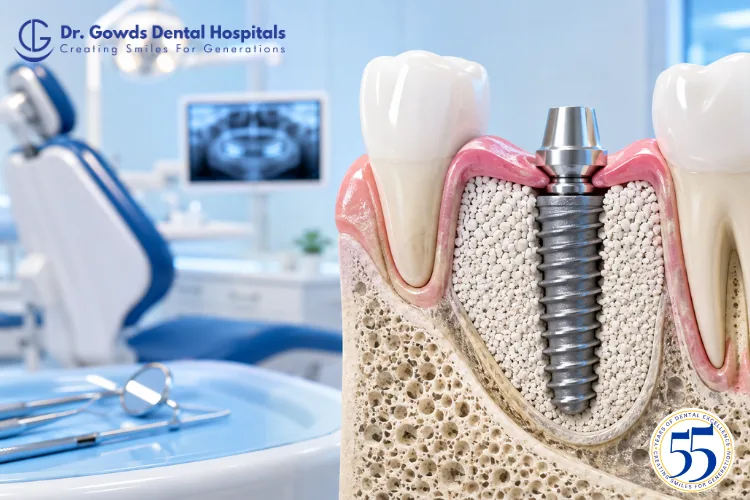
A dental implant needs adequate bone support to remain stable in the jaw. However, some people who have lost a tooth may not have enough healthy bone in the area to support an implant immediately.
This is where a dental bone graft may become part of implant treatment.
Bone loss can occur after tooth extraction, prolonged tooth loss, advanced gum disease, infection, trauma, or other conditions affecting the jaw. When the bone becomes too thin or lacks sufficient volume, a dentist or implant specialist may recommend bone augmentation before or during implant placement.
At Dr Gowds Dental Hospitals, implant treatment can involve assessing the condition of the jawbone before deciding whether bone grafting is required. The objective is to create an appropriate foundation for implant treatment while considering the patient’s overall oral health.
A dental bone graft is a procedure used to add or rebuild bone in an area of the jaw where bone volume has been lost or is insufficient.
The graft material acts as a framework or scaffold that supports the body’s natural bone-healing process. Over time, new bone can develop within or around the grafted area.
A bone graft is not simply a replacement for the missing bone. It is part of a biological healing process designed to improve the quantity or quality of bone available for future dental treatment.
A dental implant is placed into the jawbone, where it needs sufficient bone support to remain stable.
After placement, the implant undergoes a process known as osseointegration, during which bone develops around the implant surface and provides long-term support.
If the jawbone has insufficient width, height, or volume, implant placement may be difficult or may not provide the desired stability.
A dental bone graft may therefore be recommended to improve the available bone in selected cases.
Several factors can contribute to loss of bone around missing or damaged teeth.
After a tooth is removed, the surrounding jawbone no longer receives the same stimulation from the tooth root.
Over time, the bone in that region can gradually shrink.
Advanced periodontal disease can damage the tissues and bone supporting the teeth.
If significant bone loss occurs, implant planning may require additional evaluation and, in some cases, bone augmentation.
An infection around a tooth can affect the surrounding bone.
After the infected tooth is treated or removed, the remaining bone may need to be assessed before implant placement.
The longer a tooth has been missing, the more likely changes in the surrounding bone may occur, although the extent varies between individuals.
No.
Many patients have sufficient bone volume for implant placement without grafting.
A bone graft may be considered when the available bone is inadequate for the planned implant.
The decision can depend on:
A dental examination and appropriate imaging are needed to determine whether grafting is necessary.
The grafting material and technique can vary depending on the patient’s needs.
This uses bone taken from another area of the patient’s own body.
Because the material comes from the same person, it has specific biological properties that can be useful in selected situations.
However, using the patient’s own bone may require an additional surgical site.
An allograft uses processed donor human bone.
It can provide a scaffold for new bone formation without requiring bone to be harvested from another area of the patient’s body.
A xenograft is derived from an animal source and is processed for medical use.
It can provide a framework that supports bone regeneration.
Some grafting materials are manufactured synthetically and are designed to provide a scaffold for bone regeneration.
The appropriate material depends on the clinical situation and the dentist’s treatment plan.
The exact procedure varies depending on the location and amount of bone that needs to be restored.
Generally, the process may involve several stages.
The dentist assesses the missing-tooth area and the available bone.
Imaging may be used to determine the dimensions of the defect.
Local anesthesia is generally used for the procedure so the treatment area is numb.
The gum tissue is carefully moved to expose the area requiring augmentation.
The selected graft material is positioned in the area where additional bone volume is needed.
Depending on the procedure, a membrane or other material may be used to protect the graft and support regeneration.
The gum tissue is repositioned and sutured.
Healing then begins as the body integrates and remodels the grafted area.
The procedure itself is generally performed under local anesthesia, which numbs the treatment area.
After the anesthesia wears off, some discomfort and swelling may occur.
Pain management varies according to the procedure and the individual patient. Your dentist can recommend appropriate medication and postoperative measures.
Severe or worsening pain should not simply be assumed to be part of normal healing. It should be discussed with the dental team.
A missing tooth does not always mean that an implant can be placed immediately.
In some patients, bone loss has reduced the available foundation needed to support an implant. A dental bone graft can help restore bone volume and create more favorable conditions for future implant placement.
However, not every patient requires grafting, and not every graft needs to be performed as a separate procedure. Some cases may allow grafting and implant placement during the same treatment, while others require a staged approach.
The decision depends on the individual’s bone anatomy, oral health, implant requirements, and healing considerations.
If you have been told that you do not have enough bone for a dental implant, a professional evaluation can help determine whether bone grafting or another treatment approach is appropriate.
At Dr Gowds Dental Hospitals, implant planning can include assessment of the supporting jawbone and individualized treatment planning based on the patient’s dental needs.
Visit us at-
Dr gowds dental hospital Nanakramguda
Dr gowds dental hospital Gachibowli
Dr gowds dental hospital madhapur
A dental bone graft is a procedure used to add or support the regeneration of bone in an area of the jaw where bone volume is insufficient.
An implant needs adequate bone support for stability. A bone graft may be recommended when bone loss has reduced the available volume needed for implant placement.
No. Many patients have enough bone for implant placement without grafting. The need for a graft is determined through clinical examination and imaging.
Sometimes. If sufficient existing bone is available to stabilize the implant, the procedures may be performed together. More significant bone deficiencies may require graft healing before implant placement.
Healing varies depending on the graft, location, size of the defect, and individual healing response. The dentist determines when the area is ready for the next stage of treatment.
The procedure is generally performed under local anesthesia. Some swelling and discomfort can occur afterward and can usually be managed according to the dentist’s instructions.
 Gachibowli Branch