

Schedule Appointment

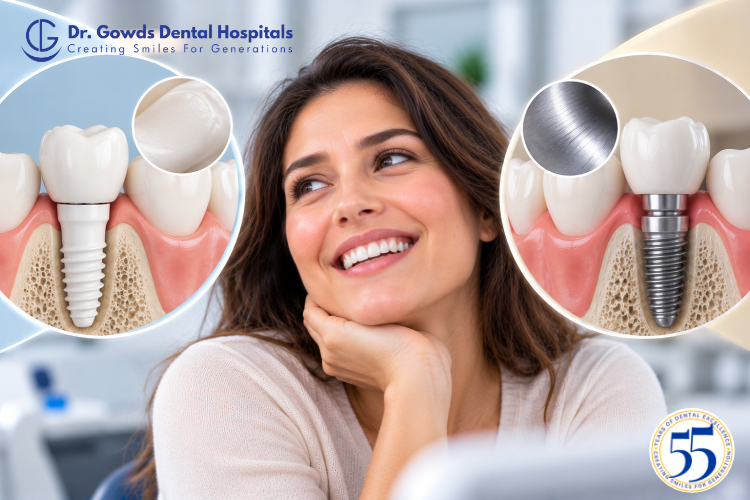
Choosing a dental implant involves more than deciding to replace a missing tooth. One of the questions that may come up during an implant consultation is the choice of implant material. Zirconia and titanium dental implants are two materials that may be discussed, and understanding how they differ can make the conversation with your dentist easier.
Zirconia is a ceramic material, while titanium is a metal. Beyond this basic difference, implant design, the position of the implant, the planned restoration, bite considerations and individual dental requirements can all influence the choice.
At Dr Gowds Dental Hospitals, patients can discuss their implant requirements with the dental team and understand which implant options are appropriate for their situation.
Looking for dental implants in Hyderabad?
A dental implant is a component used as part of a tooth replacement. The implant fixture is positioned in the jawbone, with an abutment and dental crown forming the remaining parts of the restoration in many implant systems.
The three commonly discussed components are:
The term osseointegration is often used in implant dentistry to describe the interaction between the implant surface and surrounding bone during the healing process.
The implant material is therefore only one part of the overall treatment plan. The implant system, restoration and placement considerations also need to be evaluated together.
The simplest difference is the material used to manufacture the implant.
| Feature | Zirconia Dental Implants | Titanium Dental Implants |
| Material | Ceramic, primarily zirconium dioxide | Metal |
| Appearance | White or tooth-coloured material | Metallic appearance |
| Material category | Ceramic | Metal |
| Implant designs | Available in different system configurations | Available in a wide range of system configurations |
| Main discussion point | Ceramic material and appearance | Established metal implant material |
| Selection | Depends on individual dental requirements | Depends on individual dental requirements |
Neither option should be selected simply because one material sounds newer or more attractive. The appropriate choice requires consideration of the complete dental situation.
Zirconia dental implants are made from zirconium dioxide, a ceramic material. Unlike titanium, zirconia does not have a metallic appearance.
The colour of zirconia is one of the reasons it may be considered when the visible appearance of the implant area is part of the discussion. However, the final appearance of an implant-supported tooth involves more than the implant material itself.
Zirconia implants are available in specific implant system designs. Depending on the system, the implant and abutment arrangement can differ.
This makes it important to look beyond the word “zirconia” when comparing options. Two zirconia implant systems may not have exactly the same design or components.
A dentist may discuss zirconia when:
The decision should be based on the complete treatment plan rather than material preference alone.
Titanium dental implants use titanium as the implant material. Titanium has been used in implant dentistry for many years and is available across a wide range of implant systems and designs.
Titanium implants can be used with different abutment and crown configurations, depending on the implant system and planned restoration.
One important point when comparing titanium vs zirconia dental implants is that implant design matters alongside the material.
Factors such as:
may all form part of the treatment discussion.
Therefore, asking only “Is titanium better than zirconia?” does not provide enough information to make a meaningful decision.
Appearance is one of the easiest differences to understand.
Titanium is a metallic material, whereas zirconia is white or tooth-coloured. This distinction can become a topic of discussion when an implant is planned in an area where the appearance of the surrounding tissues and restoration is important.
However, an implant itself is not the same as the visible crown. The final appearance depends on the restoration, shade, shape, position and surrounding oral structures as well.
For this reason, zirconia implant vs titanium implant comparisons should consider the entire restoration rather than focusing only on material colour.
When people search for the best material for dental implants, they often expect one material to be universally better than the other.
That is an oversimplification.
The choice can involve several factors, including implant dimensions, design, placement location, restoration requirements and the way the teeth come together during biting.
Zirconia and titanium implant systems can also differ in their available designs. A clinician therefore needs to assess the actual implant system being considered rather than comparing the materials in isolation.
The material is only one part of an implant.
A useful comparison should consider:
This approach provides a more useful basis for an implant consultation.
There is no single list of advantages that applies equally to every patient or every implant system. Instead, each material has characteristics that may be relevant to different treatment discussions.
Zirconia may be considered when:
Titanium may be considered when:
The important point is that zirconia implant pros and cons and titanium implant pros and cons should be evaluated in relation to the individual case.
If you are unsure which implant material to consider, discuss both options with your dentist before making a decision. A consultation can help you understand the implant design, restoration and material being proposed for your treatment.
This is one of the most common questions people ask when researching dental implant materials.
There is no simple “better” answer that applies to every person.
Zirconia and titanium are different materials with different characteristics. The relevant question is usually not which material is universally superior, but which available implant option is appropriate for the individual’s dental requirements and planned restoration.
A professional assessment can help compare the available options based on factors relevant to the particular case.
If you are comparing zirconia vs titanium dental implants, consider discussing these questions during your consultation:
Find out whether the recommended implant uses titanium or zirconia and why that material is being considered.
The material alone does not describe the complete implant. Ask which implant system and design are being proposed.
Discuss the type of crown and abutment planned for the implant. The visible tooth restoration is an important part of the overall treatment.
Your dentist can explain how factors such as implant location, available space, bite and surrounding dental structures affect the treatment plan.
If both materials are suitable options for your situation, ask your dentist to explain the differences between them so you can make an informed decision.
For someone beginning their research, the difference can be summarised simply:
Rather than choosing an implant based only on online comparisons, use the information to prepare better questions for your dentist.
Online searches can explain the basic differences between zirconia dental implants and titanium dental implants, but they cannot determine which option is appropriate for a particular person.
A consultation allows the dental team to assess the relevant dental factors and explain the available implant systems and restoration options.
At Dr Gowds Dental Hospitals, patients in Hyderabad can discuss their dental implant requirements with the dental team and understand the options relevant to their treatment plan.
Zirconia implants are made from a ceramic material called zirconium dioxide, while titanium implants are made from titanium metal. Implant design and restoration options can also differ between systems.
Neither material can be considered universally better for every patient. The appropriate option depends on the individual dental situation, implant system, placement considerations and planned restoration.
Zirconia has a white or tooth-coloured appearance, while titanium is metallic. However, the final appearance of an implant-supported tooth also depends on the crown, surrounding tissues and overall restoration.
Yes. Zirconia is a ceramic material rather than a metal. Patients considering a metal-free implant option can discuss available zirconia systems with their dentist.
In some situations, different implant materials may be available for consideration. Whether both are appropriate depends on the individual treatment plan and the implant systems available.
The best way to compare options is to discuss your dental requirements, implant position, restoration plan, bite and available implant systems with your dentist.
You can ask about the implant material, implant system, placement plan, abutment, crown, expected treatment stages and available alternatives.
Patients researching dental implants in Hyderabad can discuss zirconia and titanium options with the dental team at Dr Gowds Dental Hospitals branches in Nanakramguda, Gachibowli, Madhapur, koti.
 Gachibowli Branch