

Schedule Appointment


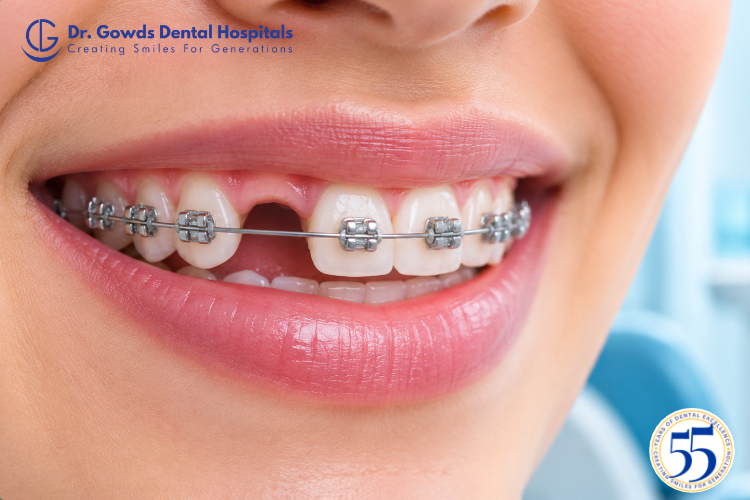
A missing tooth can make you wonder whether braces are still an option. After all, braces are usually associated with moving teeth into better positions, so what happens when one of those teeth is not there?
The good news is that having a missing tooth does not automatically rule out orthodontic treatment. Braces with a missing tooth may be considered depending on the location of the missing tooth, the condition and position of the surrounding teeth, the amount of available space, and the overall treatment objective.
In some situations, the treatment plan may involve closing the space. In others, the space may need to be maintained or adjusted for a future tooth replacement.
Looking for clarity about braces with a missing tooth?
Yes, braces may still be considered when a tooth is missing.
The presence of a missing tooth simply means that the orthodontic treatment plan needs to account for the existing gap. Instead of treating the teeth as though the missing tooth were present, the orthodontic plan is designed around the current arrangement of the teeth.
The main question becomes:
What should happen to the space left by the missing tooth?
Depending on the individual situation, the treatment plan may involve:
This is why there is no single answer that applies to everyone with a missing tooth.
Not every missing-tooth situation is the same.
A tooth may be missing because it was previously removed, because it never developed, or because it was lost for another reason. The position of the missing tooth also matters.
For example, a missing front tooth creates a different orthodontic planning situation from a missing tooth further back in the mouth.
The condition and position of the neighbouring teeth also need to be considered. A treatment plan that works for one person may not be appropriate for another.
Before starting braces, the dental team can assess the existing teeth and the available space and then determine what the orthodontic treatment needs to accomplish.
One of the most important decisions is whether the gap should be closed or preserved.
In some cases, the orthodontic treatment may be planned around bringing nearby teeth closer together.
The objective is to reduce or close the space created by the missing tooth while also addressing the alignment of the surrounding teeth.
Whether this is suitable depends on factors such as the location of the missing tooth and the position of the neighbouring teeth.
In other situations, closing the gap may not be the preferred approach.
The space may instead need to be maintained or carefully adjusted so that another form of tooth replacement can be considered later.
This can be particularly relevant when a patient is considering options such as a dental implant or another type of restoration.
The orthodontic and restorative stages may therefore need to be planned together rather than treated as completely separate procedures.
Sometimes the existing gap may not be the ideal size or position for the next stage of treatment.
Braces can be used as part of a broader plan to position the surrounding teeth and manage the available space before the missing tooth is addressed.
The exact sequence depends on the individual’s dental situation.
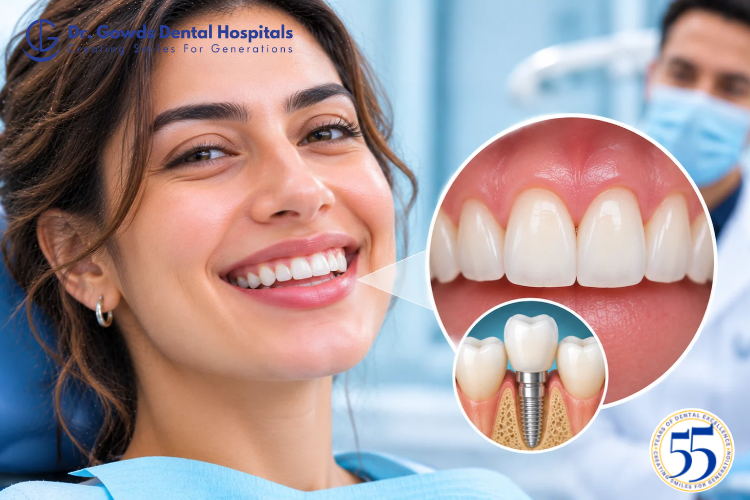
Yes, orthodontic treatment and dental implant treatment can sometimes form part of the same overall treatment plan.
However, the sequence matters.
If a missing tooth is going to be replaced, the surrounding teeth may first need to be positioned appropriately. Braces may therefore be considered before the replacement stage.
The purpose is not simply to “straighten the teeth.” The orthodontic plan needs to consider the missing-tooth space and how the surrounding teeth relate to it.
This is why it is useful to discuss orthodontic treatment and tooth replacement together when a missing tooth is involved.
A missing front tooth can raise additional concerns because the visible gap is often one of the first things people notice.
When considering braces with a missing tooth in the front of the mouth, treatment planning needs to account for the position of the surrounding teeth and the appearance of the final arrangement.
There may be different approaches depending on whether the goal is to close the space or maintain it for a future replacement.
Rather than assuming that braces will automatically close the gap, it is better to determine the intended final result before treatment begins.
Adults can also ask about orthodontic treatment when one or more teeth are missing.
The important consideration is not simply age. The treatment plan needs to be based on the individual’s current dental arrangement, the missing-tooth space and the intended outcome.
For an adult who has lived with a missing tooth for some time, the surrounding teeth may already have shifted from their earlier positions. This makes individual assessment particularly important when planning orthodontic movement.
If you have been avoiding braces because you have a missing tooth, a consultation can help you understand whether orthodontic treatment is worth considering in your situation.
Have a missing tooth but still want straighter teeth? Talk to the team at Dr Gowds Dental Hospitals in Hyderabad about whether braces, space management or a combined treatment approach may be appropriate for you.
A missing tooth means that treatment planning needs to be more specific.
A dental professional may consider:
The position of the missing tooth can influence how the surrounding teeth are positioned and what options may be available.
The amount of available space is another important part of orthodontic planning. The existing gap may need to be closed, maintained or adjusted.
The teeth next to the missing space are part of the overall treatment picture. Their current position can influence the orthodontic plan.
The treatment approach can differ depending on whether the goal is to close the space or prepare it for a future tooth replacement.
Before braces are planned, the dental team needs to understand the current condition of the teeth and surrounding structures.
These factors help create a treatment plan that is specific to the patient’s needs rather than relying on a standard approach.
There is no universal answer.
For some patients, closing the space may be considered. For others, keeping or preparing the space for a replacement may make more sense.
The decision can depend on:
The important point is that braces and tooth replacement do not necessarily have to be viewed as competing options. In some treatment plans, orthodontics may be one stage of a broader approach.
If you are considering orthodontic treatment, ask questions that clarify what will happen to the missing-tooth space.
Useful questions include:
Having these questions answered before starting treatment can make the overall plan much easier to understand.
Having a missing tooth does not automatically mean you cannot have braces.
The more important question is how the missing-tooth space should be managed as part of the overall orthodontic plan.
Depending on the individual situation, treatment may focus on closing the space, maintaining it, adjusting it, or preparing it for a future tooth replacement. The location of the missing tooth, surrounding teeth and desired final result all play a role in determining the approach.
If you are searching for braces with a missing tooth in Hyderabad, Dr Gowds Dental Hospitals provides orthodontic consultations across Nanakramguda, Gachibowli, Madhapur, koti.
Yes, braces may still be considered when a tooth is missing. The treatment plan will depend on the location of the missing tooth, the surrounding teeth, the available space and the intended final result.
In some situations, orthodontic treatment may be planned to close the space left by a missing tooth. Whether this approach is suitable depends on the individual dental arrangement.
Orthodontic treatment may sometimes be planned before a dental implant. In such cases, the position of the surrounding teeth and the space for the replacement tooth need to be considered as part of the overall treatment plan.
There is no single option that is right for everyone. The choice can depend on which tooth is missing, the size and position of the gap, the surrounding teeth and the desired final result.
Adults may also be considered for orthodontic treatment when a tooth is missing. The treatment approach depends on the current position of the teeth and the goals of treatment.
Braces may be considered when a front tooth is missing. The treatment plan needs to account for the visible space, surrounding teeth and whether the space is intended to be closed or maintained for a replacement.
The two concerns can potentially be addressed within one overall treatment plan. The orthodontic approach may involve aligning the existing teeth while also deciding how the missing-tooth space should be managed.
If you are considering braces with a missing tooth, an orthodontic assessment can help you understand the available treatment approaches and how the missing space may be managed.
 Gachibowli Branch