

Schedule Appointment


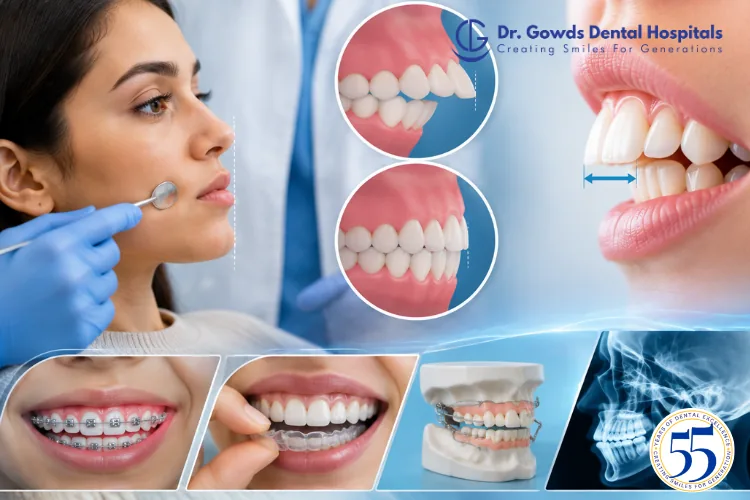
When the upper front teeth appear noticeably farther forward than the lower front teeth, the condition may be described as an overjet. A small amount of horizontal overlap between the upper and lower front teeth is normal. The concern arises when the horizontal distance is excessive and affects the appearance, bite, tooth function, or long-term oral health.
Overjet can develop for different reasons. In some people, the upper front teeth are positioned too far forward. In others, the lower jaw sits farther back relative to the upper jaw. Tooth position, jaw development, genetics, oral habits, and other factors can all contribute.
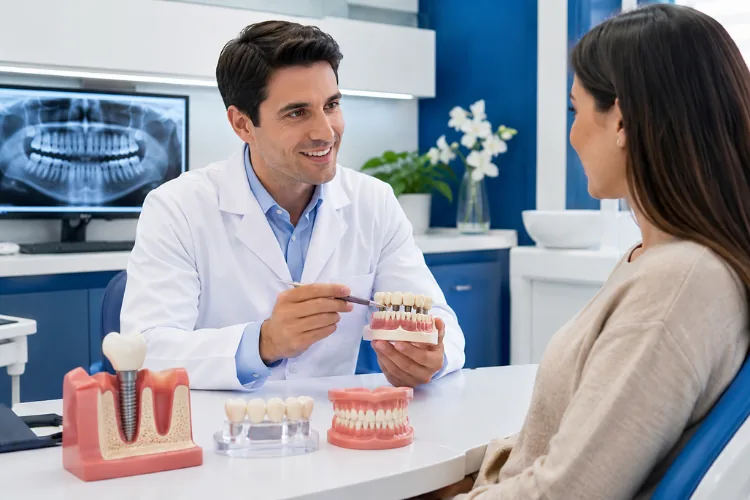
At Dr Gowds Dental Hospitals, an orthodontic evaluation can help determine whether a noticeable overjet is primarily related to tooth position, jaw relationships, or a combination of factors. Treatment is then planned according to the patient’s age, bite, facial development, and individual dental needs.
Overjet is the horizontal distance between the upper and lower front teeth when the teeth are brought together.
In a healthy bite, the upper front teeth normally sit slightly ahead of the lower front teeth.
A larger-than-normal horizontal distance is commonly referred to as an increased or excessive overjet.
Overjet is measured horizontally, rather than vertically.
This distinction is important because overjet and overbite describe different aspects of how the front teeth overlap.
These terms are often confused.
Overjet
Overjet describes the horizontal relationship between the upper and lower front teeth.
Overbite
Overbite describes the vertical overlap of the upper front teeth over the lower front teeth.
A noticeable overjet may make the upper front teeth appear to project forward.
Depending on its severity, you may notice:
However, appearance alone cannot determine the severity or cause of an overjet.
An orthodontic examination is needed to evaluate the bite and underlying jaw relationship.
Overjet does not have one universal cause.
The relationship between the upper and lower jaws has a major influence on the bite.
If the lower jaw is positioned farther back relative to the upper jaw, the upper front teeth may appear more prominent.
This type of skeletal relationship can be more noticeable during childhood and adolescence as the jaws develop.
Overjet can also be primarily dental.
The upper incisors may be angled or positioned farther forward than expected, creating increased horizontal distance from the lower incisors.
In these cases, orthodontic treatment may focus substantially on tooth movement.
Jaw size, facial growth patterns, tooth size, and dental alignment can have genetic influences.
A family history of prominent upper teeth or certain bite patterns may increase the likelihood of developing a similar relationship.
Some prolonged oral habits can influence developing tooth position.
Examples include:
The effect depends on factors such as the duration, frequency, intensity, and age at which the habit continues.
Early dental guidance can help parents understand whether a child’s oral habit may be affecting developing teeth.
Missing teeth, crowding, spacing, or abnormal tooth eruption can alter the relationship between the upper and lower teeth.
An orthodontic evaluation can determine whether these factors are contributing to the overjet.
An increased overjet can be identified during childhood.
Because the jaws and teeth are still developing, early assessment can be useful.
An orthodontist can monitor:
Not every child with a noticeable overjet needs immediate treatment.
In some cases, observation may be appropriate. In others, early intervention may be recommended depending on the developing bite and risk of dental trauma.
An increased overjet does not automatically mean that a person will develop dental disease.
However, a significant or untreated bite discrepancy may be associated with certain concerns.
Protruding upper incisors may be more vulnerable to injury.
Severely positioned teeth can sometimes be more difficult to clean effectively.
An abnormal bite can contribute to uneven contact or wear in some individuals.
A large overjet may affect how the front teeth function during biting.
Some people with bite abnormalities experience jaw discomfort or muscle strain, although overjet alone does not mean that a person will develop a TMJ disorder.
No.
A small amount of overjet is normal.
Treatment may be considered when the overjet is significantly increased or associated with:
The decision should be based on an individual assessment rather than the appearance of the front teeth alone.
Treatment depends primarily on the cause and the patient’s stage of dental development.
Traditional fixed braces can gradually move teeth into improved positions.
Brackets and archwires apply controlled forces to reposition teeth and correct the overall bite.
Braces may be appropriate for children, teenagers, and adults depending on their orthodontic needs.
Clear aligners use a series of removable trays to progressively move teeth.
They may be suitable for selected cases of increased overjet, particularly when the primary issue is tooth positioning.
However, not every overjet can be corrected with aligners alone.
The orthodontist needs to determine whether the patient’s tooth and jaw relationship is suitable for this approach.
When an increased overjet is associated with the developing relationship between the upper and lower jaws, treatment during growth may sometimes be considered.
Orthodontic appliances can be used in selected growing patients to influence the developing bite.
The timing depends on the child’s growth pattern and individual orthodontic assessment.
Some patients may need specialized orthodontic appliances in addition to braces or aligners.
These may be used to address specific jaw or tooth relationships.
The appliance selected depends on the underlying problem.
In adults with a significant skeletal discrepancy, orthodontic treatment alone may not fully correct the jaw relationship.
In selected cases, orthognathic jaw surgery may be considered alongside orthodontic treatment.
This is generally reserved for significant skeletal discrepancies where changing tooth position alone would not provide an appropriate functional or stable result.
Overjet describes the horizontal distance between the upper and lower front teeth. A small amount is normal, but a significantly increased overjet can affect tooth position, appearance, function, and susceptibility to front-tooth injury.
The underlying cause matters when choosing treatment. Some cases are primarily related to the position of the teeth, while others involve the relationship between the upper and lower jaws.
Braces, clear aligners, growth-related orthodontic treatment, and, in selected severe skeletal cases, jaw surgery may be considered.
If you or your child has noticeably protruding upper front teeth, an orthodontic assessment can help determine whether the overjet requires treatment or simply monitoring.
At Dr Gowds Dental Hospitals, individualized evaluation can help identify the cause of the overjet and determine an appropriate treatment approach based on the patient’s age, bite, jaw relationship, and dental needs.
Visit us at-
Dr gowds dental hospital Nanakramguda
Dr gowds dental hospital Gachibowli
Dr gowds dental hospital madhapur
Overjet is the horizontal distance between the upper and lower front teeth when the teeth are brought together. A small amount is normal, while an excessive distance may require orthodontic evaluation.
No. Overjet refers to horizontal overlap between the upper and lower front teeth, while overbite describes their vertical overlap.
Overjet can result from forward-positioned upper teeth, a relatively backward lower jaw, genetics, jaw growth patterns, certain childhood oral habits, or a combination of factors.
Yes. Depending on the cause and severity, overjet may be corrected with braces, clear aligners, growth-related orthodontic treatment, or, in selected severe skeletal cases, orthognathic surgery.
Clear aligners can correct selected cases where tooth movement is the primary concern. More significant jaw discrepancies may require additional or different treatment.
 Gachibowli Branch