

Schedule Appointment

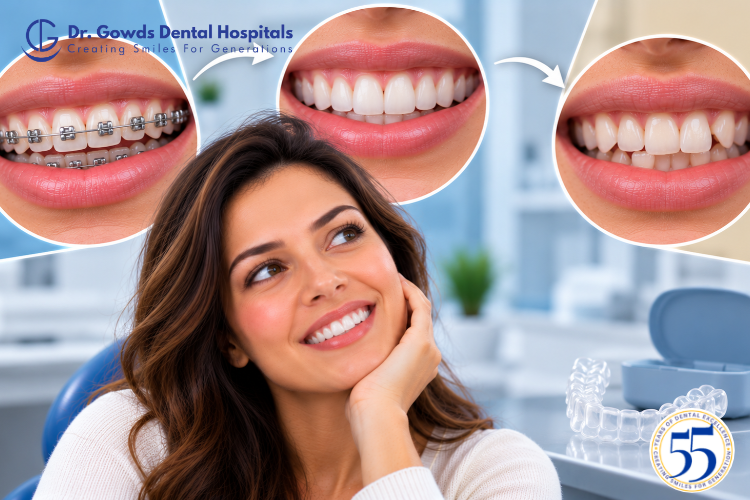
You finally finished your braces treatment, your teeth look straighter, and you are enjoying your new smile. Then, sometime later, you notice that one tooth looks slightly different or your teeth do not seem as aligned as they were when the braces came off.
Teeth shifting after braces can be frustrating, especially when you have already spent time going through orthodontic treatment. But noticing a change does not necessarily mean that all your previous progress has been lost.
Several factors can contribute to changes in tooth position after braces, including retainer habits and the natural changes that can occur over time. Understanding why teeth move and knowing what to do when you notice a change can help you make a more informed decision about your next step.
If you have noticed changes in your teeth after braces, a consultation at Dr Gowds Dental Hospitals can help you understand your current alignment and discuss suitable options based on your individual situation.
Braces are designed to move teeth into a planned position. Once the braces are removed, maintaining that position becomes an important part of the overall orthodontic journey.
Teeth can sometimes move after braces for several reasons.
One of the most common concerns associated with teeth shifting after braces is inconsistent retainer use.
Retainers are designed to help maintain the position of teeth after orthodontic treatment. If a retainer is not worn according to the instructions provided by your dental professional, the teeth may not remain in exactly the same position.
This is why finishing braces treatment does not necessarily mean that retainers are no longer relevant.
A retainer that once fitted comfortably may feel different later.
If your retainer feels unusually tight, does not fit properly, or cannot be placed comfortably, avoid forcing it into position. Instead, consider discussing the change with your dentist or orthodontic professional.
A change in retainer fit can also be a useful reason to have your teeth checked.
Teeth are not completely fixed in one position forever. Changes in the mouth can occur over time, which means alignment may change even after orthodontic treatment.
This is one reason why maintaining good retainer habits and having appropriate follow-up can be important after braces.
Certain everyday habits can also affect how your teeth and bite feel.
For example, repeatedly placing pressure on your teeth or using them in ways they are not intended to be used may contribute to changes in how your teeth feel or function.
If you have noticed a change in alignment, mentioning any relevant habits during a dental consultation can help provide useful context.
You may have come across the term orthodontic relapse when searching for information about teeth moving after braces.
In simple terms, it refers to a situation where teeth move away from the position achieved during orthodontic treatment.
Relapse does not necessarily look the same for everyone.
You might notice:
The important point is not to ignore a noticeable change simply because it appears small.
Yes, people may notice changes in their tooth alignment years after completing braces treatment.
This can be surprising if you assumed that your teeth would remain exactly where they were after the braces were removed.
However, completing braces is not necessarily the end of maintaining your results. Retainer use and ongoing attention to your dental health may remain relevant even years later.
If you notice that your teeth have moved after several years, the best next step is to have the current alignment assessed rather than assuming that you need braces again.
If you notice your teeth moving after braces, there are several practical steps you can take.
Think about when you first noticed your teeth shifting.
Was it recently? Has it gradually changed? Did you recently stop wearing your retainer?
Sharing this information during a consultation can help your dental professional understand the situation better.
If you still have your retainer, check whether it fits as it previously did.
Do not force a retainer that no longer fits comfortably. A dental professional can assess whether the retainer is still appropriate or whether another option needs to be considered.
A small change may seem unimportant, particularly if it does not affect your smile significantly.
However, if you continue noticing changes, getting the alignment assessed can help you understand what is happening rather than relying on guesswork.
The appropriate next step depends on how much the teeth have moved and what your current alignment looks like.
Depending on the situation, your dental professional may discuss options involving retainers, monitoring or further orthodontic treatment.
There is no single solution for everyone.
If your teeth have moved after braces, you may wonder whether you need braces all over again.
That depends on the extent and nature of the movement.
For a small change, the approach may be different from a situation where there has been more noticeable movement. A dental professional can assess your current alignment and explain the available options.
Possible approaches may include:
The goal is to understand the current position of your teeth first rather than choosing a treatment based only on how the teeth look in a photograph or mirror.
If your teeth have started moving after braces, Dr Gowds Dental Hospitals can help you explore your orthodontic options and understand what may be appropriate for your smile.
Maintaining your results requires attention even after the active braces phase has ended.
Here are some simple habits to keep in mind:
If you have been given a retainer, follow the wearing instructions provided by your dental professional.
Retainer schedules can vary, so it is better to follow your specific instructions rather than copying someone else’s routine.
A retainer should be kept clean and handled carefully.
Follow the cleaning instructions provided for your particular type of retainer, and store it safely when it is not being worn.
Regular dental visits can provide an opportunity to discuss any changes you have noticed in your teeth or retainer.
If something feels different, mention it rather than waiting until the change becomes more noticeable.
Your smile is not the only thing worth noticing.
If the way your teeth come together feels different, or if you notice a new change in your bite, bring it up during your next dental visit.
You do not need to panic every time you notice a minor difference in your smile.
However, a dental assessment can be useful if:
Getting an assessment can help you understand the situation before deciding what to do next.
Seeing your teeth move after braces can be disappointing, but it does not automatically mean that your entire orthodontic treatment has failed.
The first step is understanding what has changed.
Retainer habits, changes over time and other factors can play a role in changes in alignment. Rather than trying to correct the movement yourself, consider getting your teeth assessed and discussing the available options with a dental professional.
Most importantly, do not assume that you need to start braces from the beginning simply because you have noticed a small change. Your current alignment should be considered before deciding on the next step.
If you have noticed teeth shifting after braces, you can contact the dental team at Dr Gowds Dental Hospitals to discuss your alignment and possible next steps.
Visit you nearest branch- Nanakramguda, Gachibowli, Madhapur, koti
Teeth can change position after braces for different reasons. Retainer habits, changes over time and other factors may contribute to movement. If you notice a change, a dental assessment can help determine what is happening.
Yes, teeth may move after braces when retainers are not being used as advised. If you have noticed movement after stopping retainer use, discuss the change with a dental professional.
Changes in tooth alignment can be noticed years after braces. If your teeth look different from their previous position, having the alignment checked can help you understand whether any further action is needed.
Do not force a retainer that does not fit comfortably. Contact your dental professional and have the current position of your teeth and the retainer assessed.
Not necessarily. The appropriate option depends on how much the teeth have moved and your current alignment. A dental professional can explain whether monitoring, a new retainer or further orthodontic treatment may be appropriate.
Following your retainer instructions, caring for your retainer properly and keeping up with dental appointments can help you stay aware of changes in your alignment.
Clear aligners may be an option in some situations where teeth have moved after braces. Suitability depends on the current alignment and should be assessed by a dental professional.
Minor changes in tooth position can occur over time. If the movement is noticeable, increasing or causing concern, consider having your teeth checked rather than assuming it will correct itself.
 Gachibowli Branch