

Schedule Appointment


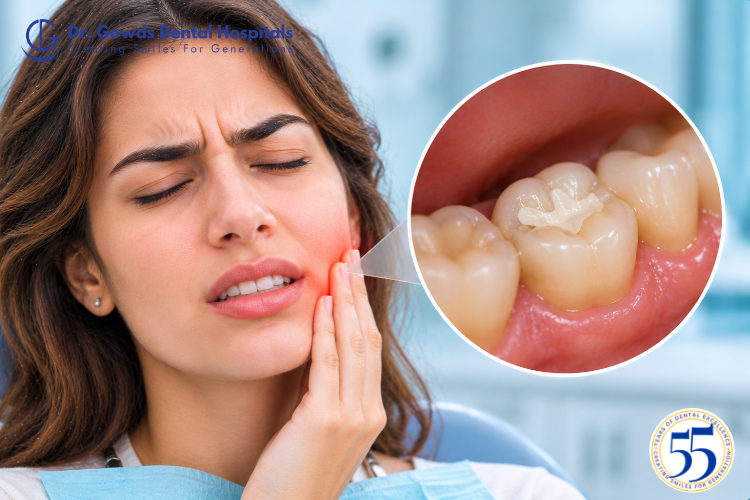
Having a dental filling can help restore a tooth affected by decay or damage, but some people notice sensitivity or discomfort afterwards. If you have tooth pain after filling, it is natural to wonder whether it is part of the healing process or something that needs attention.
The duration and type of discomfort can vary depending on the tooth, the filling procedure and how the tooth feels afterwards. Knowing what to watch for can help you decide when it is worth checking with your dentist.
At Dr Gowds Dental Hospitals, patients can discuss ongoing tooth sensitivity or discomfort with a dental professional and understand what may be causing it.
Experiencing tooth pain after a filling? Consider speaking with a dentist at Dr Gowds Dental Hospitals in Nanakramguda, Gachibowli, Madhapur, koti Hyderabad.
Some sensitivity or mild discomfort can occur after a dental filling. For some people, it may settle relatively quickly, while others may notice sensitivity for longer.
There is no single timeline that applies to every filling. The type of filling, location of the tooth, depth of the previous dental work and individual sensitivity can all influence how the tooth feels afterwards.
Rather than focusing only on the number of days, pay attention to how the discomfort is changing.
A useful way to look at it is:
If the discomfort is persistent, worsening or interfering with eating and daily activities, contacting your dentist is a sensible next step.
A filling involves working on the tooth and restoring the affected area. Once the procedure is complete, the tooth may feel different for a period of time.
A tooth can sometimes feel sensitive after dental treatment. You may notice a short-lived reaction when having something hot, cold, sweet or particularly hard.
The important thing is to notice whether the sensitivity is gradually becoming less noticeable.
After a filling, the restored tooth can feel slightly different when you bite down.
If the tooth feels as though it is making contact before the surrounding teeth, or biting feels uncomfortable, the dentist may need to assess the filling and the way the teeth come together.
Not every type of tooth pain after filling is the same. The location, intensity, timing and trigger of the discomfort can provide useful information during a dental examination.
This is why persistent or unusual pain should not simply be ignored.
One common concern is tooth pain after filling when biting or chewing.
You may notice discomfort when:
If the tooth feels fine when you are not biting but hurts when pressure is placed on it, tell your dentist exactly when the pain occurs.
The dentist can examine the restored tooth and assess how it interacts with the surrounding teeth.
Avoid repeatedly testing the tooth by biting hard objects or foods just to check whether it still hurts. This can make an already sensitive area more uncomfortable.
Sensitivity can feel different from person to person.
Some people describe it as:
Keeping track of what triggers the sensation can be useful when speaking with your dentist.
For example, instead of simply saying, “My tooth hurts,” you can explain:
“The tooth is sensitive when I drink something cold, but I don’t notice it at other times.”
Or:
“The tooth hurts when I bite down, but it doesn’t hurt when I leave it alone.”
These details can help the dentist understand the pattern of your discomfort.
A little sensitivity does not necessarily mean there is a problem with the filling. However, ongoing or worsening discomfort deserves attention.
Consider contacting your dentist if:
You do not need to wait until discomfort becomes severe before discussing it with your dentist.
If your dentist has advised you to monitor the tooth, a few simple habits can make the area more comfortable.
If a particular food or drink causes discomfort, avoid repeatedly testing the tooth with it.
If chewing feels uncomfortable, softer foods may be easier to manage while you monitor how the tooth feels.
Continue caring for your teeth as advised by your dental professional. A filled tooth still needs regular cleaning and attention.
Notice whether the pain is:
This information can be useful during a dental consultation.
No two dental situations are exactly alike, so discomfort after a filling should be considered in context.
A tooth may feel sensitive after treatment without the discomfort necessarily indicating a problem. At the same time, persistent, worsening or unusual pain should not automatically be dismissed as “normal.”
The key is the pattern.
If the discomfort is gradually settling, that is different from pain that is becoming more frequent or affecting your ability to chew comfortably.
When in doubt, a dental examination can provide a clearer answer than trying to diagnose the cause at home.
If you return to the dentist because your tooth is still hurting after a filling, the dentist will usually begin by asking questions about your symptoms.
You may be asked:
The tooth and surrounding area can then be assessed based on your symptoms and the dentist’s clinical examination.
This is why describing your pain accurately can be helpful.
If your filled tooth is still uncomfortable, don’t rely on guesswork.
Before your appointment, think about the following:
Where is the pain?
Identify the tooth or side of your mouth where you feel the discomfort.
When does it happen?
Mention whether it occurs while biting, chewing, drinking or at rest.
What triggers it?
Note whether hot, cold, sweet or hard foods make a difference.
Has it changed?
Tell your dentist whether the pain is improving, unchanged or getting worse.
These simple details can make your dental consultation more informative.
Tooth pain after filling can have different patterns, and there is no universal timeline that applies to every person or every filling.
Mild sensitivity may settle as the tooth adjusts after treatment. However, discomfort that persists, becomes stronger, repeatedly occurs when biting or interferes with everyday activities is worth discussing with a dentist.
Instead of trying to decide whether your pain is “normal” based only on the number of days, pay attention to how the symptoms are changing.
Experiencing tooth pain after a filling? Consult Dr Gowds Dental Hospitals in Hyderabad at your nearest branch in Gachibowli, Puppalguda, Madhapur or Koti and get your dental concern evaluated.
The duration can vary depending on the tooth and the type of dental treatment. Some sensitivity may settle gradually, while persistent or worsening discomfort should be discussed with a dentist.
Some people notice sensitivity after a filling. What matters is the pattern of the discomfort and whether it is improving. If sensitivity continues or becomes more noticeable, speak with your dentist.
Pain when biting can have different causes and should be assessed in context. Tell your dentist if the filled tooth hurts specifically when chewing or when your teeth come together.
Cold sensitivity can occur after dental treatment. If it continues, becomes stronger or causes significant discomfort, a dental examination can help determine what may be happening.
A tooth that continues to hurt after a week may need to be checked, particularly if the pain is not improving or is becoming more noticeable. Contact your dentist and describe when the pain occurs.
Yes, discomfort can occur without chewing. If the tooth develops ongoing or increasing pain even when you are not eating, it is worth discussing with your dentist.
Not every instance of discomfort means there is a problem. However, persistent, worsening or disruptive pain should not be ignored. A dental examination can help clarify the cause.
Pay attention to when the pain occurs and whether it is improving. Avoid repeatedly triggering the discomfort and contact your dentist if the pain persists, worsens or affects normal activities.
 Gachibowli Branch