

Schedule Appointment



A root canal is one of the dental treatments people often associate with fear, pain and complicated procedures. This has created several root canal myths, including the idea that treatment is always painful or that it can cause illness.
If you are considering root canal treatment, it helps to separate common assumptions from the questions that actually matter. In this guide, Dr Gowds Dental Hospitals explains seven common root canal myths in simple language, helping you approach a dental consultation with clearer expectations.
Have questions about root canal treatment?
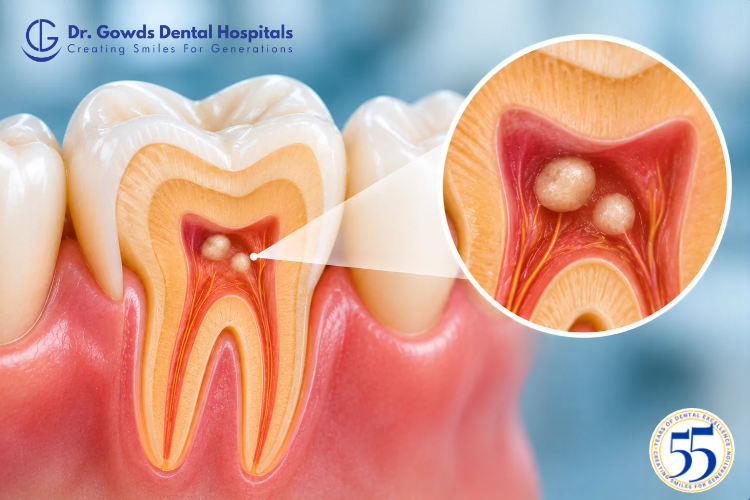
Root canal treatment is a dental procedure that focuses on the inside of a tooth. Depending on the condition of the tooth, a dentist may discuss this treatment as one of the available options.
The treatment process, number of appointments and restoration required can vary from one person and tooth to another. This is why an individual dental assessment is more useful than relying on general statements found online.
Fear of pain is one of the main reasons people search for “is root canal painful?” before making an appointment.
What to know: The experience can vary depending on the tooth, its condition, the planned procedure and the individual. Your dentist can explain the comfort measures used during treatment and what you may experience afterwards.
Instead of assuming that a root canal will be painful, consider asking:
Understanding the process can make the appointment feel much less uncertain.
The idea that root canal treatment itself causes illness is one of the most frequently discussed dental misconceptions.
What to know: A root canal is a dental procedure focused on a particular tooth. Concerns about your overall health should not be based on social media posts, online discussions or generalised claims.
If you have a specific health concern, explain it to your dentist and ask how it relates to your individual dental situation.
The important point is to discuss your own circumstances rather than relying on broad claims about root canal treatment.
Some people assume that removing a troublesome tooth is simpler and therefore automatically the better choice.
What to know: Root canal treatment and extraction are different treatment approaches. The choice can depend on the condition of the tooth, its structure, surrounding dental considerations and the treatment plan discussed with your dentist.
If both options are being considered, ask:
The decision should be based on your individual dental assessment rather than the assumption that one option is always better.
A change in tooth pain can make people assume that the problem has disappeared.
What to know: Pain is only one part of a dental assessment. A change in symptoms does not give you enough information to determine what is happening inside a tooth.
If you have experienced persistent, recurring or unusual tooth discomfort, discuss it with a dental professional instead of relying only on whether the pain is present at a particular moment.
The phrase “root canal” can make people imagine a long series of dental appointments.
What to know: Treatment time and appointment requirements vary. Factors such as the tooth involved, its condition, the complexity of the procedure and the planned restoration can influence the treatment schedule.
During your consultation, ask about:
Having a clear treatment plan can help you prepare for the process.
Another common concern is that a tooth treated with a root canal will inevitably become a problem again.
What to know: The future care of a treated tooth can depend on factors such as its condition, the restoration selected, oral hygiene and follow-up care.
A root canal should not be viewed as the end of dental care. Ask your dentist how the tooth will be restored and what daily care should be followed afterwards.
Root canal treatment is sometimes associated with ageing, which can lead younger adults to assume that it is not relevant to them.
What to know: Dental treatment decisions are based on the condition of an individual tooth and the findings of a dental assessment rather than age alone.
If you are concerned about a particular tooth, a dental consultation can help explain what is happening and which treatment options may be appropriate for your situation.
If you feel nervous about treatment, preparing questions before your appointment can help you understand what has been recommended.
Consider asking:
You do not need to arrive at the clinic with your own diagnosis. Explain your concerns and symptoms, then allow your dental team to explain the assessment and available options.
If you are searching for root canal treatment in Hyderabad, Dr Gowds Dental Hospitals has branches in Nanakramguda, Gachibowli, Madhapur, koti. Contact the branch convenient for you to discuss your dental concerns.
Dental myths can make treatment sound either much more frightening or much simpler than it actually is.
A root canal should not be judged solely by another person’s experience with pain, treatment duration or recovery. The details can differ depending on the tooth and the individual treatment plan.
If you are concerned about pain, illness, extraction, treatment duration or what happens after a root canal, bring those questions to your dental consultation. Understanding the proposed procedure can help you make a more informed decision about your dental care.
Before your appointment, make a note of what you have noticed about the tooth. You can mention when the concern started, whether it has changed and whether you have previously received dental treatment for the same tooth.
It can also help to:
A consultation is an opportunity to understand your individual situation rather than trying to diagnose the problem yourself.
Root canal myths can create unnecessary uncertainty around a treatment that many people may have questions about.
The most useful approach is to look beyond general statements about pain, illness, treatment duration or extraction and focus on your individual dental assessment.
If you are considering a root canal, speak openly with your dentist about what worries you. Asking questions can help you understand the proposed treatment, possible alternatives and what to expect during the process.
Looking for a root canal consultation in Hyderabad? Dr Gowds Dental Hospitals welcomes patients at its Gachibowli, Puppalaguda, Madhapur and Koti branches.
People can have different experiences during and after dental treatment. If you are concerned about discomfort, discuss your concerns with your dentist before the procedure and ask what comfort measures and aftercare are appropriate.
The idea that root canal treatment itself causes general illness is a common misconception. If you have concerns about how dental treatment relates to your overall health, discuss your individual situation with your dentist.
Root canal treatment and extraction are different options. The appropriate approach depends on the individual tooth and the treatment plan discussed after a dental assessment.
The number and length of appointments can vary depending on the tooth, its condition, the complexity of treatment and the planned restoration. Your dentist can provide a more specific treatment schedule.
After treatment, your dentist can explain what to expect, how to care for the treated tooth and whether a restoration or follow-up appointment is recommended.
A change in pain does not provide enough information to determine the condition of a tooth. If you have experienced recurring or unusual tooth discomfort, discuss it with a dental professional.

 Gachibowli Branch