

Schedule Appointment


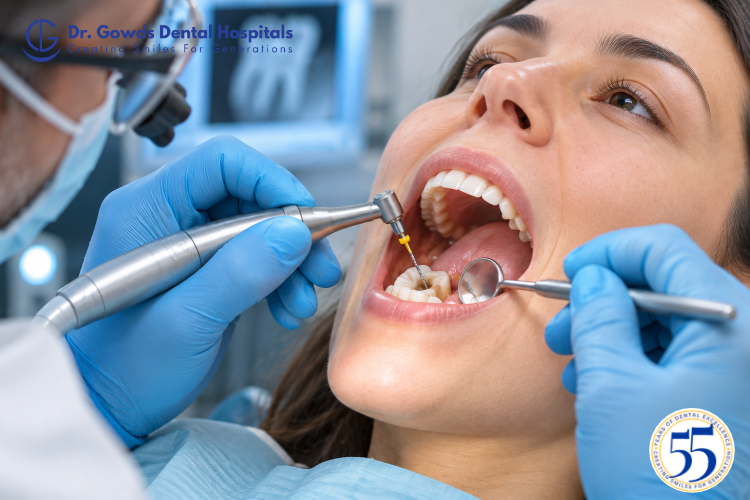
A tooth that has already undergone root canal treatment may sometimes develop new problems later. New discomfort, swelling, sensitivity while biting, or other changes around a previously treated tooth can leave you wondering: Can a root canal get infected again?
In some situations, a previously treated tooth may need root canal retreatment. Retreatment involves reassessing the tooth and addressing the inside of the tooth again when the earlier treatment has not resolved the problem as expected or the tooth has developed a new issue.
If you are looking for root canal retreatment in Hyderabad, Dr Gowds Dental Hospitals provides dental consultations across its Nanakramguda, Gachibowli, Madhapur, koti branches.
Noticing new symptoms in a tooth that already had a root canal?
Root canal retreatment is a procedure performed on a tooth that has previously undergone root canal treatment.
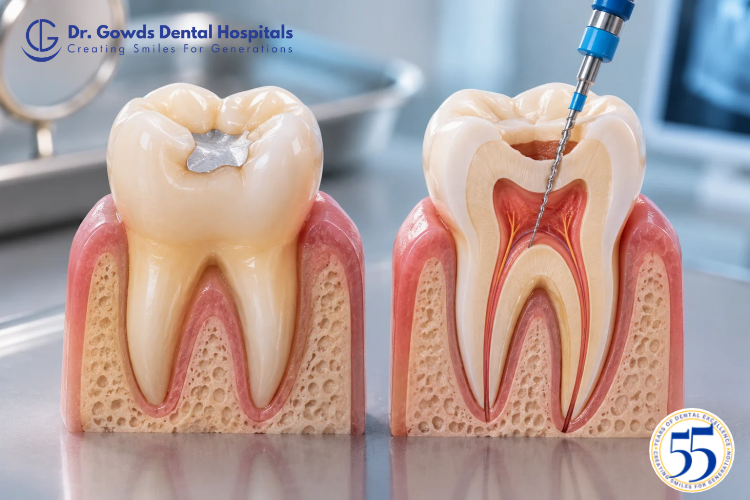
During the original procedure, the inside of the tooth is cleaned and sealed. In some cases, a tooth may later require another evaluation because the area has not healed as expected, the tooth has been exposed to a new problem, or the existing treatment needs to be reassessed.
Retreatment generally involves reopening the treated tooth, examining the existing root canal filling, cleaning the canal spaces again when necessary, and resealing them.
The exact approach depends on the condition of the tooth and the findings during the dental examination.
There is no single reason why a previously treated tooth may need another procedure. A dentist may investigate several possible factors.
Some teeth have narrow, curved, or branching canal spaces. Their anatomy can make the original treatment more complex.
During retreatment, the dentist may reassess the tooth’s internal structure and look for areas that require further attention.
A tooth can have more than one canal. If a canal space was not identified or adequately treated during the earlier procedure, it may become relevant during a later evaluation.
This is one reason detailed assessment is important before deciding whether retreatment is appropriate.
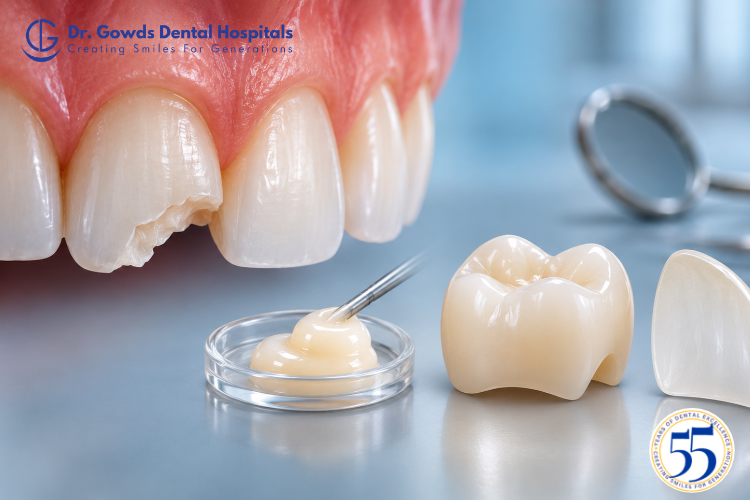
The restoration placed after a root canal is an important part of protecting the treated tooth.
If the restoration becomes damaged or new decay develops around the tooth, bacteria can potentially reach areas that were previously sealed. The dentist may then need to assess both the restoration and the root canal treatment.
A tooth can experience changes years after the original root canal. A new crack, damage to the restoration, or another dental problem may require the tooth to be reassessed.
Retreatment is therefore not simply about repeating the same procedure. It begins with identifying what has changed.
Not every treated tooth that feels different requires retreatment. However, certain changes can be a reason to arrange a dental evaluation.
You may notice:
Some dental problems may not produce obvious symptoms. For that reason, the decision about retreatment should be based on an examination rather than symptoms alone.
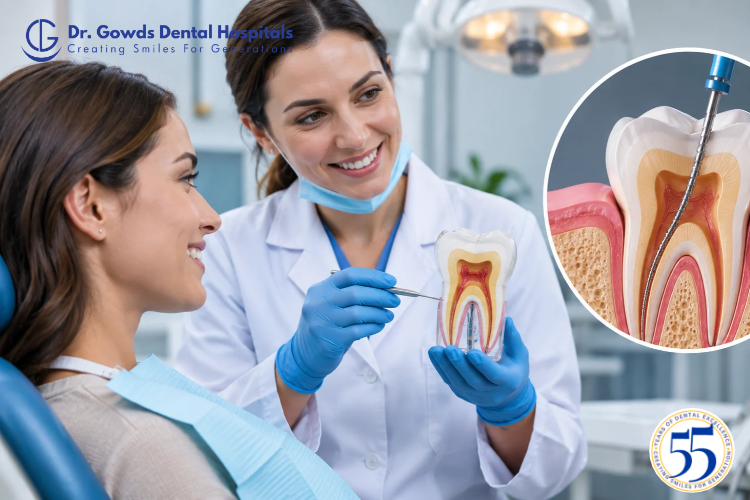
The root canal retreatment procedure is planned according to the condition of the individual tooth.
The dentist first reviews the tooth and its previous treatment. Your symptoms, dental history, existing restoration, and clinical findings may all be considered.
Imaging may be used to examine the tooth and surrounding structures. The type of imaging depends on what the dentist needs to evaluate.
If retreatment is considered suitable, the dentist needs access to the previously treated root canal spaces.
Existing dental restorations may need to be assessed or removed depending on the situation.
The existing root canal material may be removed so the canal spaces can be examined again.
The dentist then works on cleaning and preparing the relevant areas according to the findings.
After the canal spaces have been addressed, they are sealed again. The goal is to create an appropriate seal within the treated tooth.
The tooth may require a suitable restoration after retreatment. The type of restoration depends on factors such as the remaining tooth structure and the existing restoration.
When a previously treated tooth develops a problem, people often wonder whether it needs to be removed.
Extraction and retreatment are not the same approach.
Root canal retreatment focuses on reassessing and treating the existing tooth again.
Tooth extraction involves removing the tooth.
Depending on the condition of the tooth, its structure, the previous treatment, and other findings, a dentist may discuss retreatment, another endodontic procedure, extraction, or monitoring.
There is no single option that is suitable for every previously treated tooth. A dental examination is necessary to understand the available choices.
No. A previously treated tooth does not automatically need retreatment simply because it has been treated before or because it feels slightly different.
A dentist may consider:
After evaluating these factors, the dentist can explain whether retreatment is appropriate and what alternatives may be considered.
There is no fixed period after which a tooth must be retreated.
A tooth may be reassessed relatively soon after its original treatment or many years later. The timing depends on what is happening with the tooth.
This is why a tooth that previously received root canal treatment should not be assumed to be permanently problem-free simply because the original procedure was completed.
If symptoms return after months or years, an evaluation can help determine whether the issue is related to the previous root canal, the restoration, or another dental condition.
The cost of root canal retreatment can vary because every tooth is different.
Factors that may influence the treatment plan include:
Instead of relying on a fixed online estimate, it is better to have the tooth examined so the treatment requirements can be explained clearly.
Do not assume that every new toothache means the original root canal has failed.
A previously treated tooth can develop different dental problems, and symptoms alone cannot determine the cause.
If you notice discomfort, swelling, changes around the gum, or problems with the restoration, arrange a dental examination. The dentist can assess the tooth and explain whether root canal retreatment, another treatment, or observation is appropriate.
If you have a tooth that was treated with a root canal and is causing new or recurring problems, consult Dr Gowds Dental Hospitals in Hyderabad for an evaluation and discuss the treatment options available for your tooth.
After a root canal, maintaining the tooth and its restoration remains important.
Simple habits include:
The aim is not to assume that every previously treated tooth will need retreatment. Instead, timely assessment can help identify problems before deciding on the next step.
Root canal retreatment is considered when a tooth that has already undergone root canal treatment needs to be reassessed and treated again.
A previously treated tooth can develop new problems for different reasons, and symptoms such as discomfort, swelling, or changes around the tooth should not be used to make a diagnosis on their own.
The right approach depends on the condition of the individual tooth, the previous treatment, the restoration, and the findings from a dental examination.
If you are looking for root canal retreatment in Hyderabad, Dr Gowds Dental Hospitals has branches in Gachibowli, Puppalaguda, Madhapur, and Koti.
Have a previously treated tooth that is causing concern?
A previously treated tooth can sometimes develop a new problem that requires reassessment. A dental examination can help determine whether the issue is related to the previous root canal or another condition.
New or persistent discomfort, swelling, discomfort while biting, changes around the gum, or problems with an existing restoration may lead to an evaluation. These signs do not automatically mean retreatment is required.
Root canal retreatment involves reassessing a tooth that has already received root canal treatment and addressing the existing canal spaces again when appropriate. The exact procedure depends on the condition of the tooth.
Yes, a previously treated tooth can develop new symptoms months or years after treatment. The cause needs to be assessed by a dentist rather than assumed from the symptom alone.
Retreatment and extraction are different treatment approaches. Whether retreatment is suitable depends on factors such as the condition of the tooth, its remaining structure, previous treatment, and restorability.
There is no single cost for every retreatment case. The complexity of the tooth, previous treatment, restoration, imaging, and any additional procedures can affect the overall treatment plan and cost.
Yes, a previously treated tooth may sometimes require another root canal procedure. A dentist needs to assess the tooth to determine whether retreatment is appropriate.
 Gachibowli Branch