

Schedule Appointment

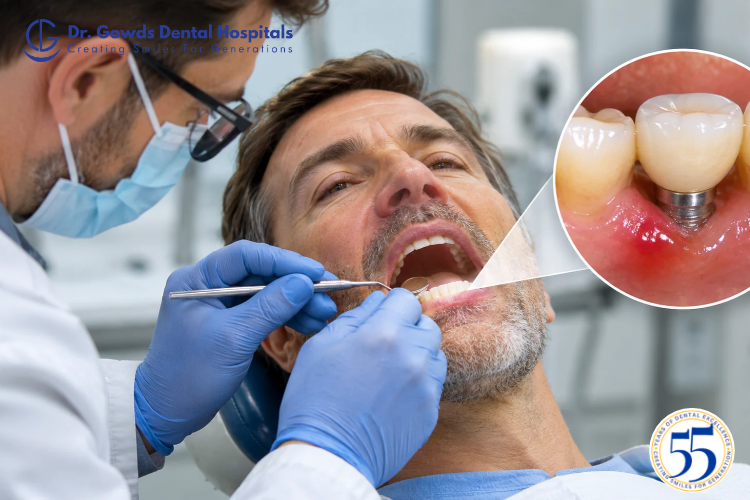
Dental implants are designed to become part of a carefully planned tooth replacement treatment. However, changes around an implant, such as persistent discomfort, swelling, bleeding, or an unusual taste, should not simply be ignored. These symptoms can have different causes and may need professional evaluation.
A dental implant infection is one of the concerns people may have when they notice unusual changes around an implant. Knowing what to look for can help you decide when it is time to contact a dental professional.
At Dr Gowds Dental Hospitals, patients in Hyderabad can seek dental evaluation at the Gachibowli, Puppalguda, Madhapur, and Koti branches.
If you have noticed pain, swelling, bleeding, discharge, or other changes around a dental implant, consider scheduling a dental examination rather than waiting for the symptoms to settle on their own.
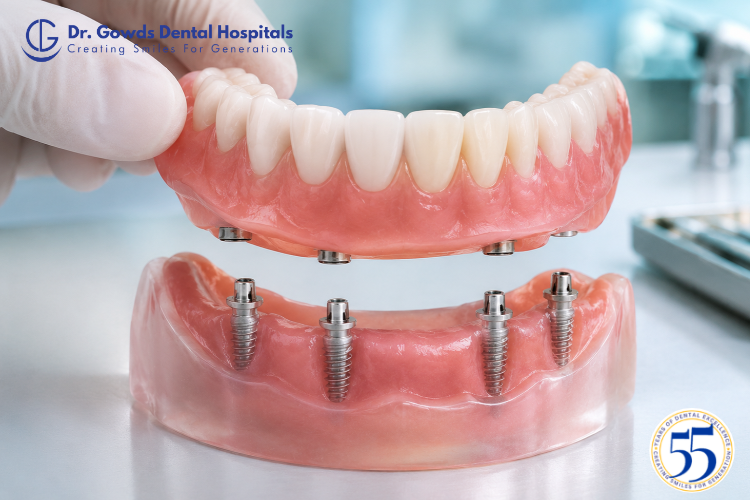
A dental implant consists of components that work together to replace a missing tooth. The implant itself is positioned within the jaw, while the visible restoration sits above the gum.
When someone refers to an infected dental implant, they may be describing irritation, inflammation, or infection involving the tissues around the implant. Dental professionals may also use specific terms depending on which tissues are affected.
The important point for patients is simple: changes around an implant deserve attention, particularly when they persist, become more noticeable, or occur together with other symptoms.
Not every instance of implant discomfort means there is an infection. That is why self-diagnosis can be misleading.
The signs of a problem around a dental implant can vary from person to person. Some symptoms may be subtle at first.
Mild discomfort can occur at certain stages of dental treatment. However, pain that persists, returns, or becomes more noticeable around an established implant is worth discussing with a dentist.
Pay attention to:
The location and nature of the pain can help a dental professional determine what needs to be checked.
Swollen or puffy gum tissue around an implant can be another warning sign.
You may notice that the gum appears different from the surrounding tissue or feels tender when touched. Swelling that does not settle or appears alongside other symptoms should be evaluated.
Changes in the appearance of the gums around an implant can be easy to overlook.
If the area appears unusually red or bleeds during brushing or cleaning, do not automatically assume that it is normal.
Bleeding around a dental implant can have different causes, so a dental examination is useful for understanding what is happening.
An unusual discharge around an implant should not be ignored.
Some people may notice a small amount of fluid, discharge, or an unpleasant taste in the mouth. If you see something that looks like pus around the implant, arrange a dental evaluation.
Avoid repeatedly pressing or squeezing the area yourself.
A persistent unpleasant taste around an implant can be another reason to have the area checked.
This may be particularly noticeable if the taste keeps returning after brushing or cleaning.
A dentist can examine the implant area and surrounding tissues instead of relying on the symptom alone to determine the cause.
A feeling of movement or looseness around an implant should receive attention.
It is important to distinguish between the implant itself and the restoration attached to it. Patients may describe both situations as a “loose implant,” but they can involve different components.
Do not repeatedly move the area with your tongue or fingers to test it.
Changes in the gumline, tenderness, swelling, or other visible differences around an implant can indicate that the area needs assessment.
Regularly looking at the implant area during routine oral hygiene can make it easier to notice changes early.
A dental implant problem does not necessarily have one single cause.
Several factors may need to be considered during an examination, including:
This is why it is better to have the implant examined rather than assuming that every symptom represents an infection.
If you notice possible signs of an infected dental implant, the next step should be a professional dental evaluation.
If discomfort, swelling, bleeding, discharge, or other changes continue, arrange an appointment.
Continue cleaning your teeth and the implant area according to the instructions provided by your dental professional. Avoid aggressive brushing or repeatedly disturbing a painful area.
Using household substances or attempting to manipulate the implant yourself can make the situation more difficult to assess.
Before your appointment, note:
This information can make your consultation more useful.
If you are experiencing changes around an existing dental implant, Dr Gowds Dental Hospitals can help you arrange a dental evaluation in Hyderabad.
A dental professional may begin by discussing your symptoms and dental history.
The examination can include looking at:
Depending on what is found during the examination, the dentist may recommend further assessment.
The purpose is to identify what is causing the symptoms rather than treating every case as an infection.
There is no single routine that guarantees that an implant will never develop a problem. However, maintaining good oral care and attending recommended dental appointments can help you stay aware of changes around the implant.
Useful habits include:
The key is consistency. Implant care does not end once the restoration has been placed.
You should consider contacting a dental professional when you notice a persistent or worsening change around your implant.
This includes:
If several of these symptoms occur together, seeking professional assessment becomes especially important.
Rather than trying to determine the cause yourself, an examination can help identify what is actually happening around the implant.
A dental implant can feel like a permanent solution once the treatment is completed, which can sometimes make people less attentive to changes in the area.
However, your gums, surrounding teeth, and implant restoration still need regular care.
A small change may be easy to dismiss, especially when there is little or no pain. Paying attention to changes in appearance, comfort, bleeding, or stability gives you a reason to seek advice when necessary.
The goal is not to assume that every symptom is an infection. It is to avoid ignoring a change that deserves professional attention.
A dental implant infection is not something that can be confirmed based on symptoms alone. Pain, swelling, bleeding, discharge, unpleasant taste, gum changes, or looseness around an implant can all be reasons to arrange a dental examination.
If something around your implant feels different from usual, do not rely on self-diagnosis. A professional evaluation can help determine whether the issue involves the implant, restoration, gums, surrounding teeth, or another factor.
Looking for dental implant care in Hyderabad? Dr Gowds Dental Hospitals provides dental care across Nanakramguda, Gachibowli, Madhapur, koti Contact the branch nearest to you to schedule an appointment and have your dental implant concerns evaluated.
Possible warning signs include persistent pain, swelling, bleeding, unusual discharge, an unpleasant taste or odour, gum changes, or a feeling that the implant or restoration is loose. These symptoms can have different causes and should be evaluated by a dentist.
Some discomfort may occur at different stages of dental treatment. However, persistent, recurring, or worsening pain around an established implant should be discussed with a dental professional.
There is no single appearance that confirms an infection. Changes may include swollen or unusually red gum tissue, bleeding, discharge, or other visible differences around the implant. A dental examination is needed to determine the cause.
Swelling around an implant can have different causes. It may be related to the surrounding gum tissue, oral hygiene, the restoration, or another dental issue. A professional examination can help identify the reason.
A feeling of looseness around an implant or its restoration should be checked. Patients may not always be able to tell whether the movement involves the implant itself or the restoration attached to it.
If you notice pus or unusual discharge around an implant, avoid squeezing or repeatedly disturbing the area. Contact a dental professional for an examination.
Consider contacting a dentist when implant pain persists, returns, becomes more noticeable, or occurs with symptoms such as swelling, bleeding, discharge, or changes around the implant.
 Gachibowli Branch