

Schedule Appointment


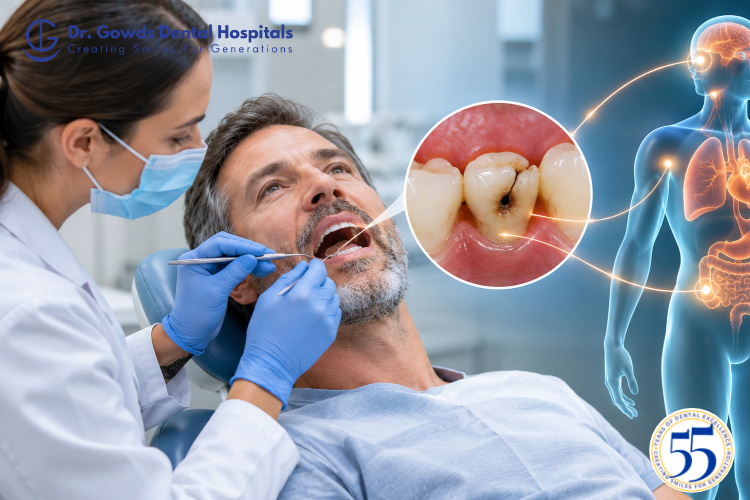
A tooth problem rarely feels like “just a tooth.” When one tooth becomes painful, sensitive, damaged, or difficult to use, it can change how you eat, sleep, speak, and go about your day. That is why many people ask: can a bad tooth affect your whole body?
The answer is more nuanced than a simple yes or no. One dental problem does not automatically mean your entire body will be affected. However, ignoring a tooth problem can create a chain of problems involving your mouth, eating habits, comfort, and everyday routine.
At Dr Gowds Dental Hospitals in Hyderabad, understanding the reason behind a dental problem is an important part of deciding what kind of dental care may be appropriate.
Think about a row of dominoes. When the first one falls, it can influence what happens next.
The same idea can be used to describe certain dental problems. A painful or damaged tooth may cause you to avoid chewing on one side. That can change your usual eating pattern. You may also become more conscious of certain foods, avoid brushing around a sensitive area, or postpone a dental visit because the symptoms temporarily improve.
The original problem may still be there while new habits develop around it.
The “dental domino effect” is therefore less about one tooth directly affecting every part of the body and more about how an untreated dental concern can influence surrounding oral structures and everyday habits.
Can a bad tooth affect your whole body? It is important not to interpret the question too literally.
A single problematic tooth does not automatically mean that something is wrong throughout your body. However, dental problems can have effects that extend beyond the tooth itself in practical ways.
For example, a person dealing with ongoing tooth discomfort may:
These changes may seem small individually. Over time, however, they can become part of a pattern that affects daily life.
That is why the better question is not simply “can a bad tooth affect your whole body?” but rather “what is this dental problem doing to my mouth and my daily routine, and why is it happening?”
When one tooth is uncomfortable, you may naturally start using another part of your mouth more often.
This can change your normal chewing pattern. You may also begin avoiding foods that require more chewing or feel uncomfortable against the affected tooth.
A dental examination can help identify what is causing the discomfort and whether the tooth needs further attention.
A chipped, cracked, sensitive, or painful tooth can become something you constantly think about.
You may become careful while eating, avoid very hot or cold foods, or repeatedly check the area with your tongue. These small adjustments can make a dental problem more noticeable in everyday life.
Teeth do not function completely independently. They work alongside the surrounding teeth, gums, jaw, and bite.
When one tooth is damaged or difficult to use, your dentist may therefore look beyond that single tooth during an examination.
This broader approach helps determine whether the issue is related to tooth decay, damage, an old restoration, gum concerns, bite-related problems, or another dental condition.
Not every dental problem begins with severe pain.
Some people notice smaller changes first. These may include:
The important point is not to diagnose the cause yourself.
A symptom can have more than one possible explanation, so a dental examination is the appropriate way to understand what is happening.
One of the most common mistakes is waiting for tooth discomfort to disappear completely.
Dental symptoms can sometimes fluctuate. You may have discomfort for a few days, feel better, and assume that the issue has resolved.
But feeling better does not necessarily tell you why the problem started in the first place.
Instead of repeatedly waiting for symptoms to return, consider having the tooth evaluated. Early attention can also give you a clearer understanding of your available treatment options.
CTA: If you have recurring tooth pain, sensitivity, or a damaged tooth, Dr Gowds Dental Hospitals can help you understand what may be causing the problem and what dental care may be suitable for your situation.
A dental assessment is not simply about finding the tooth that hurts.
Depending on your symptoms, a dentist may look at:
You may be asked when the problem started, what makes it better or worse, and whether you have experienced a similar issue before.
The dentist can examine the tooth for visible damage, changes, sensitivity, or other signs that may help identify the problem.
Sometimes the source of discomfort is not exactly where you expect it to be. Examining the surrounding area provides a more complete picture.
The way your upper and lower teeth come together can also be considered when assessing certain dental concerns.
If additional information is needed, your dentist may recommend appropriate dental imaging as part of the assessment.
The goal is to understand the problem before deciding what should happen next.
A common concern is whether one problematic tooth can somehow “spread” the problem to every other tooth.
That is not how every dental problem works.
However, one uncomfortable tooth can change the way you use your mouth. You may chew differently, clean the area differently, or place more attention on the surrounding teeth.
This is one reason it is useful to address dental problems instead of simply adapting to them for months or years.
You do not need to wait for a serious dental problem before paying attention to your teeth.
A few practical habits can help you stay aware of changes in your mouth:
Prevention is not about achieving perfect teeth. It is about noticing changes early and making dental care part of your normal health routine.
The biggest mistake is often assuming that a dental problem has to become severe before it deserves attention.
You do not need to wait until you cannot eat comfortably or the problem starts interfering with your routine.
If something about a tooth has changed and the change continues, a dental assessment can help you understand what is happening.
For patients in Hyderabad, Dr Gowds Dental Hospitals provides dental care across its Nanakramguda, Gachibowli, Madhapur, koti branches.
So, can a bad tooth affect your whole body?
The answer is not as simple as saying that one bad tooth automatically affects every part of your body. The more useful way to look at the issue is to understand how a dental problem can influence your mouth, eating habits, comfort, and everyday routine.
A tooth that hurts, feels different, or has become damaged deserves attention.
Instead of adapting your routine around a dental problem, find out what is causing it and discuss your options with a dental professional.
Concerned about a painful, sensitive, damaged, or troublesome tooth? Book a dental consultation at Dr Gowds Dental Hospitals in Hyderabad and take the first step toward understanding your dental concern.
A single bad tooth does not automatically mean your entire body is affected. However, a persistent dental problem can influence chewing, eating habits, comfort, and daily routines. A dental examination can help determine what is causing the problem.
Ignoring recurring tooth pain can leave the underlying dental concern unassessed. Even if discomfort comes and goes, it is worth discussing persistent symptoms with a dentist rather than relying only on temporary relief.
Yes, a painful or sensitive tooth may make you change the way you chew or avoid certain foods. If you notice that you are consistently using one side of your mouth, consider having the affected tooth checked.
Recurring sensitivity, pain while chewing, a chipped or cracked tooth, repeated food trapping, or a noticeable change in a tooth are all reasonable reasons to schedule a dental assessment.
A damaged tooth does not automatically cause problems in every nearby tooth. However, it can change the way you chew or clean the area, which is why dentists often examine the surrounding teeth and gums as well.
If the same tooth repeatedly becomes painful or sensitive, it is sensible to have it evaluated even when the discomfort temporarily disappears. The goal is to understand why the symptoms are occurring.
Maintain regular brushing and between-teeth cleaning, pay attention to changes in your teeth and gums, and arrange dental checkups when you notice persistent or unusual symptoms.
 Gachibowli Branch