

Schedule Appointment

Losing one or more teeth can make everyday activities such as eating, speaking, and smiling feel different. For people looking for a faster tooth replacement option, immediate load dental implants may sound especially appealing. You may also have come across the phrase “teeth in 48 hours” while researching implant treatment.
But does everyone qualify for this approach?
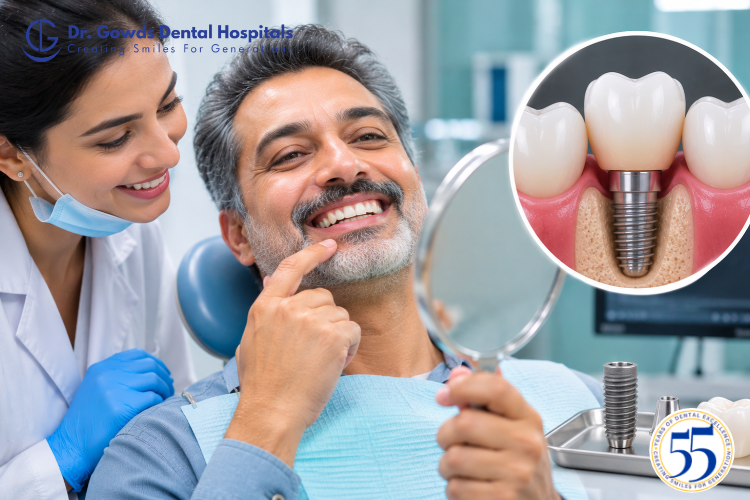
Immediate load implants involve placing a dental implant and attaching a restoration within a short period, sometimes on the same day or within 48 hours, depending on the treatment plan. The teeth provided during this stage may be temporary or provisional rather than the final permanent restoration.
The important question is not simply how quickly implants can be placed. It is whether your oral condition, available bone, overall treatment requirements, and implant stability make an immediate loading approach appropriate.
At Dr Gowds Dental Hospitals, patients can discuss their tooth replacement requirements and undergo an individual assessment before deciding which implant approach is suitable.
Traditional implant treatment and immediate loading follow different timelines.
A dental implant is a small structure placed in the jaw to provide support for a replacement tooth or dental restoration. With conventional treatment, there may be a period between implant placement and attachment of the final restoration.
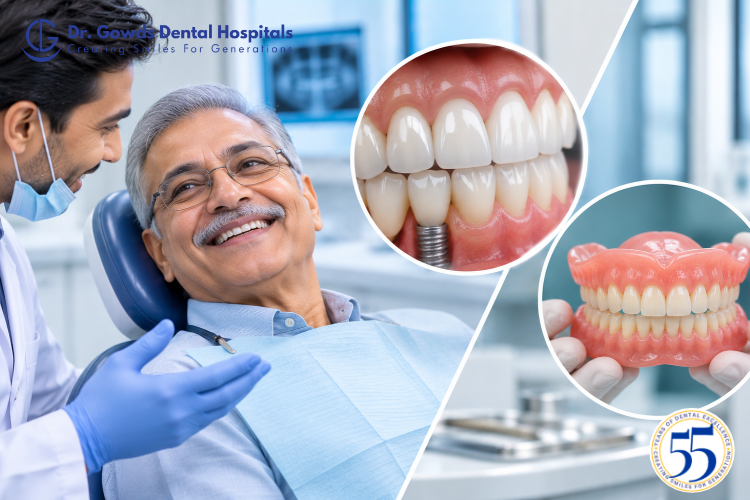
With an immediate load implant, a suitable restoration may be connected to the implant soon after placement. Depending on the case, this could involve a temporary tooth or a provisional full-arch restoration.
This is why the phrase “teeth in 48 hours” should not automatically be interpreted as receiving the final permanent teeth within exactly 48 hours.
The treatment timeline depends on factors such as:
Immediate loading is not automatically suitable for every person who needs dental implants. A dentist or implant team needs to evaluate the mouth and the planned restoration before recommending this approach.
The condition and available volume of the jawbone are important parts of implant planning.
An implant needs an appropriate foundation within the jaw. If there is insufficient bone in the planned implant area, additional treatment may need to be considered before or alongside implant placement.
A dental examination and appropriate imaging can help the dental team understand the available bone and plan implant positioning.
One of the important considerations for immediate loading is how stable the implant is after placement.
The implant team evaluates stability as part of the treatment process. If the required level of stability cannot be achieved, an immediate loading approach may not be the preferred option.
This is one reason why the decision cannot be made based only on the number of missing teeth or the patient’s desire for faster treatment.
The condition of the gums, remaining teeth, and surrounding oral structures also needs to be assessed.
Existing dental problems may need attention before an implant-based restoration is planned. A comprehensive evaluation helps the dental team identify factors that could affect the treatment sequence.
Your bite matters when planning implant treatment.
The dental team may evaluate how the upper and lower teeth meet, the forces placed on the planned restoration, and the position of the implant-supported teeth.
This is particularly relevant when multiple teeth or a full arch are being restored.
Immediate loading is not simply about placing an implant quickly.
The entire treatment needs to be planned around the implant position, restoration design, bite, appearance, and long-term maintenance requirements.
For some patients, a provisional restoration may be appropriate while the final restoration is planned separately.
Not every implant case is suitable for immediate loading.
A different treatment timeline may be considered when there are factors such as:
This does not necessarily mean that dental implants are unsuitable. It may simply mean that the treatment needs to follow a different sequence.
Understanding the difference between treatment approaches can make your consultation more productive.
With immediate loading, the implant and provisional restoration may be provided within a short timeframe when the case is suitable.
Potential advantages of the approach may include a shorter initial treatment timeline and earlier placement of a provisional tooth or restoration.
However, the exact timeline and type of restoration depend on individual treatment planning.
With a conventional approach, there may be a longer interval between implant placement and restoration.
This allows the treatment to follow a staged process where the implant and restoration are managed according to the individual’s requirements.
Neither approach should be considered automatically better for everyone. The appropriate option depends on the patient’s dental condition and treatment plan.
If you are interested in teeth in 48 hours, the first step should be an assessment rather than choosing a treatment based solely on the advertised timeline.
The dentist examines the teeth, gums, bite, and areas where implants may be required.
Dental imaging may be used to assess the jawbone and plan implant positioning.
The type of imaging required depends on the case and the dentist’s assessment.
The dental team can explain whether immediate loading, staged implant treatment, or another tooth replacement option is appropriate for your situation.
The planned restoration is considered alongside the implant placement. This helps the dental team plan the position, appearance, function, and overall treatment sequence.
Not necessarily.
The phrase “teeth in 48 hours” can refer to receiving a provisional or temporary restoration shortly after implant placement.
The final restoration may require a separate stage depending on the treatment plan.
Patients should therefore ask exactly what is included in the quoted timeline:
Getting clear answers can help you understand the complete treatment rather than focusing only on the first 48 hours.
Before proceeding, consider asking your dental team:
These questions can help you compare treatment plans based on your actual dental requirements rather than the speed of treatment alone.
The biggest misconception about immediate load implants is that the treatment timeline can be applied universally.
It cannot.
Two people with missing teeth may have completely different bone conditions, bite patterns, oral health, restoration requirements, and treatment priorities.
For this reason, the phrase “teeth in 48 hours” should be viewed as a possible treatment timeline for selected cases rather than a standard outcome for every implant patient.
A detailed dental evaluation is the appropriate starting point for understanding your options.
At Dr Gowds Dental Hospitals, patients in Hyderabad can discuss their tooth replacement needs with the dental team and understand whether an immediate loading approach fits their individual treatment plan.
Immediate load dental implants can provide a faster route to an implant-supported provisional restoration for selected patients. However, being interested in “teeth in 48 hours” does not automatically mean you are a candidate.
Bone availability, implant stability, oral conditions, bite, restoration requirements, and overall treatment planning all need to be considered.
The best way to determine whether immediate loading is appropriate is to have your case assessed and understand the complete treatment timeline, including what you will receive initially and when the final restoration may be provided.
If you are considering immediate load implants in Hyderabad, Dr Gowds Dental Hospitals has four locations in Nanakramguda, Gachibowli, Madhapur, koti where you can enquire about implant treatment and discuss your options with the dental team.
Immediate load dental implants are implants where a suitable restoration may be attached shortly after implant placement. The initial restoration may be temporary or provisional depending on the treatment plan.
Not necessarily. “Teeth in 48 hours” may refer to a provisional restoration provided shortly after implant placement. The final restoration may be completed at a later stage depending on the individual treatment plan.
Suitability depends on factors such as available bone, implant stability, oral conditions, bite, restoration requirements, and the overall treatment plan. A dental assessment is needed to determine whether immediate loading is appropriate.
No. Immediate loading is not automatically suitable for every implant patient. Some cases may require a different treatment sequence or additional procedures before the planned restoration can be completed.
The dental team may assess your teeth, gums, bite, jawbone, missing teeth, and restoration requirements. Dental imaging may also be used as part of treatment planning.
The timeline varies by case. Some suitable cases may receive a provisional restoration shortly after implant placement, while other cases may require a staged treatment approach.
The terms can sometimes be used to describe similar treatment concepts, but the exact treatment provided can vary. Patients should ask whether the implant is placed on the same day, whether a provisional restoration is provided, and when the final restoration will be completed.
 Gachibowli Branch