

Schedule Appointment


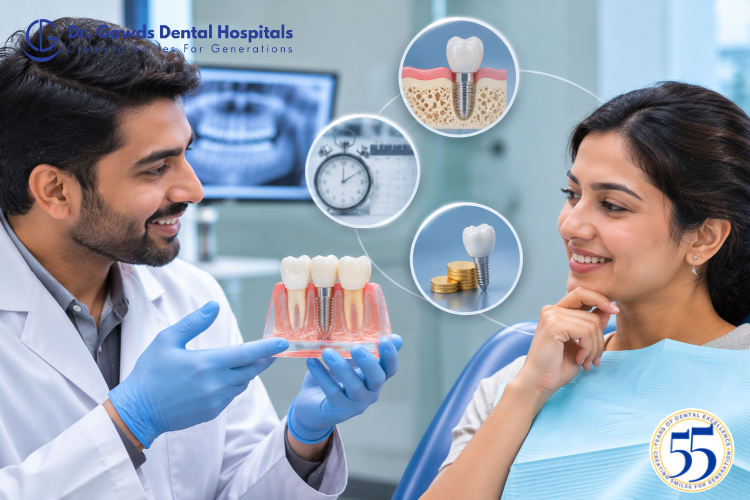
Losing a tooth can raise more questions than expected. Is a dental implant painful? Is it too expensive? Does age matter? What if the tooth has been missing for several years?
These questions often come from common dental implant myths that can make people delay exploring their tooth replacement options. While dental implants may be suitable for some people, they are not a one-size-fits-all solution, and an individual evaluation is important before deciding on treatment.
At Dr Gowds Dental Hospitals, we believe understanding your options is an important part of making an informed dental decision. This guide looks at seven common myths about dental implants and explains what you should consider instead.
Thinking about replacing a missing tooth?
When information about dental implants comes from casual conversations, social media or outdated experiences, it can be difficult to separate assumptions from useful information.
Some people may avoid asking about implants because they assume the treatment is painful, unaffordable or unsuitable for them. Others may believe that dentures are automatically the better choice or that implants are only about appearance.
The reality is more individual. Your dentist may consider factors such as the number of missing teeth, the condition of the surrounding teeth and gums, overall oral health, available bone support and your treatment preferences.
Here are seven common myths worth understanding before making a decision.
The fear of pain is one of the most common reasons people hesitate to ask about dental implants.
The experience of dental treatment can vary from person to person. During an implant procedure, the dental team uses appropriate methods to manage discomfort. Some people may experience soreness or discomfort afterward, but that does not mean every patient has the same experience.
Instead of assuming that implant treatment will be extremely painful, ask your dentist what the procedure involves, what you may experience afterward and how discomfort will be managed.
Understanding the actual treatment process can make the decision much clearer.
Another common misconception is that dental implants are mainly an option for older people.
In reality, age alone does not determine whether someone may be considered for dental implants. The decision involves looking at the individual’s dental situation and overall treatment needs.
Someone who has lost a tooth at a younger age may also want to discuss tooth replacement options. Similarly, an older adult may want to explore different options based on their dental condition.
The important question is not simply, “Am I too young or too old?”
A more useful question is:
“Which tooth replacement option is appropriate for my current dental situation?”
Because dental implants can be used to replace missing teeth, many people associate them mainly with appearance.
However, replacing a missing tooth involves more than how the smile looks. A missing tooth can affect how a person feels about eating, speaking or maintaining their normal dental routine.
The purpose of tooth replacement should therefore be discussed from both an appearance and functional perspective.
Depending on the situation, options may include a single tooth implant, multiple implants, bridges or dentures. Your dentist can explain how these options differ and which factors should be considered.
Cost is a genuine consideration when replacing missing teeth, but saying that dental implants are “always too expensive” oversimplifies the decision.
The cost of dental implant treatment can vary depending on several factors, including:
Instead of comparing only the initial price, ask for a clear treatment estimate and understand what is included.
Considering dental implants in Hyderabad? Dr Gowds Dental Hospitals can help you understand the treatment options and the factors that may influence your individual treatment plan.
Some people assume that once a tooth has been missing for a long time, dental implant treatment is automatically ruled out.
That is not necessarily how treatment decisions are made.
The time since tooth loss can be one factor considered during treatment planning, but it does not provide the complete picture. A dentist may evaluate the area where the tooth is missing, the surrounding teeth, oral health and other relevant factors before discussing available options.
If you have lived with a missing tooth for several years, it is better to have the area assessed rather than assuming that treatment is no longer possible.
Another concern is that getting a dental implant always means a very long and complicated treatment journey.
Treatment timelines can vary considerably because no two cases are exactly the same.
A straightforward single-tooth replacement may involve a different treatment plan from multiple missing teeth or a more complex restoration. Additional planning or procedures may also affect the overall timeline.
Rather than relying on a general number of days or months, ask your dentist:
A clear treatment plan can give you a much better understanding of the expected timeline.
It is easy to assume that one tooth replacement method must be better than all others.
But tooth replacement is not a competition between implants and dentures. Different options may suit different dental situations, preferences and treatment requirements.
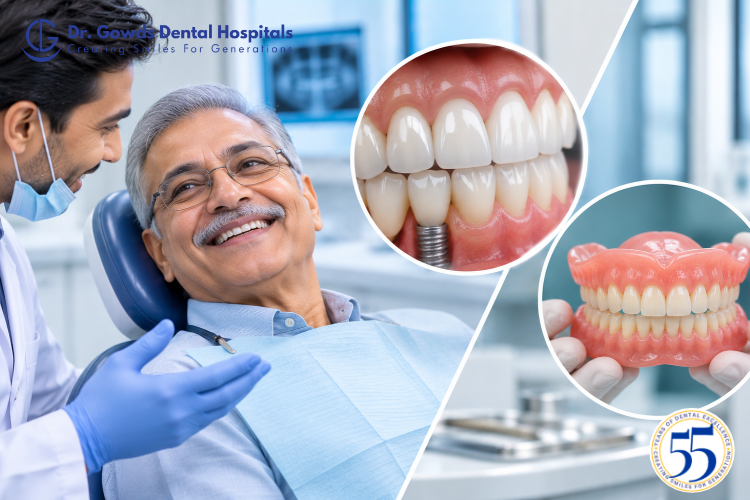
Dentures, bridges and dental implants each involve different considerations. The number of missing teeth, surrounding dental condition, treatment preferences and other individual factors can influence the options discussed with you.
The goal should not simply be to choose the most advanced-sounding option.
The goal is to understand your choices and select an approach that fits your individual needs.
Once you move past common dental implant myths, the next step is understanding what actually matters when evaluating tooth replacement.
A single missing tooth can require a different approach from several missing teeth. Tell your dentist how long the tooth has been missing and whether you have already tried another replacement option.
The condition of your surrounding teeth, gums and the area where the tooth is missing can influence treatment planning.
Think about what matters most to you. You may be particularly concerned about appearance, chewing, convenience, treatment duration or long-term maintenance.
Discussing these priorities can help your dentist explain the available choices more clearly.
Ask what each stage involves and whether there are alternative approaches. A detailed consultation can help you understand the process instead of making a decision based on a single price or a common assumption.
If you are considering replacing a missing tooth, avoid making the decision based solely on online myths or someone else’s experience.
A practical approach is to:
The right choice is ultimately an individual one.
If you are searching for dental implants in Hyderabad, Dr Gowds Dental Hospitals provides dental care across four Hyderabad locations: Nanakramguda, Gachibowli, Madhapur, koti.
Whether you are exploring a single tooth implant or looking into different ways of replacing missing teeth, discussing your concerns with a dental professional can help you understand what options may be appropriate for your situation.
Dental implant myths can make missing-tooth replacement seem more complicated than it needs to be.
Implants are not automatically painful, restricted to older adults, purely cosmetic or unsuitable simply because a tooth has been missing for years. At the same time, they are not automatically the right choice for everyone.
The most useful approach is to understand your options, ask specific questions and make a decision based on your individual dental needs rather than assumptions.
Looking for dental implants in Hyderabad? Consult Dr Gowds Dental Hospitals to discuss your missing-tooth replacement options and take the next step toward an informed decision.
The experience can vary between individuals. Your dentist can explain what the procedure involves, what discomfort may be expected and how it will be managed.
Age alone does not determine whether dental implants may be considered. A dentist will evaluate the individual’s dental condition, treatment requirements and other relevant factors.
A tooth being missing for several years does not automatically determine whether an implant can be considered. An individual dental assessment is needed to understand the available options.
Neither option is automatically better for every person. Dental implants and dentures have different considerations, and the appropriate choice depends on the individual’s dental situation, preferences and treatment needs.
Treatment time varies depending on the individual case, the number of teeth involved and the stages included in the treatment plan. Your dentist can provide a more relevant timeline after evaluation.
No treatment decision should be based on appearance alone. Dental implants are a tooth replacement option, and discussions may also consider function, comfort, convenience and the individual’s overall treatment needs.
There is no single price that applies to every implant case. Costs can vary based on the number of teeth being replaced, the restoration, materials, planning and any additional treatment required.
Ask about the available tooth replacement options, treatment stages, expected timeline, costs, alternatives and what the treatment plan involves for your specific dental situation.

 Gachibowli Branch