

Schedule Appointment


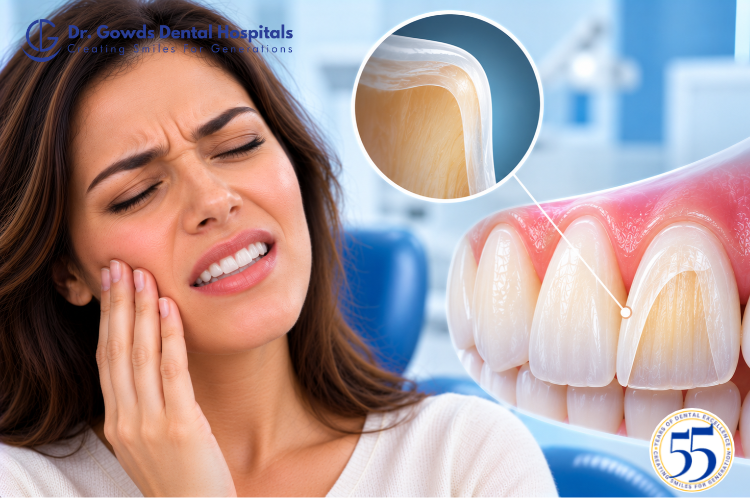
Thin tooth enamel can make a tooth look noticeably different from the teeth around it. It may appear uneven, rough, grooved or dotted with small pits when it comes in. For parents, this often raises a simple question: why does one tooth look weaker than the others?
Thin or pitted enamel can be related to changes that occurred while the tooth was developing. However, the appearance alone does not always explain what the tooth needs. A dental examination can help identify the pattern and decide whether the tooth needs monitoring, preventive care or restorative attention.
At Dr Gowds Dental Hospitals, patients in Hyderabad can discuss unusual tooth surfaces, enamel concerns and other dental problems with a dental team.
Enamel is the hard outer surface of a tooth. When it appears thinner or less even than expected, the tooth may look different in shape, texture or colour.
“Thin enamel” describes an appearance rather than a complete diagnosis. A tooth may have:
Not every uneven tooth surface means the same thing. The location, pattern and appearance can help a dentist understand the concern more clearly.
Teeth develop over time, and enamel forms while the tooth is developing. If enamel formation is affected during that period, the tooth may later appear thinner, uneven or pitted when it comes in.
This is why some enamel differences can be noticeable from the beginning rather than appearing only after years of use.
Sometimes the change is limited to one tooth. In other cases, several teeth may show similar surface differences.
Looking at which teeth are affected and whether the pattern is repeated across the mouth can give a dentist useful information during an examination.
Teeth do not always develop with identical surface characteristics. Variations during tooth formation can result in enamel that looks less uniform.
It is therefore not always accurate to assume that pitted enamel is simply the result of poor brushing or inadequate dental care.
Parents often notice enamel changes when a child’s new tooth appears. Common signs include:
The difference can be subtle and may become easier to notice when the tooth is compared with its neighbours.
When a child’s new tooth looks pitted or unusually thin, avoid jumping to conclusions.
A dentist can examine the affected tooth and compare it with neighbouring teeth. The assessment may consider:
This helps the dental team decide what type of care, if any, is appropriate.
Regular brushing, cleaning between teeth and routine dental visits remain useful. The aim is not to try to repair enamel at home, but to maintain good daily care while getting professional guidance for unusual changes.
Parents should also avoid assuming that every pitted tooth needs the same treatment. The appropriate approach depends on the individual tooth.
There is no single approach for every tooth with an enamel irregularity. The suitable option depends on the appearance and condition of the tooth, the person’s age and other dental factors.
Depending on the examination, a dentist may discuss:
If the tooth does not require immediate treatment, it may simply be monitored during routine dental visits.
For some surface irregularities, a dentist may discuss ways to improve the shape or texture of the tooth.
When a visible pit or surface defect needs attention, a tooth-coloured restorative option may be considered.
If the tooth needs more extensive support, the dentist may discuss an appropriate restorative approach based on its condition.
Treatment should be selected after examining the tooth rather than choosing an option based only on the phrase “weak enamel.”
Consider a dental visit when a tooth:
You do not need to wait until the tooth becomes a major concern before asking about it. An examination can provide a clearer understanding of what you are seeing and whether any action is needed.
Parents can also support everyday dental care by maintaining regular brushing, cleaning between teeth as advised and keeping routine dental appointments.
Parents may first notice enamel changes when permanent teeth begin appearing. It is natural to expect a newly erupted tooth to look similar to the others, but teeth can have visible differences in shape and surface.
What matters is understanding whether the difference is simply an enamel variation or something that needs attention. A dental assessment can help establish a suitable care routine and monitor the tooth as the rest of the mouth develops.
Online images may help you recognise that a tooth looks unusual, but they cannot replace an examination. Similar-looking surface changes can have different explanations, and the appropriate approach depends on the individual tooth.
At Dr Gowds Dental Hospitals, the focus is on understanding the concern, examining the tooth and explaining available options clearly.
Thin or pitted enamel can make a tooth look unusual from the time it appears. The change may be linked to how the enamel developed, and the appearance alone does not always explain what the tooth needs.
If you notice pits, grooves, roughness or an unusual tooth shape, the most useful next step is a dental examination. Rather than guessing the cause, get the tooth assessed and discuss whether monitoring, preventive care or a restorative option is appropriate.
Looking for dental care in Hyderabad? Visit Dr Gowds Dental Hospitals at Nanakramguda, Gachibowli, Madhapur, koti to discuss thin or pitted enamel and other dental concerns with a dental professional.
Thin tooth enamel refers to enamel that appears thinner, uneven or less developed on the surface of a tooth. It may be noticed as pits, grooves, rough areas or differences in tooth shape.
Some teeth may develop with thinner or uneven enamel because of changes during tooth development. The exact reason can vary, so an examination is useful when a tooth looks noticeably different.
Pitted enamel can be associated with differences that occurred while the tooth was forming. A dentist can assess the pattern, location and appearance of the pits to better understand the concern.
Not necessarily. The significance of pitted enamel depends on the individual tooth, its appearance and its overall condition. A dental examination can help determine whether monitoring or treatment is appropriate.
Treatment depends on the tooth. Depending on the examination, options may include monitoring, minor reshaping, tooth-coloured restoration or other restorative approaches.
If a newly erupted tooth has noticeable pits, grooves, roughness or an unusual shape, a dental check-up can help parents understand what they are seeing and whether any care is needed.
Brushing is an important part of everyday dental care, but an existing pit or change in tooth shape should be assessed by a dental professional rather than managed by changing brushing alone.

 Gachibowli Branch