

Schedule Appointment


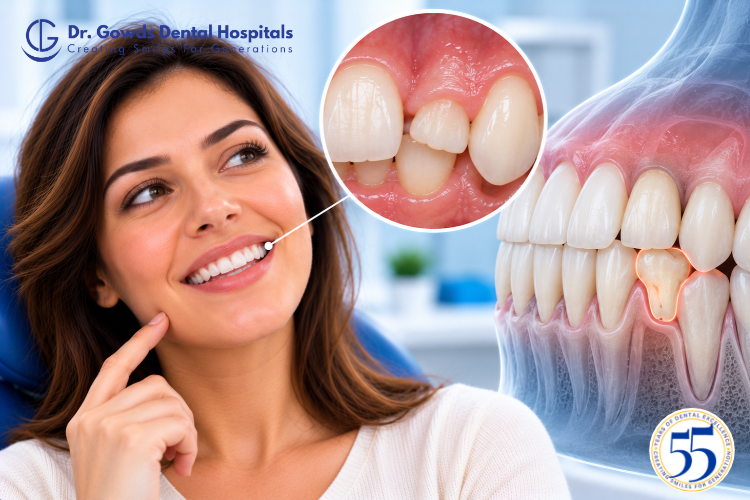
If you are 25 and still have one of your baby teeth, you may wonder whether it should have fallen out years ago. A baby tooth that remains into adulthood is often described as a retained baby tooth or retained primary tooth.
There is no single explanation for every retained baby tooth. The adult tooth may be positioned differently, may not be present, or there may be spacing or developmental factors involved. The important point is that age alone does not tell you what should happen next.
This guide explains what retained baby teeth in adults mean, why one may remain, what a dentist may check, and which treatment options may be considered.
A retained baby tooth is a primary tooth that remains in the mouth into adulthood instead of being replaced as expected. You may also hear terms such as retained primary tooth or retained deciduous tooth.
It can be easy to overlook when the tooth looks normal and does not cause discomfort. Some adults only find out they have a retained baby tooth during a routine dental examination or after dental imaging.
The useful question is not simply, “Why has this tooth not fallen out?” It is, “What is happening with this tooth and the teeth around it?”
Several situations may be considered when a baby tooth remains in an adult. A dental examination is needed to identify which one applies.
The adult tooth expected to replace the baby tooth may be positioned differently from the usual path. A dentist may use an examination and imaging to understand its location.
In some cases, the permanent replacement tooth may not have developed. If there is no permanent tooth taking its place, the baby tooth may remain.
The arrangement of nearby teeth can affect the space available for a permanent tooth. Crowding or spacing can therefore be relevant when assessing a retained baby tooth.
A retained baby tooth may appear smaller, shorter or different in shape from the teeth around it. Its position can also look different when compared with neighbouring teeth.
Dental development does not follow exactly the same pattern for everyone. Previous dental history and the position of nearby teeth may also be considered during an assessment.
A retained baby tooth can look like an ordinary tooth, but some people notice differences such as:
Appearance alone cannot confirm whether a tooth is a baby tooth or whether treatment is needed. A dental examination provides a clearer picture.
A retained baby tooth may remain without an obvious day-to-day concern. Some adults discover it incidentally and have no symptoms that led them to seek care.
However, the condition of the tooth, the position of nearby teeth, whether a permanent tooth is present and how the teeth meet when you bite can all be relevant. That is why the appropriate approach can differ from one person to another.
If you visit a dentist because a baby tooth is still present at 25, the assessment may include several steps.
The dentist may examine the retained tooth, nearby teeth, gums, spacing and bite. They may also ask about your dental history.
An X-ray may be recommended to assess what is happening below the visible part of the tooth. It can help the dentist understand the position of nearby structures and whether a permanent tooth is present.
The dentist may check how the upper and lower teeth meet and whether the retained tooth is affecting the overall arrangement of the teeth.
Once the situation is clearer, the dentist can explain whether monitoring or treatment should be considered. The plan depends on the individual tooth and surrounding teeth.
There is no single treatment for every retained baby tooth.
If the tooth is stable and there is no immediate reason for intervention, monitoring may be considered. Regular dental check-ups can help track changes.
If the retained tooth is smaller or shaped differently, restorative treatment may be considered to improve its appearance or fit within the bite.
In some cases, removal may be recommended. This decision depends on the position of the tooth, the surrounding teeth and what is happening with the permanent tooth.
If tooth position or spacing is part of the issue, orthodontic treatment may form part of the plan. Braces or clear aligners may be considered depending on the individual situation.
If there is no permanent tooth to replace the retained baby tooth, replacement options may be discussed. Depending on the case, these can include a dental implant, bridge or another suitable restoration.
CTA: Not sure whether your adult tooth is actually a retained baby tooth? A dental consultation can help identify the tooth, assess its position and explain the next steps.
Not necessarily.
The fact that a baby tooth is still present at 25 does not, by itself, determine whether it needs to be removed. A dentist may consider the tooth’s condition, position, surrounding teeth, bite and whether a permanent tooth is present.
Making a decision based only on age may miss the reason the tooth has remained. An assessment is a better starting point than assuming that removal is automatically necessary.
Consider arranging a dental examination if:
Finding a baby tooth still present at 25 can be surprising, but age alone does not determine the right approach. The first step is to identify the tooth and understand how it relates to the surrounding teeth.
A dentist can examine the area, use imaging when appropriate and discuss the available options. Depending on the situation, monitoring, restorative care, orthodontic treatment, removal or replacement may be considered.
For people looking for dental care in Hyderabad, Dr Gowds Dental Hospitals has branches in Nanakramguda, Gachibowli, Madhapur, koti.
Still have a baby tooth at 25? Book a dental consultation at Dr Gowds Dental Hospitals in Hyderabad and visit the branch that is most convenient for you.
Yes. A primary tooth can remain into adulthood. A dental examination can confirm whether it is retained and help assess the surrounding teeth.
Possible explanations include the position or absence of the permanent tooth, limited space, or individual differences in tooth development.
Not necessarily. Some may remain without an obvious concern, while others may need monitoring or treatment depending on the tooth and surrounding area.
Removal is not automatically required. A dentist can assess the tooth, surrounding teeth, bite and permanent tooth before discussing the options.
If a permanent tooth is not present, replacement options may be discussed. These can include an implant, bridge or another restoration, depending on the case.
Orthodontic treatment may be considered when tooth position or spacing is part of the situation. The suitable approach depends on the dental assessment.
The assessment may include a clinical examination, bite evaluation and dental imaging to understand the tooth’s position and surrounding structures.
 Gachibowli Branch