

Schedule Appointment


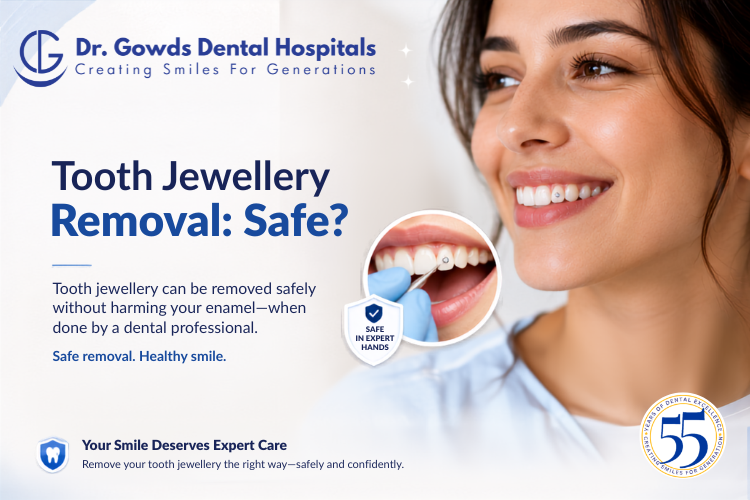
Tooth jewellery removal does not usually damage the enamel when performed correctly by a dental professional. Unlike traditional jewellery that requires drilling or permanent alteration of the tooth, most tooth gems are attached using dental bonding materials that can be carefully removed without harming the natural tooth surface. However, attempting to remove tooth jewellery at home using force, sharp objects, or chemicals can scratch the enamel, damage the bonding layer, or increase the risk of sensitivity.
At Dr. Gowds Dental Hospitals, our dentists use safe techniques to remove tooth jewellery while protecting the enamel and maintaining the natural appearance and health of your teeth.
Tooth jewellery is a cosmetic dental accessory placed on the surface of a tooth to enhance its appearance.
Unlike dental crowns or veneers, tooth jewellery is usually a non-invasive cosmetic procedure where small decorative pieces such as crystals, gems, or gold designs are attached using dental-grade bonding materials.
Common types include:
The jewellery is typically attached to the front surface of teeth, especially visible front teeth.
There are several reasons someone may consider tooth jewellery removal.
Common reasons include:
Regardless of the reason, professional removal ensures the tooth surface remains protected.
One of the most common concerns patients have is whether removing tooth jewellery can harm the enamel.
The answer depends on how it is removed.
When performed by a dentist:
Professional tooth jewellery removal generally does not cause enamel damage.
Trying to remove tooth gems yourself can be risky.
Methods such as:
may cause:
It is always safer to have tooth jewellery removed professionally.
The tooth jewellery removal procedure is usually simple and comfortable.
The dentist first examines:
This helps determine the safest removal approach.
The dentist gently separates the jewellery from the tooth using appropriate dental instruments.
The goal is to remove the attachment without affecting the enamel.
After the jewellery is removed, any leftover bonding material is carefully cleaned from the tooth surface.
The tooth is polished to restore a smooth surface and remove minor residue.
The dentist checks for:
Most patients experience little to no discomfort during tooth jewellery removal.
Because the procedure usually involves only removing surface bonding material, anesthesia is generally not required.
Some patients may experience:
These symptoms usually improve quickly.
Consider professional tooth jewellery removal if you notice:
Early removal can help prevent oral health problems.
Some patients choose removal because they want a different design.
The dentist may recommend:
The tooth should always be evaluated before adding another cosmetic attachment.
Tooth jewellery removal is generally a safe procedure that does not damage enamel when performed correctly by a dental professional. Since tooth gems are usually attached using dental bonding materials rather than permanently altering the tooth, they can be removed without harming the natural tooth surface.
The main risk comes from attempting removal at home or using improper techniques, which can scratch enamel, increase sensitivity, or damage the tooth structure.
If you are considering removing tooth jewellery or have concerns about enamel health, consult the dental experts at Dr. Gowds Dental Hospitals. A professional evaluation ensures safe removal while protecting your smile and maintaining healthy teeth.
Visit us at-
Dr gowds dental hospital Nanakramguda
Dr gowds dental hospital Gachibowli
Dr gowds dental hospital madhapur
No. Professional tooth jewellery removal generally does not damage enamel because dentists carefully remove the bonding material without altering the natural tooth surface.
A dentist gently removes the jewellery, cleans away the bonding material, and polishes the tooth to restore a smooth surface.
It is not recommended. DIY removal can scratch enamel, damage the tooth surface, or cause sensitivity.
No. Most tooth jewellery is a temporary cosmetic accessory attached with dental bonding material and can be removed when desired.
Tooth jewellery itself does not directly cause cavities, but poor cleaning around the attachment can allow plaque buildup and increase the risk of decay.
 Gachibowli Branch