

Schedule Appointment


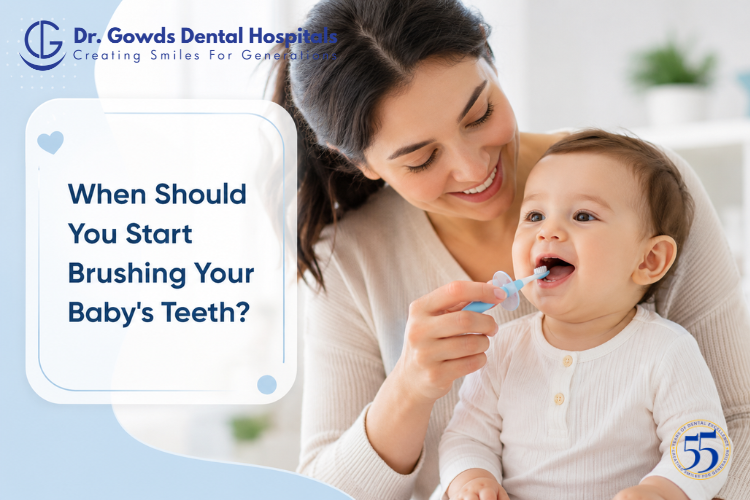
You should start brushing your baby’s teeth as soon as the first tooth appears, usually around 6 months of age. Before the first tooth erupts, gently clean your baby’s gums with a soft, damp cloth after feeding. Once teeth begin to appear, use a soft-bristled baby toothbrush and a tiny smear of fluoride toothpaste to remove plaque and protect against early childhood cavities. Establishing good oral hygiene early helps promote healthy milk teeth, proper jaw development, and lifelong dental health.
At Dr. Gowds Dental Hospitals, our pediatric dentists guide parents on age-appropriate oral care, brushing techniques, and preventive dental care to ensure every child develops a healthy smile from infancy.
Many parents believe brushing can wait until several teeth have appeared. However, bacteria can begin accumulating as soon as the first tooth erupts.
Starting oral hygiene early helps:
Good oral hygiene begins long before all the teeth appear.
The answer is simple:
Begin brushing as soon as your baby’s first tooth erupts.
Most babies get their first tooth between 6 and 10 months, although every child develops differently.
Some babies develop teeth earlier, while others may not get their first tooth until after their first birthday.
Whenever the first tooth appears, brushing should become part of your baby’s daily routine.
Even before teeth erupt, oral hygiene matters.
After each feeding:
This also helps babies become comfortable with oral care.
Once the first tooth erupts:
Parents should always perform the brushing at this stage.
As more teeth erupt:
Children may begin learning to brush independently, but parents should supervise.
Use:
Proper brushing is just as important as starting early.
Select a toothbrush that has:
Replace the toothbrush every three months or sooner if the bristles become worn.
Dental experts recommend:
Too much toothpaste increases the risk of swallowing excess fluoride.
Brush:
Use small circular motions rather than scrubbing aggressively.
The two most important times are:
Night-time brushing is especially important because saliva production decreases during sleep.
Yes. Most pediatric dentists recommend fluoride toothpaste because it helps strengthen enamel and prevent cavities.
Use only the recommended amount for your child’s age.
If you’re unsure which toothpaste is best, ask your pediatric dentist.
Many parents unintentionally increase their child’s risk of cavities.
Common mistakes include:
Brushing should begin with the very first tooth.
Young children lack the hand coordination needed for effective brushing.
Parents should supervise until about 7–8 years of age.
More toothpaste does not clean better.
Use only age-appropriate amounts.
Milk and food particles left overnight allow cavity-causing bacteria to grow.
Sleeping with bottles containing milk, juice, or sweetened liquids greatly increases the risk of early childhood caries.
Knowing when to start brushing baby teeth is one of the most important steps parents can take to protect their child’s oral health. Brushing should begin as soon as the first tooth erupts, using a soft toothbrush and a small amount of fluoride toothpaste. Combined with healthy eating habits, regular dental check-ups, and good brushing techniques, early oral care can prevent cavities, support healthy jaw development, and establish lifelong habits that keep smiles healthy.
If you have questions about your child’s oral development or brushing routine, the pediatric dental team at Dr. Gowds Dental Hospitals is here to provide expert guidance and personalized preventive care.
Visit us at-
Dr gowds dental hospital Nanakramguda
Dr gowds dental hospital Gachibowli
Dr gowds dental hospital madhapur
You should start brushing as soon as the first tooth appears, usually around 6 months of age.
Yes. Gently wipe your baby’s gums with a clean, damp cloth after feedings to maintain good oral hygiene.
Use a rice grain-sized smear of fluoride toothpaste for children under three years and a pea-sized amount after age three.
Brush your baby’s teeth twice daily, especially after breakfast and before bedtime.
Your child should visit a dentist by their first birthday or within six months after the first tooth erupts. This helps ensure healthy oral development and early prevention of dental problems.
 Gachibowli Branch