

Schedule Appointment


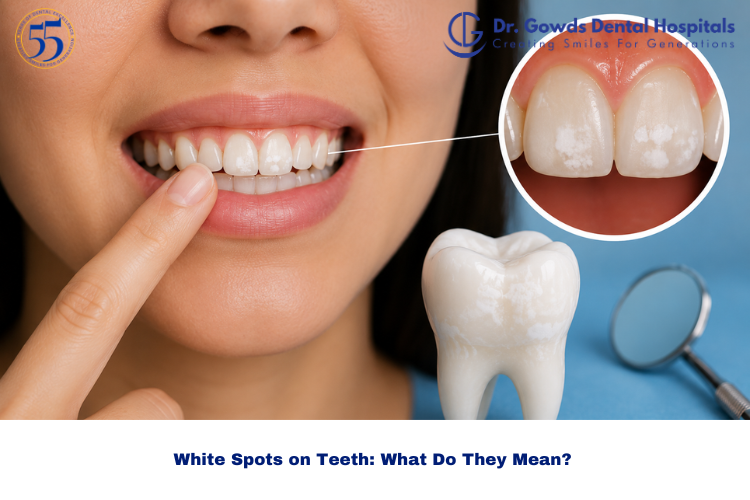
White spots on teeth are usually caused by enamel demineralization, fluorosis, enamel hypoplasia, poor oral hygiene, or plaque buildup. While some white spots are purely cosmetic, others may indicate early enamel damage that requires professional attention.
Medically Reviewed by: Prof. Dr. Snigdha Gowd, MDS (Orthodontics & Dentofacial Orthopaedics)
At Dr. Gowds Dental Hospitals, white spots are evaluated using advanced diagnostic techniques to determine the underlying cause and recommend the most effective treatment.
White spots are areas of enamel that appear lighter or chalkier than the surrounding tooth surface.
They may occur on:
These spots can vary in size and visibility depending on the cause.
Some white spots are harmless, while others may indicate weakened enamel or developing dental problems.
Not always.
Although some white spots are developmental and harmless, others are often early signs that the enamel has lost important minerals.
In many cases, white spots are the first visible stage of tooth decay before a cavity forms.
Early diagnosis helps prevent further enamel damage and improves treatment outcomes.
One of the most common causes of white spots is enamel demineralization.
Demineralization occurs when acids produced by oral bacteria remove essential minerals from the enamel.
This weakens the tooth surface and creates chalky white areas.
These spots often represent the earliest stage of tooth decay.
Inadequate brushing and flossing allow plaque to accumulate on the teeth.
Bacteria within plaque produce acids that gradually damage enamel.
Over time, mineral loss can create visible white spots.
Poor oral hygiene is especially common in:
White spots frequently develop during orthodontic treatment.
Brackets and wires create areas where plaque can accumulate.
If oral hygiene is not maintained properly, enamel around the brackets begins losing minerals.
After braces are removed, white spots become more noticeable.
At Dr. Gowds Dental Hospitals, orthodontic patients receive preventive guidance to reduce the risk of post-braces enamel demineralization.
Fluorosis develops when excessive fluoride exposure occurs during tooth development.
Children may develop fluorosis if they consume excessive fluoride while permanent teeth are forming.
Sources may include:
Most cases are mild and primarily cosmetic.
Enamel hypoplasia is a developmental defect that affects enamel formation.
Unlike demineralization, these spots are present because the enamel did not form properly.
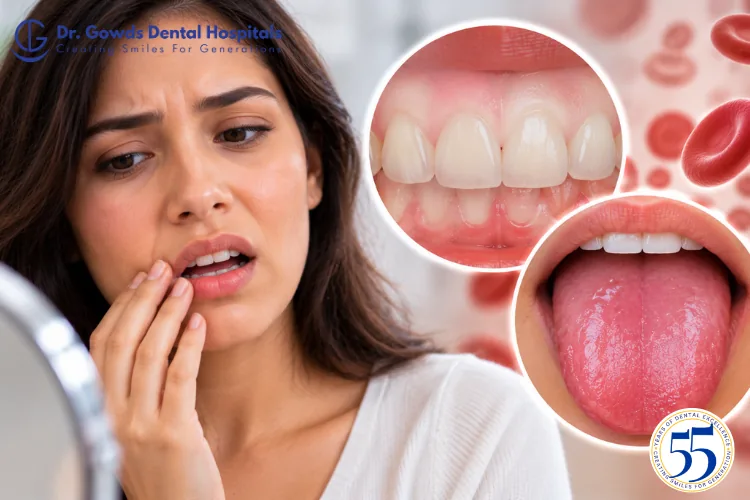
Certain vitamin and mineral deficiencies can affect enamel development.
Deficiencies associated with enamel changes include:
Poor nutrition during tooth development may contribute to white enamel defects.
Saliva plays an important role in protecting enamel.
Reduced saliva production can increase the risk of:
Dry mouth may result from:
Sometimes.
White spots caused by demineralization are often considered the earliest visible stage of tooth decay.
At this stage:
Early treatment can often prevent progression to a cavity.
Professional fluoride treatments help strengthen weakened enamel.
This approach is especially effective for early demineralization.
Specialized products containing calcium and phosphate can help restore mineral content.
Benefits include:
Microabrasion removes superficial enamel discoloration.
This treatment is commonly used for mild fluorosis and surface defects.
Resin infiltration is a minimally invasive cosmetic treatment.
The material penetrates the porous enamel and blends white spots with surrounding tooth structure.
This technique often produces highly aesthetic results.
Composite bonding may be used to improve the appearance of more noticeable enamel defects.
For severe discoloration or developmental enamel defects, porcelain veneers may provide a long-term cosmetic solution.
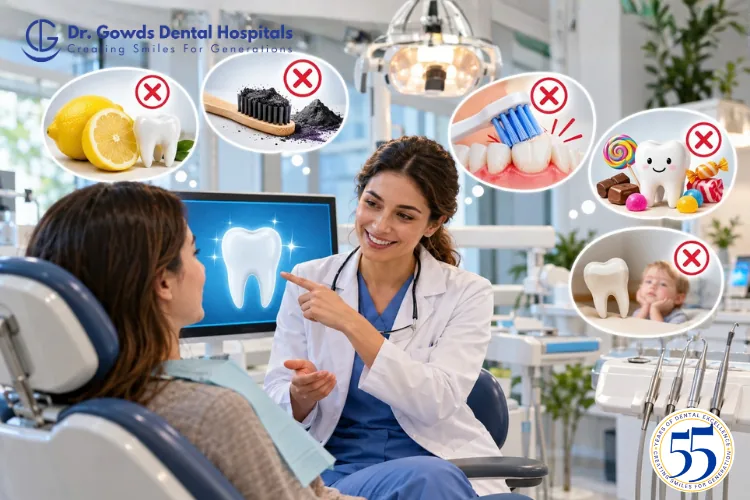
Preventive measures include:
Frequent sugar consumption increases acid production.
Professional cleanings help prevent plaque accumulation.
Proper brushing around braces is essential.
Avoid excessive fluoride intake during childhood.
White spots on teeth can develop for many reasons, including enamel demineralization, fluorosis, enamel hypoplasia, poor oral hygiene, and orthodontic treatment.
While some white spots are harmless cosmetic concerns, others may indicate early enamel damage that requires professional attention.
The good news is that modern dentistry offers several effective treatment options ranging from remineralization therapy to advanced cosmetic procedures.
If you are concerned about white spots on your teeth, a professional evaluation at Dr. Gowds Dental Hospitals can help identify the cause and determine the most appropriate treatment.
Visit us at-
Dr gowds dental hospital Nanakramguda
Dr gowds dental hospital Gachibowli
Dr gowds dental hospital madhapur
White spots commonly occur because of enamel demineralization, fluorosis, enamel hypoplasia, or plaque accumulation.
Not always. Some white spots can improve with remineralization treatments, while others may require cosmetic procedures.
Early demineralization may improve with proper oral hygiene and remineralization therapy, but many cases require professional treatment.
Plaque accumulation around orthodontic brackets can cause enamel demineralization, resulting in white spots after braces are removed.
Yes. Treatment options include fluoride therapy, resin infiltration, microabrasion, bonding, and veneers depending on the cause and severity.
 Gachibowli Branch