

Schedule Appointment


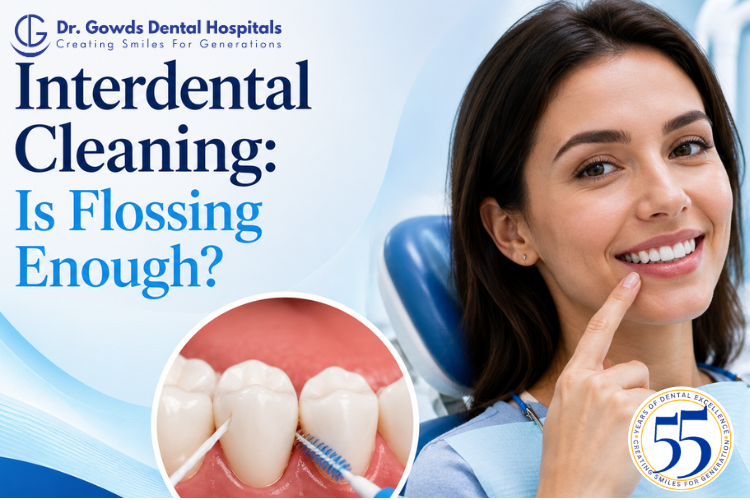
Interdental Cleaning is the process of removing plaque, food particles, and bacteria from the spaces between your teeth—areas that a toothbrush cannot effectively reach. While flossing is one of the most common methods of interdental cleaning, it may not be enough for everyone. Depending on the size of the spaces between your teeth, gum health, braces, dental implants, or bridges, your dentist may recommend interdental brushes, water flossers, or other cleaning aids in addition to floss. A personalized interdental cleaning routine can significantly reduce the risk of cavities, gum disease, and bad breath.
At Dr. Gowds Dental Hospitals, we educate patients on the most effective interdental cleaning techniques based on their individual oral health needs, helping them maintain healthier teeth and gums for the long term.
Interdental Cleaning refers to cleaning the spaces between your teeth where a regular toothbrush cannot reach.
Although brushing removes plaque from the front, back, and chewing surfaces of your teeth, it leaves nearly one-third of the tooth surface untouched.
These narrow spaces can trap:
If not cleaned regularly, they increase the risk of tooth decay, gum disease, and persistent bad breath.
Many people believe brushing twice a day is enough to maintain good oral health.
However, bacteria between the teeth continue to multiply even after thorough brushing.
Regular Interdental Cleaning helps:
Cleaning between your teeth every day is an essential part of a complete oral hygiene routine.
Flossing is highly effective, but it is not always sufficient for every individual.
Whether flossing alone is enough depends on factors such as:
For many people with healthy, closely spaced teeth, flossing may adequately remove plaque.
However, patients with larger spaces or certain dental restorations often benefit from additional interdental cleaning tools.
There are several ways to perform Interdental Cleaning, and each serves a different purpose.
Dental floss is the most widely used interdental cleaning tool.
It slides between tightly spaced teeth and removes plaque along the sides of the teeth and just below the gum line.
Advantages
Limitations
Interdental brushes are small brushes specifically designed to clean larger spaces between teeth.
They are particularly useful for patients with:
Benefits
Water flossers use a pressurized stream of water to remove plaque and food particles.
They are popular among patients with:
Although water flossers improve oral hygiene, they may not completely replace traditional floss in all situations.
Soft rubber picks gently clean between teeth without using string or wire.
They are often recommended for:
The best Interdental Cleaning method depends on your individual oral health.
Your dentist may even recommend combining more than one cleaning method.
Neglecting Interdental Cleaning allows plaque to accumulate where your toothbrush cannot reach.
Over time, this may lead to:
Many cavities begin in these hidden areas because they are not cleaned adequately.
Even people who floss regularly may not be cleaning effectively.
Common mistakes include:
Proper technique is just as important as daily cleaning.
To maximize the benefits of Interdental Cleaning, follow these tips:
Daily cleaning removes plaque before it hardens into tartar.
Use the Correct Tool
Your dentist can recommend the most suitable cleaning aid for your teeth.
Be Gentle
Avoid forcing floss or brushes between tight spaces.
Replace Cleaning Aids Regularly
Worn brushes and damaged floss become less effective.
Maintain Good Brushing Habits
Interdental cleaning complements—not replaces—twice-daily brushing with fluoride toothpaste.
Interdental Cleaning is an essential part of maintaining healthy teeth and gums because brushing alone cannot clean the spaces between your teeth. While flossing remains an excellent tool for many people, it may not always be enough, especially for individuals with braces, implants, bridges, gum disease, or wider spaces between teeth.
Choosing the right interdental cleaning method—and using it consistently—can significantly reduce your risk of cavities, gum disease, and bad breath. A dentist can recommend the most effective combination of floss, interdental brushes, or water flossers based on your unique oral health needs.
If you are unsure whether your current oral hygiene routine is providing enough protection, schedule a consultation at Dr. Gowds Dental Hospitals. Our dental experts can help you develop a personalized interdental cleaning routine that keeps your smile healthy for years to come.
Visit us at-
Dr gowds dental hospital Nanakramguda
Dr gowds dental hospital Gachibowli
Dr gowds dental hospital madhapur
Interdental Cleaning is the process of removing plaque, food particles, and bacteria from the spaces between your teeth using tools such as dental floss, interdental brushes, or water flossers.
Flossing is effective for many people with tightly spaced teeth. However, patients with braces, dental implants, gum disease, or larger gaps may benefit from additional interdental cleaning tools such as interdental brushes or water flossers.
Interdental brushes are often more effective for cleaning larger spaces, around dental implants, and in patients with gum recession. Floss is generally better for tight spaces between healthy teeth.
A water flosser is an excellent addition to your oral hygiene routine, especially for braces or implants, but it may not completely replace traditional floss in every situation. Your dentist can recommend the best option based on your needs.
You should perform Interdental Cleaning at least once every day, preferably before bedtime, to remove plaque and reduce the risk of cavities and gum disease.
 Gachibowli Branch